Entrepreneur 2026: Uno Minda Shares 6 Leadership Lessons for Indian Entrepreneurs
According to Minda, companies have to continuously invest in technology, R&D, innovation, and talent, not only to keep pace with changing trends, but to stay ahead of them, creating a strategic advantage and a unique selling proposition (USP).
.
You're reading Entrepreneur India, an international franchise of Entrepreneur Media.
“… business models may change, but the fundamentals of leadership do not change…”
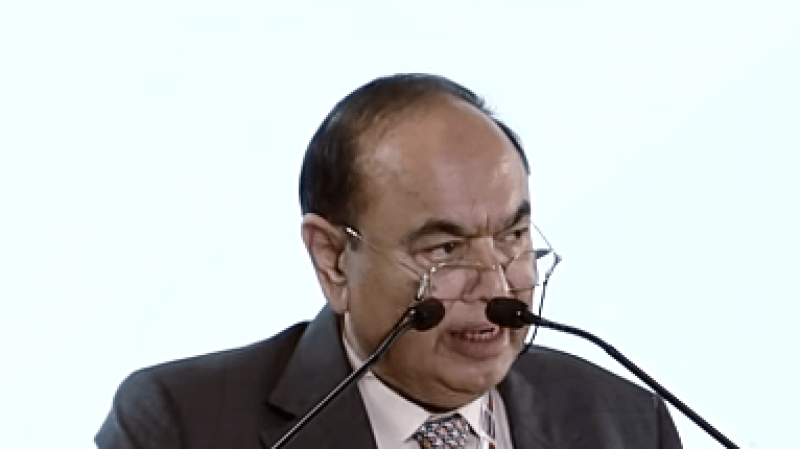
In a keynote speech at Entrepreneur 2026 summit, Nirmal K Minda, Chairman of Uno Minda, in, highlighted that the commerce is being reshaped by technological advancements, geopolitical realities, and Artificial Intelligence, and the change may seem daunting for entrepreneurs. The key, however, is keeping fundamentals of leadership constant even as business models may evolve.
“At Uno Minda, our own journey of more than six decades has reinforced this belief that fundamentals do not change, and many times we need to go back to basics and restart basics. Our vision for the company is to become a sustainable global organization that enhances value for all stakeholders, attains technology leadership, and cares for its people like a family,” Minda said.
He further shared six leadership lessons (technology, customers, people, self-reliance, building for long-term, and social responsibility to the nation) that will be critical for winning in India’s new economy and entrepreneurship journey.
First and foremost is ‘Technology Leadership’. According to Minda, companies have to continuously invest in technology, R&D, innovation, and talent, not only to keep pace with changing trends, but to stay ahead of them, creating a strategic advantage and a unique selling proposition (USP).
“At Uno Minda, we follow a simple philosophy: we must be willing to disrupt ourselves before the market disrupts us. Sometimes this means being willing to kill our own products and create something better, more efficient, and more valuable for the customer, even when the existing product is successful. Entrepreneurs who win the next decade will be technology-led, innovation-driven, and continuously willing to reinvent themselves,” he continued.
Next up is Customers. He reminded the entrepreneurs that customers remain supreme even though technology has become powerful. He also called for focusing on identifying and speedy resolution of customers’ problems.
The third important principle is ‘People’.
“We can buy technology, erect factories, and secure capital, but we cannot buy culture, passion, and ownership. In uncertain times, it is people who adapt, solve problems, and hold the culture together. If they have belongingness and ownership, they will outperform their capabilities. Building a company is not about building factories, offices, products, or technologies; it is about building people who can build a sustainable, next-generation company,” he said.
Minda also urged entrepreneurs to align with the government’s ‘Atmanirbhar’ (Self-reliance) calls.
Other two important principles, according to Minda, are ‘building for the long-term’ and ‘social responsibility for the nation’.
On building for the long-term, he said: “Do not build merely for the next funding round, next quarter, or next valuation, build for the next generation. That is the difference between building a business and building an institution. A business may revolve around a product, a market, or an individual. An institution is built on values, people, processes, systems, and a culture that outlasts individuals and business cycles.”
He noted that new companies may reward speed, but enduring companies are built with patience and perseverance. Balance speed in execution with patience in institution-building: move fast, but one must think long term.
“… Let me conclude with one thought: AI will transform industries, technology will alter business models, geopolitics will shift supply chains, and climate imperatives will change how we produce and consume. Yet, the fundamentals of leadership remain constant,” Minda said.
“For Indian entrepreneurs, the opportunity is not merely to build profitable businesses, but to help build Viksit Bharat 2047 and realize the Prime Minister’s vision of a $30-trillion economy, an India that is technologically advanced, economically strong, globally competitive, socially inclusive, and environmentally responsible. If Indian entrepreneurs combine innovation with values, technology with humanity, ambition with responsibility, and global competitiveness with national purpose, the next decade will be the most transformative in India’s economic journey,” he concluded.
Watch his full keynote speech below:
Follow our other coverage from Entrepreneur 2026 summit below:
Entrepreneur 2026: ‘The IPO is Just the Beginning’
Entrepreneur 2026: Swiggy’s Rohit Kapoor on Building for Next Gen Consumers in India
“… business models may change, but the fundamentals of leadership do not change…”
In a keynote speech at Entrepreneur 2026 summit, Nirmal K Minda, Chairman of Uno Minda, in, highlighted that the commerce is being reshaped by technological advancements, geopolitical realities, and Artificial Intelligence, and the change may seem daunting for entrepreneurs. The key, however, is keeping fundamentals of leadership constant even as business models may evolve.
“At Uno Minda, our own journey of more than six decades has reinforced this belief that fundamentals do not change, and many times we need to go back to basics and restart basics. Our vision for the company is to become a sustainable global organization that enhances value for all stakeholders, attains technology leadership, and cares for its people like a family,” Minda said.

Entrepreneur Staff • Editor
Entrepreneur Staff
For more than 30 years, Entrepreneur has set the course for success for millions of... Read more