Entrepreneur 2026: Swiggy’s Rohit Kapoor on Building for Next Gen Consumers in India
Kapoor pointed out key patterns that make the Gen Z and Gen Alpha different from the previous generations.
.
You're reading Entrepreneur India, an international franchise of Entrepreneur Media.
How should we think about what businesses to do in the future? How should one go about it, especially in consumer business wherein it’s hard to predict what will succeed in the next five years or 10 years?
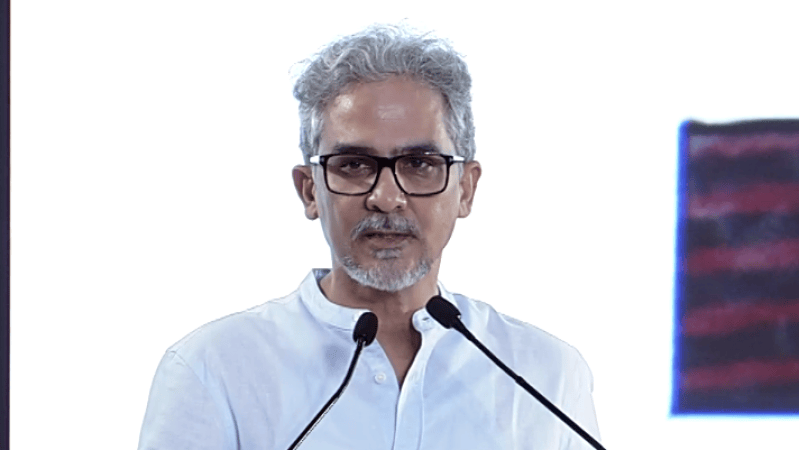
Swiggy CEO Rohit Kapoor opened his keynote at the recently held Entrepreneur Summit 2026 with these pertinent questions.
The mantra, according to Kapoor, is thinking about who will be the consumer with the largest wallet in the next few years. He said it was important to understand these sets of consumers in the present as it will pave the way for building business in a fashion that creates value over time.
Kapoor further elaborates this with modern consumer behaviours, especially Gen Z and Gen Alpha, who will be holding the largest wallets in the next five or seven years.
“They are in college, they come into the workforce, their income starts rising, and there comes a point where they start consuming a lot more,” Kapoor said.
He further explained that these two generations combined now account for nearly half of India’s population. “Gen Zs are close to 38 crore, and if you add Gen Alpha, it crosses 50% of India’s population. So, this is substantial, just in terms of sheer numbers,” he said
“And they’re very different. They… because every generation, you know, feels that the next generation is different. And I have a unique sort of ring-side view of both, because my son is a Gen Z and my daughter is a Gen Alpha. Even between them, they’re very, very different. The way they look at life, the way they think about things,” he continued.
Understanding the Next-gen Consumers
In his keynote, Kapoor pointed out key patterns that make the Gen Z and Gen Alpha different from the previous generations.
First, these consumers consider social media as their internet. Anything that matters to them, they will engage with platforms like WhatsApp, Snapchat, YouTube, and Instagram. So, businesses who are looking to reach them, they need to be present on these platforms.
Second, the phone has become their classroom. According to Kapoor, the classroom is teaching them probably 20-30% of what they know.
“They’re learning very, very little from their parents, right? It’s a surprising fact. We may not like it, but it is true, right? And they’re trusting the phone to be their school, university, and everything. So, if they want to find out, for example, as mundane a thing as which are the best highlighters available, you know what they’re likely to do? They’re likely to go on YouTube and search “the best highlighter video”,” he said.
“So, they are getting educated on everything there, and educated real-time on demand. It is not structured… they’re not looking at it as structured education, saying, “Oh, I’ll go deep into this topic.” They have a question, they want to find out something, they go to their social platforms, and the phone is everything for me,” he continued.
He also noted that their day starts later and goes onto late night. If businesses want to reach them, the prime time for these audiences is probably between 11pm and 1am.
Consumers’ pattern is quite different from the previous generations which were consuming information via conventional media like TV and FM Radio.
Empathetic & Smarter
Kapoor also highlighted that they (Gen Zs and Gen Alphas) are very deliberate with their money contrary to popular belief that they don’t value money the way the previous generations did. According to Swiggy CEO, these consumers are value-seeking as they tend to research offers before making a transaction. He also noted that Gen Alpha will be the first generation that is breaking past the scarcity mindset.
“They’re curious in theory and loyal… loyal in practice. Which simply means they research a lot, but when they like something, they tend to stick with it as a brand. But they research a lot. So, we may get the impression that they are not loyal, but they’re actually fairly loyal to brands they like, which are not the brands that we like, maybe. Which is different. Their loyalty is to a different set of brands,” Kapoor said.
The younger consumers are also quite vocal and open about how they feel. They are also now influencing their parents’ purchasing patterns for activities like going to restaurants or vacation.
“… 75% of the parents are letting the kids pick the restaurant, 75% when they go out. And some of you will resonate with it, where you’re saying the kid is literally deciding where to eat. This is the first generation with 55% of them say, ‘We have full freedom in our career choices from our parents’,” he said.
“This is the first generation which is probably truly close to their parents. 57% of surveyed said that they will first tell the secret to their mom and not their friends. Very different from Gen Z, actually, right? Where the parents are probably emerging as true friends. And remember, some of these parents are also just about coming out of being a Gen Z or a… they’re Millennials…” he continued.
Conclusion
Kapoor advises businesses to show up when these sets of customers are awake.
If you are sleeping, put an AI agent on at 11:00 PM, there’s no choice. They will engage when they will engage, not as per your rules. Be where they scroll. If you don’t show up in the feed, you’re irrelevant to them, right? They don’t know you. You can imagine that you’re doing marketing, this 50% of India doesn’t know you. Help them try the second option. They’re quite loyal. They want discovery, but they like loyalty. So, if you help them try, trials are very important. They don’t trust only by the brand or the words. They have to try either their friends have tried it or their elder sibling has tried it or they themselves try, so trials are very important,” he said.
“And lastly, anytime you’re thinking of where your buyer is a Millennial, especially in consumer businesses like travel, restaurant picking, etc. etc., talk to the kid because it is the kid who’s deciding, right? They’re not dazed, they’re not confused, they’re just early and they’re different,” he concluded.
Stay tuned for full keynote video.
How should we think about what businesses to do in the future? How should one go about it, especially in consumer business wherein it’s hard to predict what will succeed in the next five years or 10 years?
Swiggy CEO Rohit Kapoor opened his keynote at the recently held Entrepreneur Summit 2026 with these pertinent questions.
The mantra, according to Kapoor, is thinking about who will be the consumer with the largest wallet in the next few years. He said it was important to understand these sets of consumers in the present as it will pave the way for building business in a fashion that creates value over time.

Entrepreneur Staff • Editor
Entrepreneur Staff
For more than 30 years, Entrepreneur has set the course for success for millions of... Read more