BIS New Diamond Rule is a Reset, Not a Roadblock: LGD Brands
Lab-grown diamond brands say BIS’s clarification on diamond nomenclature brings long-needed transparency, reshaping how the category approaches trust, pricing, and brand-building rather than slowing growth
Opinions expressed by Entrepreneur contributors are their own.
You're reading Entrepreneur India, an international franchise of Entrepreneur Media.
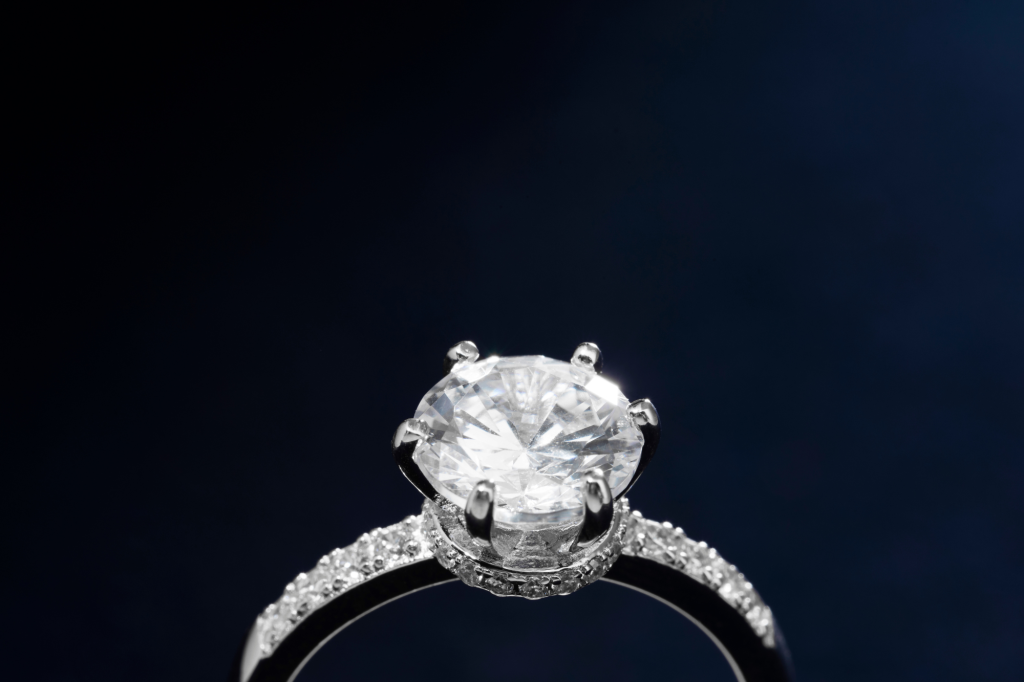
India has formally redrawn the regulatory boundaries of its diamond industry. Under a newly adopted Bureau of Indian Standards framework, the term “diamond” can now be used only for natural, mined stones, with lab-grown stones required to carry explicit labels such as “laboratory-grown diamonds”.
On the surface, the change appears terminological. In reality, it marks a structural inflection point for India’s fast-expanding lab-grown diamond (LGD) sector, forcing brands to articulate who they are without leaning on equivalence, ambiguity, or inherited narratives from natural diamonds. The shift is already reshaping how LGD brands think about value creation, consumer trust, pricing discipline, retail experience, and long-term brand ambition.
A Global Alignment
This move is not just limited to India. International regulators and industry bodies, including the US Federal Trade Commission and global standard-setters such as ISO and CIBJO, have long pushed for clearer, origin-specific nomenclature for lab-grown diamonds. BIS’s new rules align India with these global disclosure norms, placing transparency at the centre of category definition.
Yet domestically, the rule has reignited debates around legitimacy and identity, particularly as industry lobbyists attempt to frame “natural” as the only authentic diamond.
Pooja Madhavan, Founder & Managing Director of Limelight Diamonds, argues that this framing misrepresents the regulation’s intent. “The new clarity brought in by BIS is currently being mid-represented by industry lobbyists. BIS India has adopted the same initiatives that the US FTC had earlier introduced as part of its jewellery guidelines. Both bodies have, in a very unbiased approach, introduced guidelines that establish the true identity of the products,” she says.
Madhavan points out that both regulators define diamonds by material properties rather than origin, and that prohibiting terms such as “fake”, “artificial” or “synthetic” further strengthens the legitimacy of lab-grown stones. “This, in my view, is a big win for the category and will enable the sector to become more honest and transparent to the consumer,” she adds.
From Defensive Explanations to Confident Disclosure
For many LGD brands, explicit labelling is being interpreted less as a constraint and more as a necessary foundation for trust, particularly in a category still navigating consumer skepticism.
Namita Kothari, Founder at Akoirah by Augmont, describes the clarification as one that sharpens consumer understanding rather than diluting the category. “What it essentially does is reinforce that diamond remains diamond, but the source of the diamond must be clearly stated, whether it is natural or laboratory-grown. This distinction sharpens understanding rather than diminishing the category,” she says.
Kothari notes that clearer terminology allows brands to shift the conversation away from comparison and toward intrinsic value. “With clearer terminology in place, we can focus the conversation on craftsmanship, certification, and experience, rather than on comparisons,” she adds.
Ricky Vasandani, CEO & Co-founder, Solitario, sees explicit labelling as a credibility filter. “The real challenge for credible LGD brands isn’t competition from natural diamonds, but misinformation and undisclosed substitutes such as moissanite,” he says, adding, “Explicit labelling serves as an essential credibility filter.”
At Solitario, this has translated into mandatory independent certification from IGI or GIA, robust buyback policies, and retail spaces designed to educate rather than persuade. “We operationalize trust through radical transparency,” Vasandani adds.
The Shifting Centre of Diamonds
Contrary to fears of price compression, most LGD brands argue that regulatory clarity has stabilized pricing rather than disrupted it.
“At Limelight, this clarity strengthens our long-held belief that lab-grown diamonds are extremely relevant for fulfilling the diamond dream of every woman in India,” says Madhavan. She adds that the BIS move does not force a reset in pricing or margins. “The value will not lie in the commodity, but instead it gives all brands a level playing field to establish their edge & create value through design differentiation, craftsmanship and customer experience.”
Kothari echoes this sentiment, stressing that pricing is anchored in transparency rather than discount-led positioning. “Our pricing continues to be rooted in transparency and accessibility, not in positioning laboratory-grown diamonds as a discounted alternative,” she says.
Clearer categorization is also accelerating growth beyond traditional bridal segments. Vasandani notes that regulatory legitimacy has helped expand Solitario’s bridal presence while simultaneously driving everyday wear. “Accessible price points are driving the rise of ‘everyday luxury,’ shifting jewellery from being stored away to being worn and enjoyed daily,” he says.
Moving Past Manufacturing Logic
India’s lab-grown diamond sector has so far been shaped by its manufacturing and export strengths, a trend reflected in GJEPC trade data, which now tracks polished natural diamonds and LGDs separately. However, founders increasingly argue that manufacturing efficiency alone will not define the category’s future.
“If the industry competes purely on raw material pricing, it becomes a race to the bottom,” says Vasandani, adding, “For long-term sustainability, Indian LGD players must build strong consumer brands.”
Madhavan agrees, emphasizing that transparency must become a baseline rather than a differentiator. “India absolutely has the potential to build enduring lab-grown diamond consumer brands at scale, but only if brands move beyond a manufacturing- or price-led mindset,” she says.
Prajay Maganlal, CEO of Elevé Diamonds, views the BIS clarification as a necessary forcing mechanism. “It forces out lazy positioning and makes it harder to sell lab-grown diamonds through comparison alone,” he says, adding that margins are increasingly driven by brand strength, design sensibility and retail experience rather than stone pricing.
While the BIS rule may feel restrictive to some players in the short term, most LGD brands see it as a long-term enabler. By removing ambiguity, aligning India with global norms, and legitimizing the category, the regulation creates space for clearer positioning and deeper consumer trust.
India has formally redrawn the regulatory boundaries of its diamond industry. Under a newly adopted Bureau of Indian Standards framework, the term “diamond” can now be used only for natural, mined stones, with lab-grown stones required to carry explicit labels such as “laboratory-grown diamonds”.
On the surface, the change appears terminological. In reality, it marks a structural inflection point for India’s fast-expanding lab-grown diamond (LGD) sector, forcing brands to articulate who they are without leaning on equivalence, ambiguity, or inherited narratives from natural diamonds. The shift is already reshaping how LGD brands think about value creation, consumer trust, pricing discipline, retail experience, and long-term brand ambition.
A Global Alignment