From Imports to Innovation: How Uno Minda Is Reinventing
For Nirmal Kumar Minda, sustainability of business is not just about profits: it is about succession, talent, and building an institution that outlives its founder.
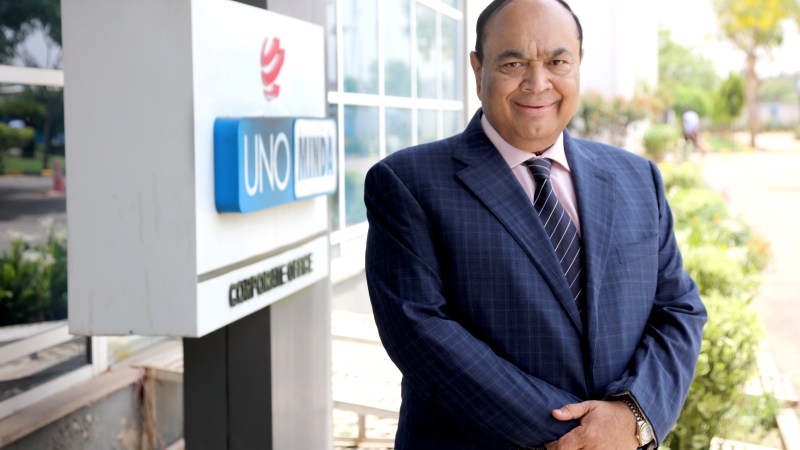
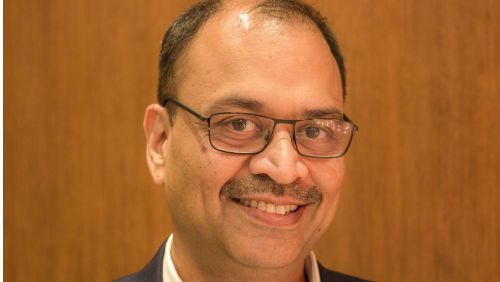
Nirmal Kumar Minda, Executive Chairman, Uno Minda Group
Opinions expressed by Entrepreneur contributors are their own.
You're reading Entrepreneur India, an international franchise of Entrepreneur Media.
“We need to kill our own product. The next product must be 20 per cent cheaper, better, and more valuable for the customer,” says Nirmal Kumar Minda, Executive Chairman, Uno Minda Group.
Minda’s journey is one of relentless reinvention.
At seventeen, he was thrust into the family business not by choice but by circumstance. What began as a modest aftermarket operation with a turnover of just INR seven lakh and 80 employees, over five decades, transformed into UNOMINDA – a global auto component giant – with 40,000 employees, 75 plants, and a market capitalization of INR 70,000 crore.
Today, UNOMINDA has 17 joint ventures and technical collaborations, supplying marquee names such as BMW, Harley-Davidson, and John Deere.
Uno Minda reported a strong Q4 FY26 performance with consolidated revenue of INR 5,336.4 crore, up 17.8 per cent year-on-year (YoY) and net profit jumping 22.4 per cent YoY to INR 325.8 crore.
Minda’s vision extends beyond scale. He has deliberately shifted UNO MINDA into a professionally run organization, stepping back as executive chairman and entrusting leadership to professional leaders.
For him, sustainability of business is not just about profits: it is about succession, talent, and building an institution that outlives its founder.
What’s ahead?
As the auto industry pivots to electrification, UNOMINDA has positioned itself as a frontrunner. Its portfolio spans across ICE and EV solutions, including EV controllers, ADAS systems, alloy wheels, chargers, motors, and infotainment. Expansion into Southeast Asia further cements its global ambitions.
“Our long-term and mid-term planning is always guided by a simple principle: we must grow faster than the industry. If the sector grows at one percent, our target is 1.5 per cent,” says the executive chairman.
In the auto component sector, it takes two to three years for a product to mature, and to get market share and achieve cost. “Currently, we are in the learning phase of some new product additions, once these mature, we expect around 14-15per cent market share. In the beginning, they were around 7-8 per cent EBITDA, but on average, we see that we get 11-12 per cent.”
UNO Minda is actively curating products with Gen Z in mind, recognizing them as the future drivers of demand. Gen Z’s preference for accessorizing vehicles—adding alloy wheels, cameras, chargers, and holders—has pushed the company to align with OEMs and introduce these features directly at the manufacturing stage. This trend has also boosted UNO Minda’s aftermarket business, which now contributes about INR 1,500 crore to its INR 25,000 crore revenue. The aftermarket is not only growing domestically but also expanding globally.
Imports, revenue mix, & EV Strategy
In terms of imports, the company’s dependency is minimal. Most mechanical components and pcb have been localized. The only significant reliance is on semiconductors, since domestic manufacturing is absent. Encouragingly, PCB imports have dropped to 30–40 per cent, with mounting and EMS now fully localized.
Across the portfolio, passenger vehicles have overtaken two-wheelers as the highest revenue generator. While two-wheelers still lead in volumes, premiumization in both segments is driving stronger kit values in passenger vehicles. Commercial vehicles and tractors remain smaller contributors, around 10 per cent each.
On the future front, the company is a front-runner in EV components, the focus is firmly on green mobility. Localization efforts in Pune and Khed, alongside acquisitions in Germany, strengthen the portfolio.
“Whatever product line we enter, our target is to secure at least 30 per cent market share. Anything less, and we risk irrelevance,” the executive chairman adds.
Geopolitical impact
India’s auto component industry is working to reduce its reliance on imports while expanding exports. Companies still import critical materials like semiconductors, rare earth magnets, metals, plastics, and PCBs, but their priority is to localize production through R&D, backward integration, and partnerships with MSMEs. Rare earth magnets remain a challenge due to China’s dominance, though India is exploring alternative technologies and mining support.
On the export front, recent trade deals with the US and EU have opened major opportunities. India’s cost advantage with labor, 10 to 15 times cheaper than in Western markets and energy costs falling, positions it as a strong supplier. Exports of seating, switches, alloy wheels, and more are already reaching global brands.
“The key focus now is maintaining world-class quality while leveraging India’s growing economy and favorable trade environment to expand in both US and European markets. We are exporting around INR 700 crore this year,” he adds.
Uno Minda is expanding its global footprint with exports becoming a key growth driver, supported by manufacturing plants in Indonesia, Vietnam, and Mexico.
The company’s early overseas expansion was driven by its ambition to become globally competitive and resilient. By entering high‑margin international markets, the company diversified revenues and strengthened its business model. Competing in mature economies like Europe and North America compelled Uno Minda to meet rigorous quality and technical standards, which in turn elevated its manufacturing and R&D capabilities across the board. This global exposure not only improved domestic operations but also prepared the company for future trends.
Tech advancements
India’s automotive and mobility ecosystem is undergoing rapid technology disruption. What begins in one sector often migrates to other areas, a cascading innovation cycle.
Every OEM has its own five-year technology roadmap, shaped by evolving environmental regulations and safety standards. By engaging deeply with these roadmaps, companies can align their own Technology Roadmap (TRM) and build a product pipeline that anticipates customer needs.
This alignment translates into workshops across engineering and manufacturing, benchmarking global best practices, and developing proof of concept (POC) prototypes with customers. A successful POC means the technology isn’t just validated; it’s ready to scale into sales.
“Technology is not innovation for its own sake. It must either reduce cost or enhance value, otherwise, it’s just disruption without direction,” says Minda.
Ultimately, R&D must deliver two outcomes: products that are more cost-competitive than their predecessors and features that are superior, safer, and more sustainable.
A bullish future
Partnerships are continuously evolving, with global players increasingly turning their attention to India. Markets in Europe, Japan, and the US are saturated, but Asia — and especially India — represents the future. With only about 44 cars per 1,000 people, compared to 150–200 in developing nations and 300–400 in mature economies, India’s potential is immense.
Free trade agreements and competitive tariffs further strengthen India’s position, making it a magnet for investment. Optimism runs high: while China produces 30 million cars annually, India can realistically target 25–30 million vehicles as part of the vision of a $35 trillion economy by 2047.
“We need to kill our own product. The next product must be 20 per cent cheaper, better, and more valuable for the customer,” says Nirmal Kumar Minda, Executive Chairman, Uno Minda Group.
Minda’s journey is one of relentless reinvention.
At seventeen, he was thrust into the family business not by choice but by circumstance. What began as a modest aftermarket operation with a turnover of just INR seven lakh and 80 employees, over five decades, transformed into UNOMINDA – a global auto component giant – with 40,000 employees, 75 plants, and a market capitalization of INR 70,000 crore.
Shrabona Ghosh • Former Senior Correspondent
Entrepreneur Staff
I write on corporates and lead a project called 'Corporate Innovations', wherein I cover large... Read more