Q3 FY2026: A Mix Bag For Auto OEMs
Looking ahead, over the next three months, PV industry should see a strong Feb–Mar run on the back of booking pipeline strength, new model/variant excitement, and financial year-end buying
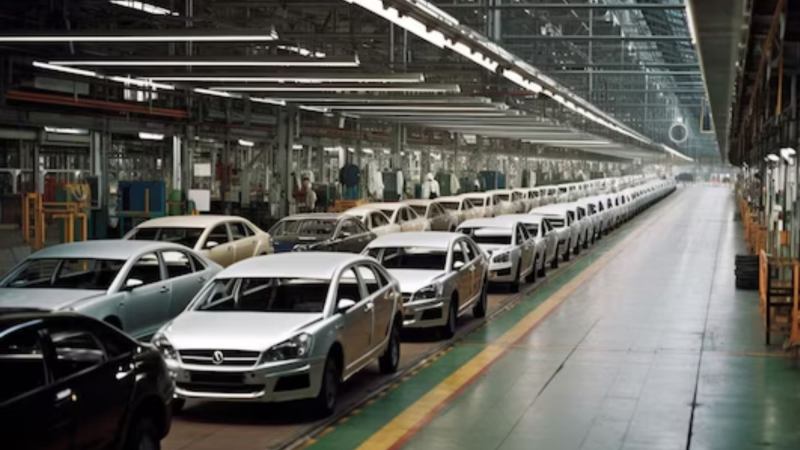
Source: Freepik
You're reading Entrepreneur India, an international franchise of Entrepreneur Media.
The GST 2.0 and festive tailwinds supported domestic demand, leading to India’s automobile industry recording a strong expansion in the October–December 2025 quarter of FY26.
Country’s biggest car maker, Maruti Suzuki India, saw a sharp recovery in the Indian car market in Q3, primarily led by the small car segment. The company achieved its highest-ever quarterly domestic sales of 564,669 units as compared to 466,993 units in Q3 the previous year, an increase of 97,676 units. Out of this increase, the small car segment in the 18 per cent GST bracket accounted for 68,328 units.
The company clocked record total sales of 667,769 units including exports of 103,100 units. In the same period last year, the total sales were at 566,213 units, comprising domestic sales of 466,993 units and exports of 99,220 units.
With this, the company registered its highest-ever quarterly net sales of INR 475,344 million, up from INR 368,020 million in the same period, a year ago. The net profit for the quarter stood at INR 37,940 million, compared to INR 36,593 million in Q3FY2024-25. Net Profit was impacted by a one-time provision of INR 5,939 million on account of the New Labour Codes.
Maruti Suzuki achieved monthly sales of 236,963 units in January 2026, a 12 per cent YoY growth from 212,251 units in January 2025. Total sales included 178,300 domestic units and 51,020 exports. The surge was driven by strong demand for UVs and a 50,000-unit milestone for the Victoris SUV.
Automaker Hyundai Motor India reported a 6.34 per cent increase in its consolidated profit after tax to INR 1,234.39 crore in the December quarter of the financial year 2025-26. The company’s revenue from operations grew 7.96 per cent to INR 17,973.48 crore in Q3 FY26, compared to INR 16,647.99 crore in the corresponding period of the previous year.
Tarun Garg, MD & CEO, said, “The third-quarter performance underscores our resilience and strong execution of ‘Quality of Growth’ strategy, marked by healthy growth in volumes, revenue and profitability. Notably, on a year-to-date basis, EBITDA margins expanded to 12.8 per cent as against 12.5 per cent last year, supported by our efforts towards improving sales mix and prudent cost control measures.”
Hyundai, recorded domestic sales at 59,107 units in January 2026, Creta emerged its best-selling model, “Reaffirming leadership, CRETA reclaimed its position as the number one SUV sold in India, achieving highest-ever annual sales of 200,000-plus units in CY2025. While it also topped the mid-size SUV segment,” the company said in a statement.
“As we move ahead, the robust January’26 sales number gives us great momentum towards a healthy 2026,” Garg added.
Mahindra & Mahindra reported third-quarter results for the period ended December 31, 2025, with consolidated profit after tax of INR 4,675 crore, up 47 per cent year-on-year. Consolidated revenue rose 26 per cent to INR 52,100 crore from INR 41,470 crore in Q3 FY25.
The auto segment posted consolidated revenue of INR 30,370 crore, up 30 per cent, and consolidated PAT of INR1,993 crore, up 42 per cent. The Farm equipment consolidated revenue was INR 11,501 crore, up 21 per cent, with consolidated PAT of INR 1,044 crore, up 7 per cent. Tractor volumes were 149,567 units, up 23 per cent.
Rajesh Jejurikar, Executive Director & CEO (Auto and Farm Sector), said, “Auto and Farm businesses delivered strong performance in Q3’FY26. We have achieved a 90 bps year-on-year (YoY) increase in SUV revenue share and 10 bps YoY increase in LCV market share in Q3. Our tractor business gained 20 bps YoY for YTD FY26. Our new launches XEV 9S, and the XUV 7XO have received very positive response in the market.”
Mahindra & Mahindra reported a strong start to 2026 with total auto sales of 104,309 vehicles in January, a 24 per cent YoY growth, driven by 63,510 SUV sales. Domestic utility vehicle (UV) sales grew 25 per cent YoY.
On the contrary, Tata Motors Passenger Vehicles (TMPV) reported a weak Q3 FY26, with a consolidated net loss of INR 3,486 crore and a 25.8 per cent YoY drop in revenue to INR 70,108 crore, largely impacted by Jaguar Land Rover (JLR) cyber incident headwinds.
Looking ahead, the company remains confident about the PV industry’s growth in light of positive demand momentum seen post GST 2.0. With product launches & interventions commencing deliveries in Q4 and a strong slate of upcoming launches, Tata Motors PV is well poised to accelerate its growth trajectory in FY27.
In January 2026, the company achieved total sales of 71,066 units (including EVs), a 47.1 per cent YoY growth from 48,316 units in January 2025. Domestic sales reached 70,222 units, driven by strong demand for the Nexon and Punch models.
According to Automobile Dealers Associations (FADA), in January 2026, passenger vehicles recorded 5,13,475 units (+7.22 per cent YoY). The mix remains urban-led at ~59.2 per cent, with rural at ~40.8 per cent; however, the growth story is increasingly being written in non-metro. India—Rural PV grew +14.43 per cent YoY, significantly ahead of Urban at +2.75 per cent YoY.
“This reinforces the structural expansion of PV demand beyond the top cities, aided by a strong SUV/compact-SUV preference, revival of entry level cars, product availability and continued schemes. Crucially, PV inventory levels continued to soften to ~32–34 days, which is a constructive indicator of healthier channel discipline and improved working-capital efficiency across the network,” said FADA in a statement.
Looking ahead, over the next three months, PV should see a strong Feb–Mar run on the back of booking pipeline strength, new model/variant excitement, and financial year-end buying (including depreciation-led decisions for some customer cohorts), “But April could normalise as festive intensity fades and base effects may play out unevenly across brands and regions.Overall next three months outlook hence remains optimistic,” the FADA statement added.
The GST 2.0 and festive tailwinds supported domestic demand, leading to India’s automobile industry recording a strong expansion in the October–December 2025 quarter of FY26.
Country’s biggest car maker, Maruti Suzuki India, saw a sharp recovery in the Indian car market in Q3, primarily led by the small car segment. The company achieved its highest-ever quarterly domestic sales of 564,669 units as compared to 466,993 units in Q3 the previous year, an increase of 97,676 units. Out of this increase, the small car segment in the 18 per cent GST bracket accounted for 68,328 units.
The company clocked record total sales of 667,769 units including exports of 103,100 units. In the same period last year, the total sales were at 566,213 units, comprising domestic sales of 466,993 units and exports of 99,220 units.

Entrepreneur Staff • Editor
Entrepreneur Staff
For more than 30 years, Entrepreneur has set the course for success for millions of... Read more