Budget 2026: Towards a More Selective, Infrastructure-Led Credit Cycle
Budget 2026 shifts focus from subsidies to infrastructure, but success will hinge on execution and last-mile credit delivery.
Opinions expressed by Entrepreneur contributors are their own.
You're reading Entrepreneur India, an international franchise of Entrepreneur Media.
India’s Union Budget in 2026 has continued to position financial infrastructure, MSME resilience, and agri-linked enterprise development as core pillars of medium-term growth, even as macro indicators point to a more selective credit environment.
MSMEs currently contribute close to 30 per cent of the country’s GDP, and employ more than 110 million, yet the sector remains underserved by formal financing. According to RBI data, MSME credit accounts for less than 18 per cent of total bank lending, which is largely dominated by big corporates. The renewed emphasis from Budget 2026 on credit guarantee mechanisms, liquidity support, and regulatory handholding reflects that capital access alone is not sufficient. True push forward is difficult without compliance aligning with the government’s broader push toward credit formalization, especially at a time when GST and e-invoicing deepen the data trails within the economy.
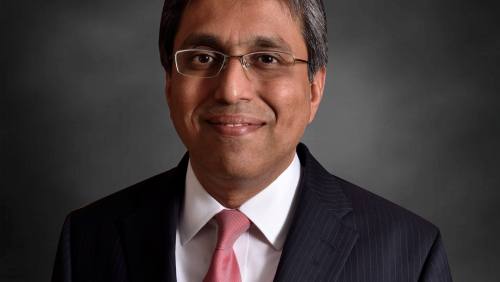
Amit Kumar, Director and CTO of Easebuzz, said, “Liquidity and credit guarantee support, as well as the introduction of corporate mitras to assist MSMEs in meeting compliance and other operational needs, demonstrate a holistic approach to enterprise development. In the digital and fintech sectors, these reforms represent the increasing importance of having transparent and technology-enabled transaction infrastructure to promote MSME resilience, formalisation, and sustainable growth.”
Digital public infrastructure (DPI) remains the connective tissue with platforms like UPI, which processed over 130 billion transactions in FY25, reshaping retail payments and lowering onboarding costs for fintech-led inclusion. However, while payments have scaled rapidly, fintech penetration in credit, insurance, and wealth management remains uneven, particularly beyond Tier I and II cities.
Sameer Mathur, Md and Founder of Roinet Solution, said that while the Budget maintains continuity in strengthening India’s digital public infrastructure, there is scope for greater clarity on the roadmap for fintech’s next phase of evolution, particularly across lending, wealth creation, and insurance, which are critical to advancing financial inclusion.
“Enhanced policy support for players building infrastructure to expand reach in smaller towns and underserved segments could further improve last-mile access. Greater emphasis on resource allocation towards education and MSME development would also contribute to long-term economic resilience. Improving access to affordable credit for MSMEs and easing operational complexities remain important priorities, especially as bank lending continues to be more skewed towards larger corporations. A more integrated policy approach could help fintech play a stronger role in enabling inclusive and sustainable growth,” said Mathur.
Agriculture-linked fintech and commerce platforms are also gaining policy visibility. With over 85 per cent of Indian farmers classified as limited and marginal, timely access to advisory services, markets, and working capital remains a constraint.
Initiatives integrating AgriStack, AI-led advisories, and multilingual delivery could materially improve farm-level decision-making, especially when combined with women-led enterprise programmes such as Lakhpati Didi, which already covers over 10 million households.
Anand Chandra, Co-founder, Executive Director of Ayra.ag, said that Bharat-VISTAAR allows agri-advisory to be more intelligent, timely, and accessible at the farmgate. By integrating AI with AgriStack and ICAR advisories in multiple languages, it can support better decisions on crops, inputs, and markets, especially for smallholder and first-generation women farmers.
“The Rural Women-Led Enterprises initiative, building on the Lakhpati Didi programme, takes this further by enabling the shift from subsistence livelihoods to ownership. In our experience, such enterprises succeed when they are deeply embedded in local agri-value chains, with access to working capital, market linkages, and autonomy over key decisions.”
“Many women-led groups are already leading the adoption of sustainable and climate-resilient practices. Strengthening them through enterprise support will generate both economic and environmental dividends. The Budget lays strong groundwork; execution will depend on how these initiatives reach real farms, in real time,” said Chandra.
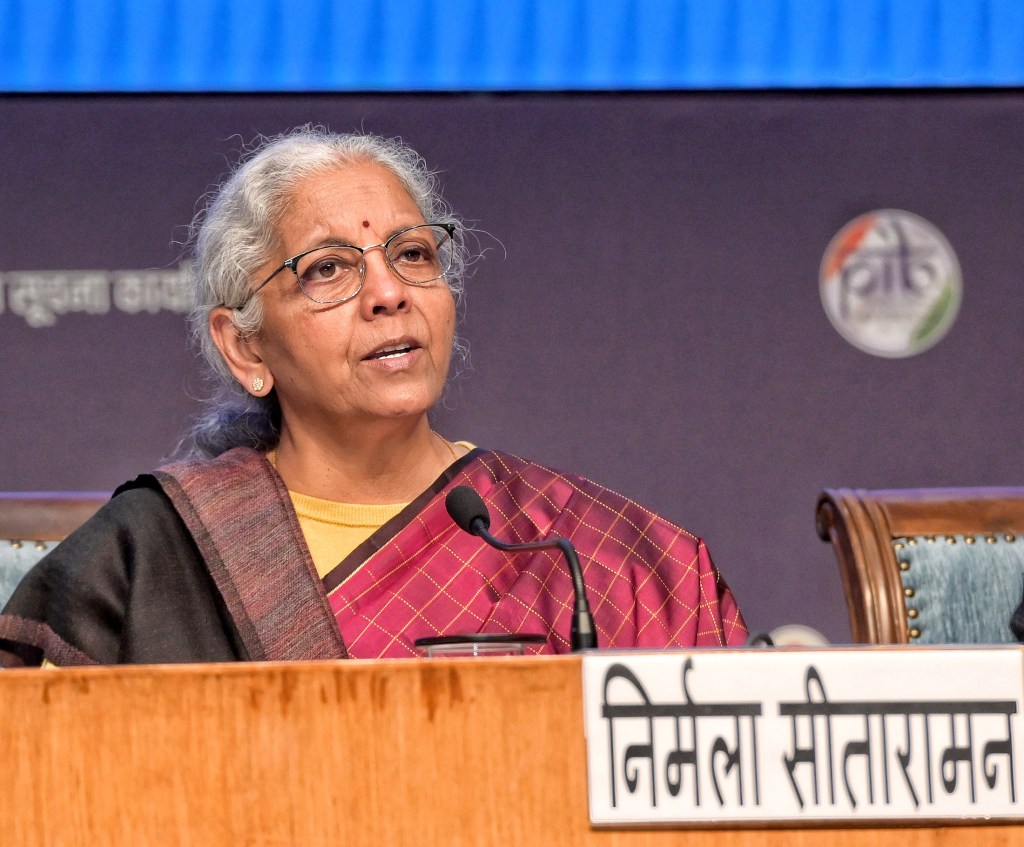
During the Budget 2026 speech, Finance Minister Nirmala Sitharaman proposed to set up a “high-level banking sector committee”, signalling the government’s acknowledgement that incremental reforms may not be enough.
While banks’ gross non-performing assets (NPAs) have fallen to multi-year lows of around 3 per cent, future risks will increasingly stem from data governance, AI-led credit models, and cyber resilience, rather than legacy balance sheet stress alone.
Amit Das, Founder and CEO at Think360.ai, said that the proposal to set up a high-level committee on the banking sector is a signal that India recognises the next decade will not be solved by incremental reform. “The future of banking reform is inseparable from data governance and technology architecture. Without rethinking how banks manage data, consent, risk signals, and AI decision-making, policy intent will struggle to translate into outcomes.”
“Committees are useful only if they move beyond structural reviews and address system-level questions – how banks compete with fintechs, how supervision adapts to AI-driven credit, and how trust is preserved in a fully digital financial system. India doesn’t suffer from a lack of reform ideas; it suffers from reform fatigue at the execution layer. The committee’s real test will be whether it simplifies the system rather than adding another layer of complexity,” said Das.
Taken together, experts opine that the proposals made during the Budget speech prioritize infrastructure over subsites. However, the real determinant of success will be its execution and how effectively these translate into last-mile credit access and a banking system capable enough to support a more distributed economy.
India’s Union Budget in 2026 has continued to position financial infrastructure, MSME resilience, and agri-linked enterprise development as core pillars of medium-term growth, even as macro indicators point to a more selective credit environment.
MSMEs currently contribute close to 30 per cent of the country’s GDP, and employ more than 110 million, yet the sector remains underserved by formal financing. According to RBI data, MSME credit accounts for less than 18 per cent of total bank lending, which is largely dominated by big corporates. The renewed emphasis from Budget 2026 on credit guarantee mechanisms, liquidity support, and regulatory handholding reflects that capital access alone is not sufficient. True push forward is difficult without compliance aligning with the government’s broader push toward credit formalization, especially at a time when GST and e-invoicing deepen the data trails within the economy.
Amit Kumar, Director and CTO of Easebuzz, said, “Liquidity and credit guarantee support, as well as the introduction of corporate mitras to assist MSMEs in meeting compliance and other operational needs, demonstrate a holistic approach to enterprise development. In the digital and fintech sectors, these reforms represent the increasing importance of having transparent and technology-enabled transaction infrastructure to promote MSME resilience, formalisation, and sustainable growth.”

Prince Kariappa • Features Content Writer
Entrepreneur Staff