After an "enthusiastic" post-pandemic capital cycle, venture investors and founders alike have recalibrated expectations, shifting focus from rapid scale to resilient business models.
GST collections have remained robust, and the decline in the October Consumer Price Index is supposed to provide the Reserve Bank of India (RBI) with a bit of wiggle room for potential rate cuts - a move that could accelerate capex spending and consumption-led growth.
According to a joint October investments report by EY & IVCA, October 2025 recorded a USD 5.3 billion in PE/VC investments, with a 9 per cent y-o-y increase from USD 4.9 billion in October. The number of deals, however, decreased to 102, a 9 per cent drop y-o-y and a 14 per cent decline month-on-month, with 145 deals in September 2025.
According to the report, the third quarter recorded USD 11.7 billion in PE/VC investments, which was 20 per cent higher than its corresponding quarter in 2024, but 5 per cent lower than Q2 of 2025. The number of deals, however, was 11 per cent higher year-over-year (Y-o-Y), totaling 369 deals versus 331 in the third quarter of 2024.
He pointed out that India's real entrepreneurial engine lies in its small and medium businesses, with the MSME sector having 67 million entrepreneurs producing 6–7 per cent of GDP.
According to its press release, the consortium will have a target corpus of INR 1000 Crore, which is an INR 500 crore plus a green-shoe option of INR 500 crore.
The Bain India VC Report 2025 highlights a shift: venture funding jumped to USD 13.7 billion in 2024, a 1.4 times increase over the previous year, while deal volumes grew 45 per cent. Yet, nearly all of that growth came from small- and mid-ticket deals, with mega-rounds slowing sharply, a sign that investors are tightening standards.
Deal volumes also saw a strong uptick. VC/PE growth deals rose from 880 in 2023 to about 1,270 in 2024. Meanwhile, PE's share of investment value tilted more toward buyouts: buyout or majority control deals made up 51 per cent of total PE deal value in 2024, up from around 37 per cent in 2022.
According to Roadzen, the financing values the India subsidiary, which contributes less than 60 per cent of consolidated revenues, at approximately INR 740 crores (USD 84 million) pre-money, representing close to 25 per cent premium to the company's current Nasdaq market capitalization.
India's private capital markets have witnessed a shifting landscape in 2025, with both venture capital (VC) and private equity (PE) showing diverging momentum compared to the same period last year. Data from January to August 19, 2025, from Tracxn highlights both cautious deployment and sectoral rebalancing across the ecosystem.
Approved in principle earlier this June, SEBI has cleared a framework to let Cat-I/II AIFs launch a Co-Investment scheme (CIV) inside the AIF structure, instead of using a separate portfolio management service (PMS), available to accredited investors in that AIF. Each co-investment will be a separate CIV scheme with some relaxed requirements.
India's private equity (PE) and venture capital (VC) investment landscape in 2025 reflects a market navigating both macroeconomic headwinds and sectoral realignments: In the first half of the year, PE/VC investments totaled USD 26.4 billion across 593 deals, according to the latest data from the EY-IVCA Mid-Year Report.
As venture funding tightens, founders are increasingly tapping grants, venture debt, and revenue-based financing to extend their runway without giving up ownership
Private equity and venture capital (PE/VC) investments in India declined by 53 per cent in May 2025 compared to April 2025 in value terms, according to an EY-IVCA report.
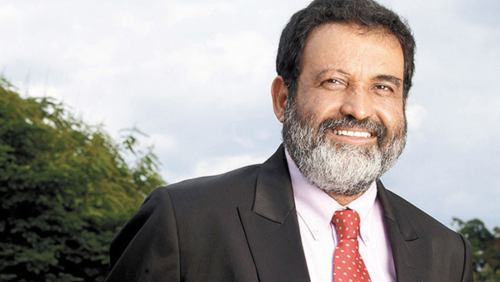
Restrictive regulations of the government have resulted in inadequate domestic capital for the Indian startup ecosystem, said Mohandas Pai, Chairman at Aarin Capital, who called for reforms in policy and better investments to drive the ecosystem in an interview with PTI.
PE investments remained steady at USD 29 billion, as funds contended with higher valuations driven by buoyant public markets. Furthermore, India became the Asia-Pacific region's second-largest PE-VC destination with a 20 per cent share of total investment, displaying growing investor confidence in the country's macroeconomic stability.
According to the report, PE/VC investments in Q1 2025 were also recorded 14 per cent lower than in Q1 2024 (US$13.7 billion in 1Q2025 versus US$15.9 billion in 1Q2024 and US$14 billion in 4Q2024).
The growth was primarily driven by a USD 1 billion investment in Erisha E mobility by an undisclosed investor based in of UAE and made up for 89 per cent of the total PE activity for the first quarter of 2025.
The outlook further stated that the early days of 2025 have shown promising momentum, with PE/VC investments in India surging by 37 per cent month-on-month in January. This marks a slight dip compared to the same period in 2024, but the sequential uptick from December 2024, "notwithstanding the spike in uncertainty on geopolitics" and aggressive changes by the US trade policies, is said to be encouraging.
General Atlantic and KKR are among 4-5 private equity firms vying for a majority stake in the Faridabad-based hospital chain, Asian Institute of Medical Sciences (AIMS), according to informed sources. The potential deal is expected to value the 1,200-bed hospital chain, which focuses on North and East India, at ₹1,500 crore.
The investment is aimed at financing business growth and also results in the two parties now entering an agreement where Arpwood enjoys a majority stake at Sitara.