As the Union Budget 2026 approaches, expectations are building across India’s financial services and startup ecosystem for policy signals that go beyond headline allocations.
Overall, the Union Budget 2025 lays out a progressive and strategic vision for India's economic growth, balancing immediate fiscal responsibility with long-term development goals. Business leaders across industries have largely welcomed these initiatives, acknowledging their potential to drive inclusive and sustainable growth
Union Budget 2025 has put a heightened focus on new-age technology and fintech alongside other areas, which has gathered a positive response from the venture capital (VC) community.
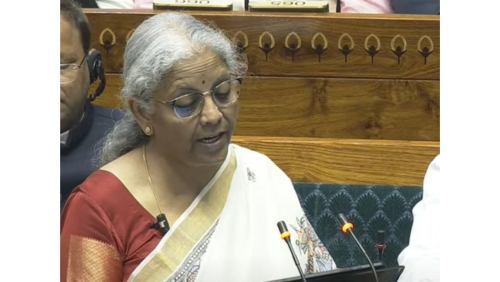
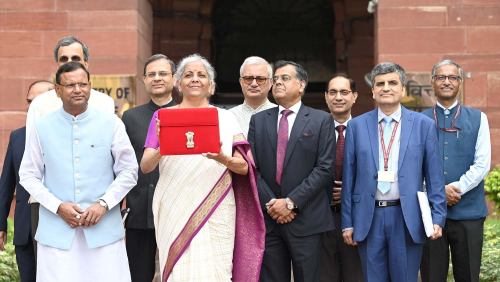
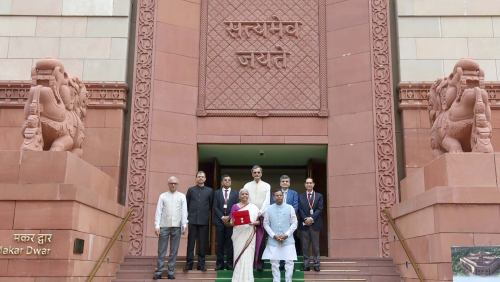
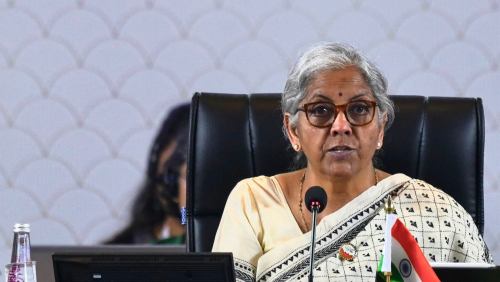
Nirmala Sitharaman, the Union finance minister announced today, the introduction of a new 'Fund of Funds' for startups with a fresh contribution of INR 10,000 crore.
With the nation's ambition to reach a $5 trillion economy and achieve the long-term vision of Viksit Bharat by 2047, the government's budgetary priorities will play a crucial role in shaping the country's economic trajectory.
Although India maintains its position as one of the biggest economies in the world, GDP growth has recently plummeted to a 7-quarter low of 5.4 per cent in the second quarter of FY25.
Representing nearly 30 per cent of India's GDP and employing over 110 million people, the MSME sector is a cornerstone of the Indian economy. As India aspires to become a $5 trillion economy, empowering its MSME sector will be critical in realizing this ambitious vision.
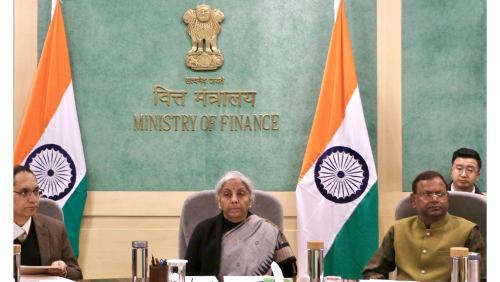
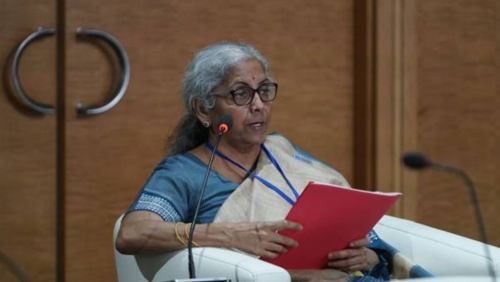
The finance minister recently held a pre-budget consultation with representatives of trade unions, with regards to the preparation of the union budget, with the meeting focused on understanding the opinions of trade unions in relation to the upcoming budget.
C S Setty, Chairman of SBI, replaces Dinesh Khara, while Uday Kotak, veteran banker and director at Kotak Mahindra Bank, takes over from T V Mohandas Pai.
The INR 100 crore credit guarantee scheme is expected to serve as a vital catalyst for MSME growth and resilience by enabling businesses to secure financing without traditional barriers. Industry experts agree that this program has the potential to unlock new avenues of opportunity for MSMEs, encouraging entrepreneurship, fostering local manufacturing, and contributing to the nation's export ecosystem.
GCCs, primarily driven by multinational corporations, have seen rapid growth in India, with nearly 56 per cent of their revenue now coming from research and development (R&D) services.
Much rejoicing was seen in the startup community and especially among the industry leaders from the 'Funds' side of things, as the Indian Central Government abolished what was known as 'Angel Tax' in a historic budget announcement led by Finance Minister Nirmala Sitharaman.
Finance Minister Nirmala Sitharaman announced the Budget for 2024, giving a significant boost to MSMEs through a self-financing guarantee fund providing coverage of up to INR 100 crore per applicant
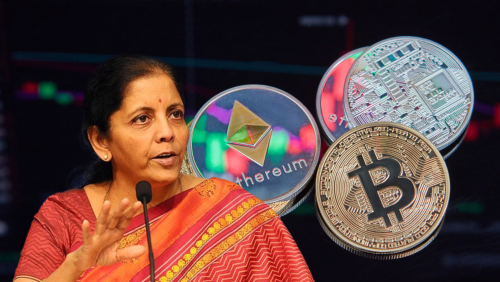
The harsh treatment of 30 per cent tax on profit and one per cent VDA coupled with India's decision to not yet ban the currency has left many in a fix. So, what does the coming times mean for crypto players in India
The approval came after three years of announcement as part of the Covid relief package, which will enable domestic companies to access foreign funds by listing their shares on various exchanges overseas
Cautioning investors against ponzi apps, Sitharaman said investors should do their due diligence and should not be lured by claims of lucrative returns made by them
The minister further emphasized the importance of healthy competition, which has led to India becoming the world's largest milk producer and argued that the focus should be on strengthening India in every aspect, rather than creating political issues around the dairy industry
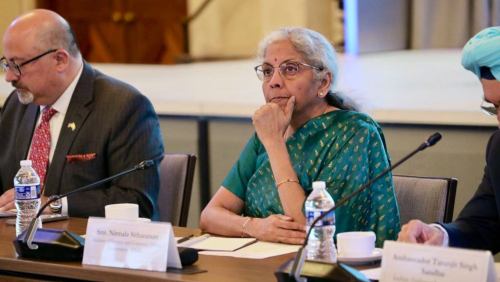
The minister further noted that there was consensus among G20 members to have a globally coordinated policy response on crypto assets that takes into consideration the full range of risks, including those specific to emerging markets and developing economies
According to the finance minister, G20 is trying to bring together all countries to address debt distress in middle-income and low-income nations like Sri Lanka and Ghana