Why WhatsApp’s New Username Feature Has Raised Eyebrows
Experts warn that even as the username system helps improve privacy for legitimate users, it also increases discoverability for attackers.

pixabay
Opinions expressed by Entrepreneur contributors are their own.
You're reading Entrepreneur India, an international franchise of Entrepreneur Media.
WhatsApp keeps rolling out new features now and then. Most of them gel fluidly with the overall app experience and users embrace them gradually without batting an eye. Can the same be said about the upcoming feature – usernames?
WhatsApp has formally introduced a new feature which allows users to connect with each other using a username and without sharing phone numbers.
“When someone new walks into your life – a classmate, a neighbor, someone you meet at an event – sharing a phone number can feel like a big step. That’s because a phone number is personal and it’s tied to so many parts of your life. Sometimes you just want to chat without handing over your digits. This is also true for group conversations. You want to join the parent chat for the soccer team but you’re not ready to give your phone number to people you’ve never met. That’s why we’re introducing usernames for WhatsApp,” said the company in a blog post.
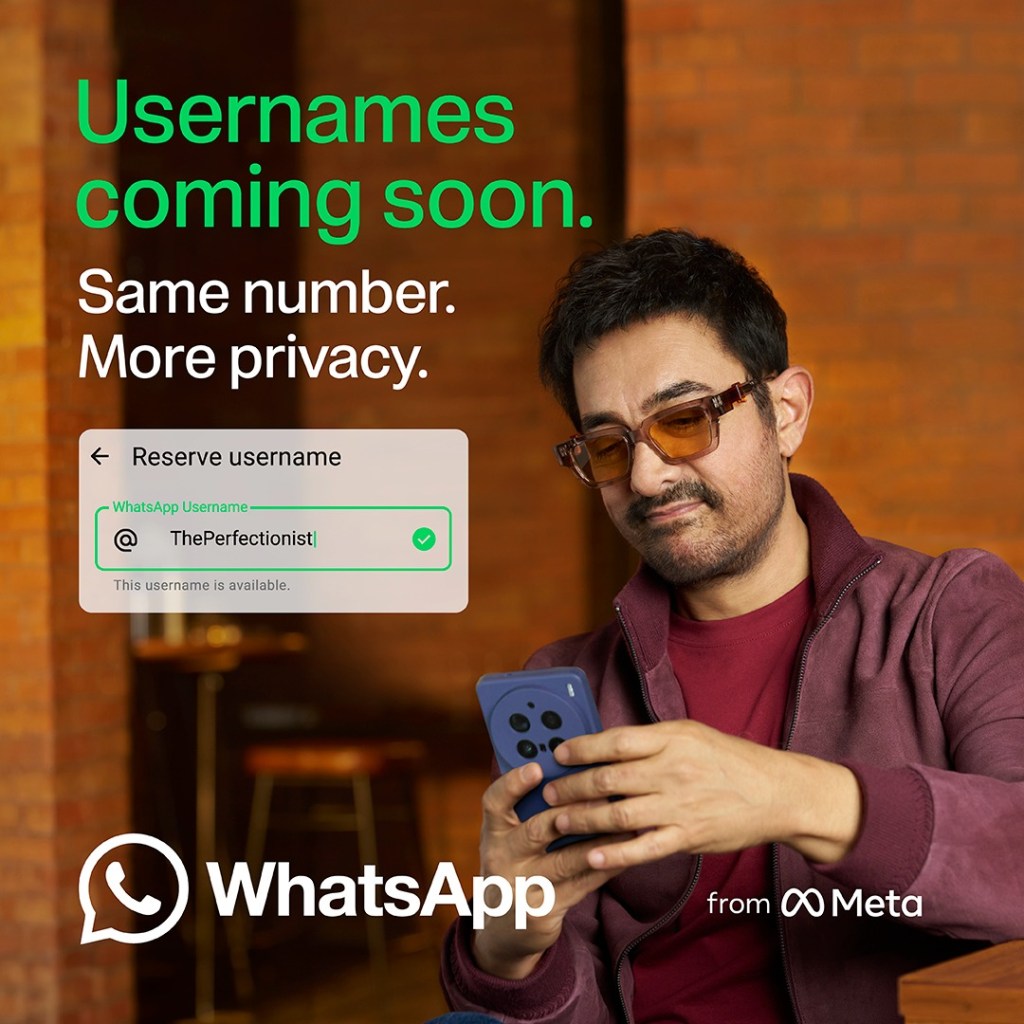
Starting this week, one can reserve a username to use later this year when the company officially rolls out the feature. As it implies, users can select something unique that only people you want to contact you will know. There’s a username generator to provide suggestions as well.
For creators, small businesses, and organizations—who wish to maintain a consistent presence online—WhatsApp has given an option to claim their existing Instagram or Facebook username on WhatsApp.
Source: WhatsApp
Inviting trouble
WhatsApp is used by nearly 3 billion people around the world. And India, as expected, is the largest market for WhatsApp in terms of user base.
WhatsApp, however, has also become a hot destination for spam and scamsters. According to a report in December last year, WhatsApp itself banned an average of 9.8 million Indian accounts every month until October 2025, citing policy violations.
Many have warned that the upcoming feature could further increase these risks, with ‘usernames’ bringing anonymity. They have also raised concerns around impersonations.
Ankur Warikoo in a post explained that such a feature could be a disaster given there are no anti-abuse systems in place.
“Imagine receiving a message from warikoo / awarikoo / ankurwarikooo / ankur_warikoo / a_warikoo / ankurwarikooofficial etc etc – soliciting money. 1. Most people don’t understand verified status (even if and when it is launched) 2. Cannot be verified through calling the phone number (because username = privacy),” he said.
“I have fought a legal case against Meta’s lack of attempt to bring down AI-generated ads showing my face, luring people into investment WhatsApp groups. I understand how massive this scam is and how easy it is in our country to execute it,” Warikoo added, noting the feature raises some serious concerns.
Speaking to Entrepreneur India, cybersecurity expert Santhosh Kumar said: “In apps like Telegram, there are already OSINT tools and bots that track username history. For example: They can show previous usernames used by an account, sometimes show name changes and timestamps, and some bots even store “top old usernames” or history snapshots.”
“So even if users change usernames, a digital trace may still exist outside the app, especially if scraped before. Username gives privacy when needed. It could be useful when traveling or talking without sharing a phone number. After a conversation, the user can change the username for privacy again.”
Prateek Bhajanka, CEO at Field CISO Advisory and former Gartner analyst, notes that in the current implementation, beyond the username, the identity can be verified with the phone number if a random impersonator message drops in.
In the absence of phone numbers, in the proposed implementation, instant verification will become a tough task. It is very easy to impersonate names, especially with the use of similar-looking Unicode characters.
“In the latest announcements it doesn’t appear that WhatsApp will do away with using mobile numbers as a base to have a whatsapp account that will at least not fuel the number of fraudsters joining the platform more than usual,” Bhajanka added.
Kumar highlights the paradox created by the username. Even as the username system helps improve privacy for legitimate users, it also increases discoverability for attackers. Consequently, increased discoverability naturally will lead to a higher risk of unsolicited spam.
Experts say that WhatsApp should come up with some rating system for usernames from Green to Red based on certain factors such as how often you change your username, how often you are blocked and reported by others, whether the usernames use keywords which are commonly used to defraud people, etc.
Telegram-like
Just recently, the Indian government temporarily banned the popular instant messaging service in a bid to prevent cheating and fraud during the re-examinations of NEET-UG. Authorities discovered several scams trying to sell “leaked” papers on the platform.
Telegram too has the feature to hide contacts and show usernames instead.
“This would lead to greater scrutiny and often blocking of the platform by the government as had happened in the case of telegram over the NEET examinations 2026. Any challenge to the action of the government blocking the platform under the garb of proportionality reasonability, and public order, would unlikely succeed. The Hon’ble Delhi High Court in the Telegram case affirmed the proportionality which was being used to block the app calling as necessary to and minimum to attain the objective for which the app was temporarily banned i .e., ensuring integrity of the NEET examinations,” Abhishek Anthwal, data privacy and tech lawyer, told Entrepreneur India.
Anthwal further said that in order to avoid the constant scrutiny of the government and the risk of being shut under section 69(A) of the Information Technology Act, 2000, read along with the Information Technology (Procedure and Safeguards for Blocking for Access to Information by Public) Rules, 2009, there is an increased likelihood that end-to-end encryption would take a hit.
“One of the arguments by the government on blocking Telegram was in fact that concealment of user identity, self-destructing messages lead to greater chance of misuse of the platform. The argument found a favour before the court and the temporary ban on Telegram was upheld by the High Court of Delhi,” he added.
Eyes on Kunal Shah
This is probably the first major product announcement since Kunal Shah’s anointment as the new WhatsApp chief. Shah will succeed Will Cathcart, who has led the instant messaging platform since 2019.
Cathcart is known for expanding WhatsApp’s purview from one-to-one chats to businesses, and adding elements like Communities, allowing businesses to better manage and organize their groups. Recently, WhatsApp also added a few AI features.
Under Shah, however, eyes will be on how he leverages his experience in building products like FreeCharge and Cred. Shah is also an investor in several Indian startups.
There are also expectations that WhatsApp may see more fintech-related features and services in the future to further monetize the instant messaging platform. It remains to be seen how Shah manoeuvres the global regulatory challenges, including in India.
WhatsApp keeps rolling out new features now and then. Most of them gel fluidly with the overall app experience and users embrace them gradually without batting an eye. Can the same be said about the upcoming feature – usernames?
WhatsApp has formally introduced a new feature which allows users to connect with each other using a username and without sharing phone numbers.
“When someone new walks into your life – a classmate, a neighbor, someone you meet at an event – sharing a phone number can feel like a big step. That’s because a phone number is personal and it’s tied to so many parts of your life. Sometimes you just want to chat without handing over your digits. This is also true for group conversations. You want to join the parent chat for the soccer team but you’re not ready to give your phone number to people you’ve never met. That’s why we’re introducing usernames for WhatsApp,” said the company in a blog post.