Apple Turns 50: Iconic Moments That Defined The Tech Giant
We look back at the iconic moments in Apple’s glorious 50-year history.
You're reading Entrepreneur India, an international franchise of Entrepreneur Media.
Apple is turning 50 on April 1.
Its journey and evolution since its founding days in a garage to now nearly USD 3.6 trillion market capitalization mirror the evolution of technology itself.
For the current generation, iPhones may be the easiest reference points for the brand ‘Apple’. When Steve Jobs, Apple’s iconic founder, unveiled the first iPhone way back in 2007, smartphones were typically unwieldy, expensive and aimed at a niche segment of working professionals and businessmen. Since then, Apple has sold more than 3.1 billion iPhones, generating nearly USD 2.3 trillion in revenue, according to Counterpoint Research.
While the iPhone remains synonymous with Apple, the tech behemoth’s journey has been quite colourful – something that has inspired several books, documentaries, and films. And the cult of Apple is incomplete without Jobs who was under the spotlight during the most eventful phases of the company.
We look back at the most iconic moments of the company that put computers in the pockets of people everywhere.
Garage to global powerhouse
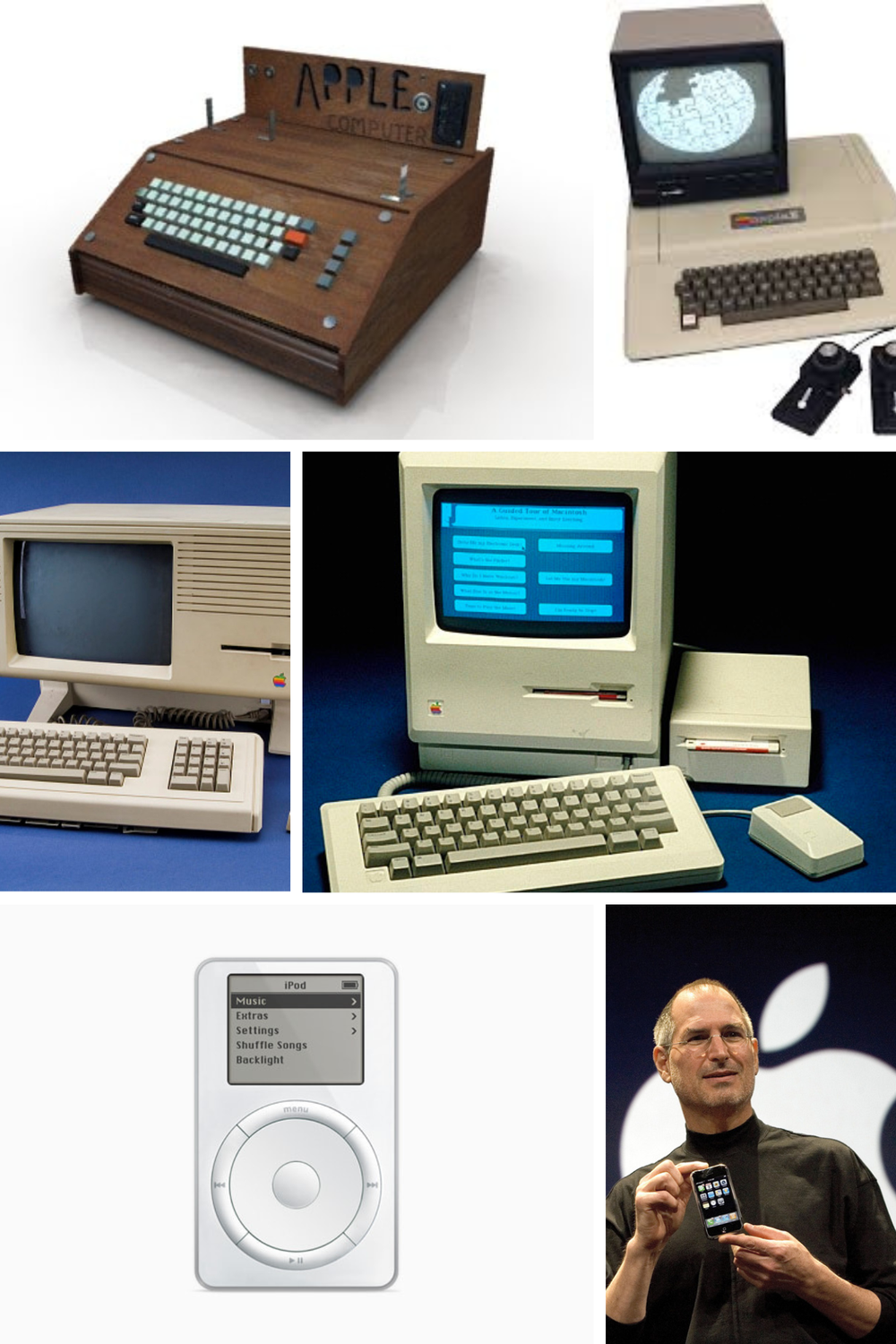
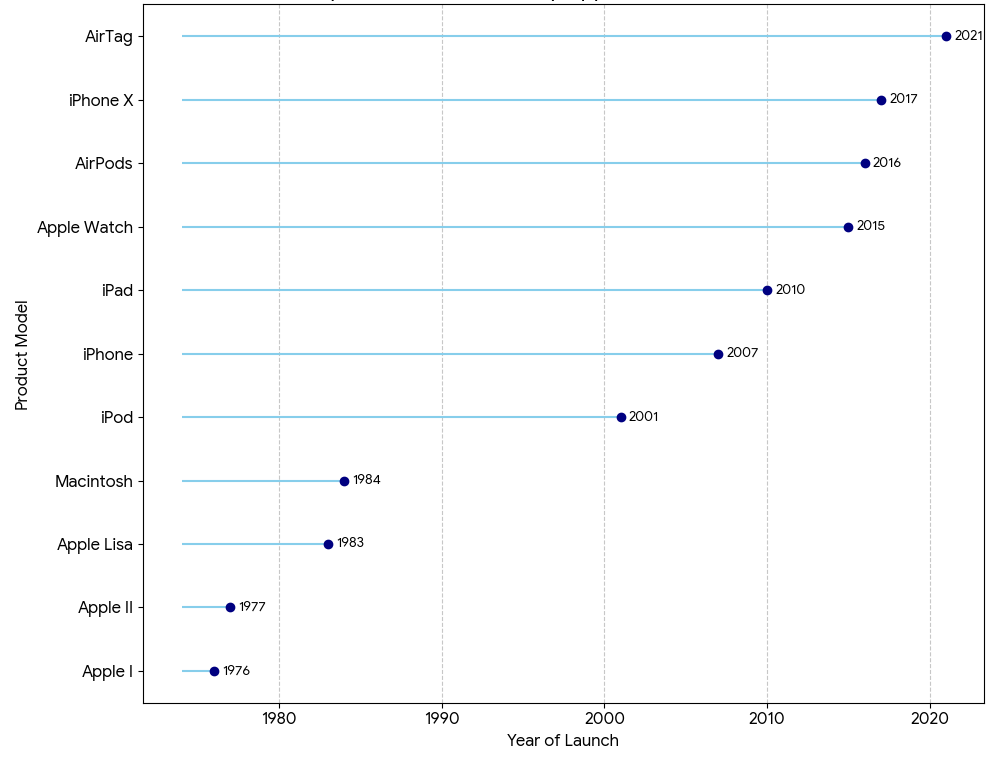
Steve Jobs, Steve Wozniak, and Ronald Wayne formed a partnership to officially start the company on April 1, 1976. Working out of a garage, the first generation Apple was developed by Wozniak, and was merely a circuit board without a typical casing, though users needed to connect a TV and a keyboard to use.
While Jobs and Wozniak knew each other before starting Apple, Wayne joined as a cofounder in exchange for a 10% stake. Interestingly, Wayne exited Apple in less than two weeks by selling his 10% shares back to Jobs and Wozniak for mere USD 800. Given today’s valuation of the company, the stake would have been in three digit USD billion.
Apple tasted first success with Apple II which came with a refined design and other improvements like graphics plastic case and keyboard, making it a complete package. The Apple II laid the foundation for the following generations of Apple computers.
Apple IPO
Even as Apple had become fairly commercially successful, it also wanted to showcase that it’s also a well governed company, which led to the company launching its IPO. Apple went public on December 12, 1980 at USD 22.00 per share. And it was quite historic too.
Valued at USD 1.77 billion, the company sold nearly 4.6 million shares, and was said to be the largest IPO since Ford in 1956. The market debut created 40 millionnaires among employees. Jobs’ net worth blew up to USD 217 million.
However, this was also the beginning of turbulent days at Apple.
Here’s what Morgan Stanely writes about the Apple IPO:
“On December 12, 1980, Apple Computer debuted at $22 a share. The stock closed that day at $29, giving 25-year-old Jobs a net worth of $217 million. Apple would go on to become the first public company to achieve a $1 trillion market cap. The path to that historic milestone wasn’t smooth, however, as Jobs would also be forced out of the company after a power struggle in 1985, returning to the CEO spot in 1997. For Wadsworth, the most transformative aspect of that deal was seeing how co-manager Hambrecht & Quist was compensated. It prompted Wadsworth to think about creating a whole new business line.”
Steve Jobs’ Exit
In the following years, Apple continued to come up with newer machines, including Lisa as well as Macintosh. Different iterations of these machines came with several groundbreaking features including the introduction of a graphic user interface. The company, however, faced stiff competition too, especially from IBM.
By 1985, the company saw a power struggle between Jobs and then CEO John Sculley. Interestingly, Sculley was Jobs’ hire. The power struggle led to the departure of Jobs, who went on to start a new venture called NeXT Computer.
“I feel like somebody just punched me in the stomach and knocked all my wind out. I’m only 30 years old and I want to have a chance to continue creating things. I know I’ve got at least one more great computer in me. And Apple is not going to give me a chance to do that,” Jobs wrote to Mike Markkula on his departure.
While Scully managed to salvage Apple’s fortunes during the time, he had to step down a decade later following a board revolt triggered by poor financial conditions and margins of the company.
“Sculley took on the task of running Apple in 1983 at an earlier crossroad, when the company needed stable leadership after its headline-grabbing start-up phase. The company has grown apace since then–from $600 million in annual sales to $8 billion.
He and co-founder Steve Jobs–whose vision of the easy-to-use Macintosh computer accounts for most of the company’s success–had a cozy partnership until 1985, when Sculley pushed Jobs out in a bitter power battle,” LA Times reported in 1993 on Sculley’s departure.
Iconic Apple products
The 90s
Even as Apple continued to exist in the market with fairly large market capitalization, it did see a strong competition from rivals for its different product portfolios. And eventually, the company had begun facing a severe financial crisis, nearing bankruptcy even, and losing ground to Microsoft-based PCs. During this crisis, it was widely deemed that Apple was no longer driven by innovation, offered nothing ground-breaking, and even suffered from poor management. Apple, however, did make a comeback, courtesy Jobs and Microsoft.
Jobs’ return: Apple’s supremacy
Steve Jobs made a comeback to the company in 1997. Starting out as an interim CEO after the departure of Gil Amelio, Jobs was quick to restructure the company. He eventually became the CEO in 2000. Jobs’ return brought the revolutionary iPhone which marked a significant departure from the conventional handsets of the time. Products like the iPod were a huge hit commercially.
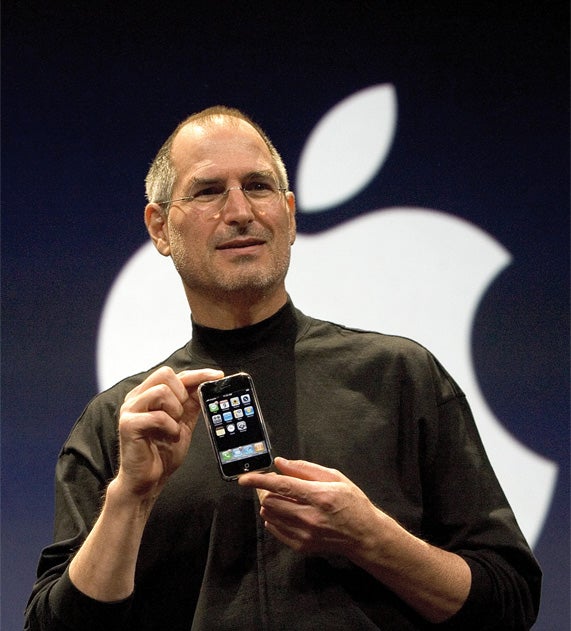
Steve Jobs introduced the original iPhone on January 9, 2007.
In the meanwhile, Jobs also got a lending hand from Gates, also considered his nemesis. In August of 1997, Gates stepped in to invest USD 150 million, eventually helping Apple avert a major crisis.
When Jobs passed away in 2011, here’s what Gates had written: “Steve and I first met nearly 30 years ago, and have been colleagues, competitors and friends over the course of more than half our lives. The world rarely sees someone who has had the profound impact Steve has had, the effects of which will be felt for many generations to come. For those of us lucky enough to get to work with him, it’s been an insanely great honor. I will miss Steve immensely.”
Cook Era
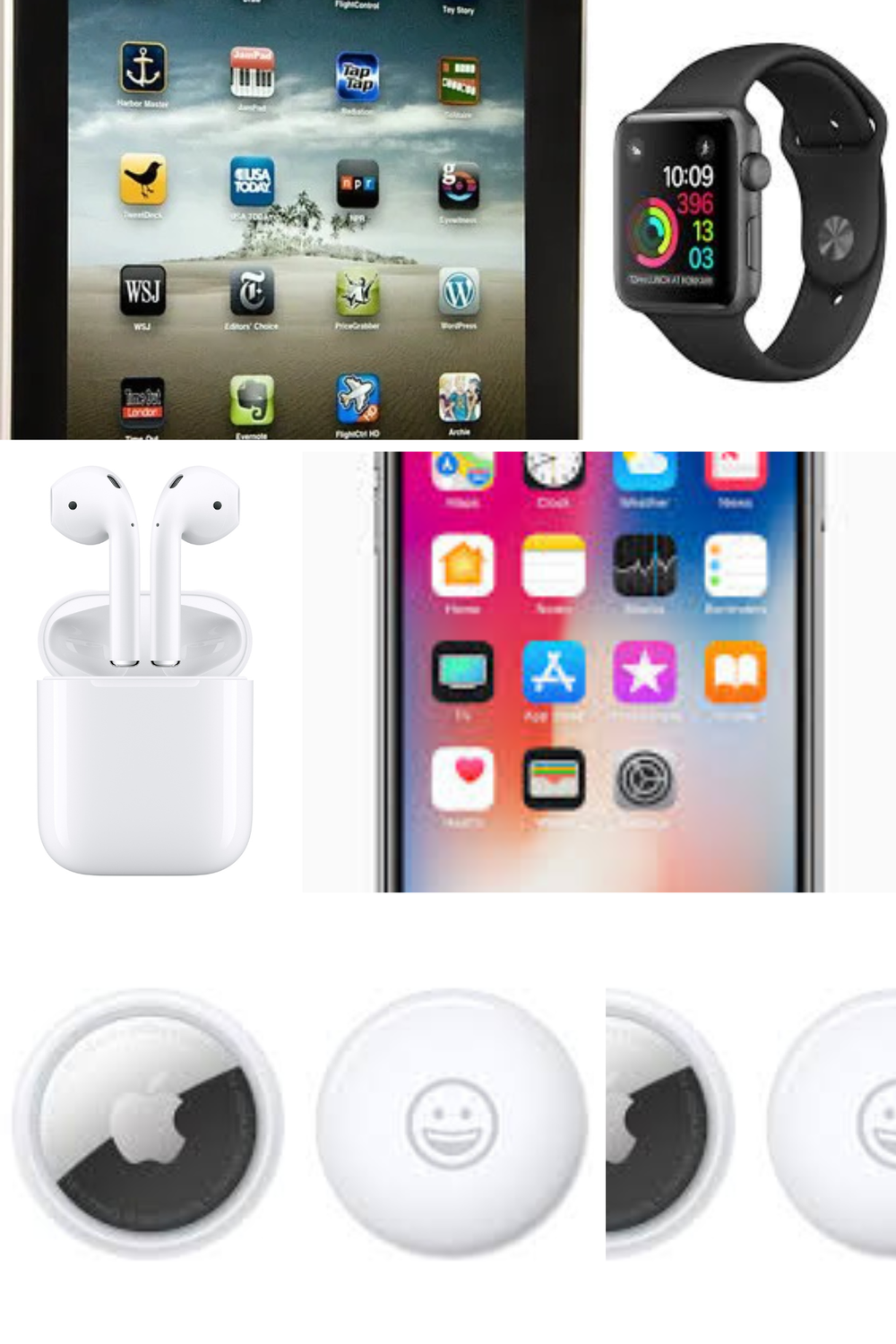
Even as Jobs’ death was a big blow to Apple and its loyalists, successor Tim Cook has handled the company pretty well, taking the company to the market cap of nearly USD 4 trillion. While hardware remained the forefront of Apple’s portfolio, the Cook era also saw the company expanding its revenue in services such as music streaming and app store. The company also diversified its product lineup to include Apple Watch and AirPods, both of which have remained commercially successful.
As of December 2025, Apple posted quarterly revenue of USD 143.8 billion, up 16 percent year over year. Diluted earnings per share was USD 2.84, up 19 percent year over year.
“Today, Apple is proud to report a remarkable, record-breaking quarter, with revenue of $143.8 billion, up 16 percent from a year ago and well above our expectations,” said Tim Cook, Apple’s CEO. “iPhone had its best-ever quarter driven by unprecedented demand, with all-time records across every geographic segment, and Services also achieved an all-time revenue record, up 14 percent from a year ago. We are also excited to announce that our installed base now has more than 2.5 billion active devices, which is a testament to incredible customer satisfaction for the very best products and services in the world.”
Misses & Dawn of AI
After half a century, Apple has gone through multiple ups and downs. Even as it’s one of the largest tech companies in the world, it had its own share of product failures, starting with Lisa. Devices like iPhone 5C (2013) and Apple Pipin (1997) were among the big misses. Though, the cult of Apple has been a remarkable feat in modern history. The company, however, is now facing a big challenge in the form of AI. Despite being the benchsetter in many categories, Apple has surprisingly lagged behind the likes of Google and newbies like OpenAI in AI. The company clearly knows this. Earlier this year, Apple and Google entered into a multi-year collaboration under which the next generation of Apple Foundation Models will be based on Google’s Gemini models and cloud technology. These models will help power future Apple Intelligence features, including a more personalized Siri coming this year.
Technology has fast evolved since the debut of Apple 1. And the last 50 years have seen Apple playing a pivotal role in some capacity. It’s worth watching out how Apple continues to take the lead in the coming era.
Apple is turning 50 on April 1.
Its journey and evolution since its founding days in a garage to now nearly USD 3.6 trillion market capitalization mirror the evolution of technology itself.
For the current generation, iPhones may be the easiest reference points for the brand ‘Apple’. When Steve Jobs, Apple’s iconic founder, unveiled the first iPhone way back in 2007, smartphones were typically unwieldy, expensive and aimed at a niche segment of working professionals and businessmen. Since then, Apple has sold more than 3.1 billion iPhones, generating nearly USD 2.3 trillion in revenue, according to Counterpoint Research.

Entrepreneur Staff • Editor
Entrepreneur Staff
For more than 30 years, Entrepreneur has set the course for success for millions of... Read more