Supporting Technologies That are Solving Pressing Global Problems
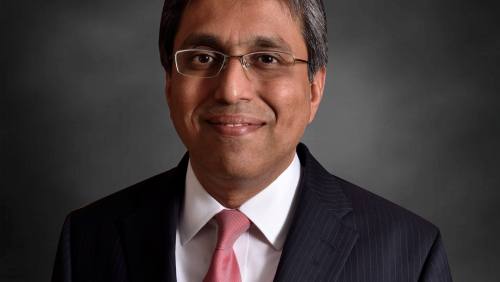
According to Vishesh Rajaram, Managing Partner of Speciale Invest, “We prefer to be the first institutional VC investor in the startup and preferably lead the round.”
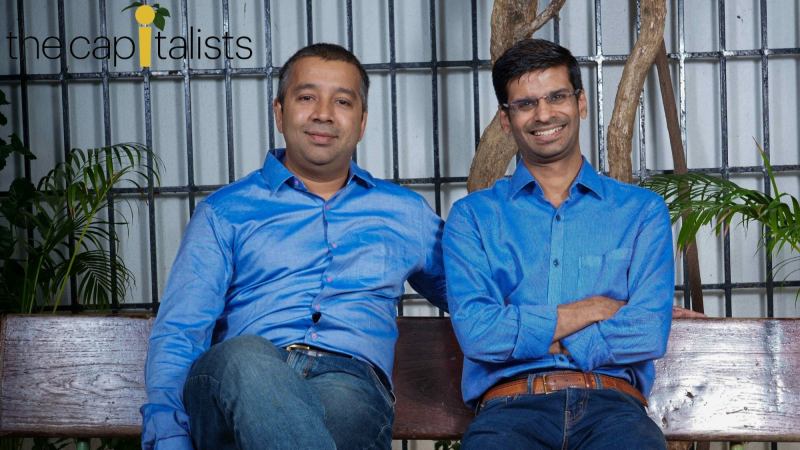
Vishesh Rajaram, Managing Partner & Arjun Rao, General Partner - Speciale Invest
This story appears in the July 2018 issue of Entrepreneur India. Subscribe »
You're reading Entrepreneur India, an international franchise of Entrepreneur Media.
Early-stage venture capital firm Speciale Invest, which has its headquarters in Chennai, said that it will maintain its commitment to advancing solutions that are addressing urgent global issues.
“We have industries like climate-tech, batteries, semiconductors, and biotech on our radar thanks to a combination of government push, global urgency, enormous market for disruption, etc. According to Vishesh Rajaram, Managing Partner of Speciale Invest, “We prefer to be the first institutional VC investor in the startup and preferably lead the round.”
“As usual, we are willing to invest if the proper opportunity arises. Rajaram stated, “Companies with strong technological moats, straightforward business models, sensible unit economics, and clear paths to profitability would be most desired for investments.”
When asked about their recommendations for their portfolio during the cash crunch, Rajaram indicated they typically advise cutting back on initiatives like new product development, product iterations/optimizations, etc. that might not be urgent for the business in the near future. Startups occasionally may have to part ways with their staff as well.
Rajaram said, “We encourage founders to focus exclusively on those activities with the remaining capital that make significant technological and commercial progress, thereby reducing risk and increasing the odds of success and raising more capital.”
According to Rajaram, unit economics and profitability are the north star for any business because these are elements that support growth. In startups, the path to achieving these might be riddled with greater risks. Investors would seek out a clear road to achieve profitability, with mapped-out goals for the product and company.
“For firms who are out of money in this environment, internal/external bridge rounds may be a smart stop-gap measure. In the short run, VCs would prefer to protect and sustain their current portfolios than make new investments,” Rajaram highlighted.
Stats:
No of Startups Invested in: 34 (since inception)
No of Exists: 5 (since inception)
Focus Sectors: Spacetech, EVs, Robotics, Climatetech, Semiconductors, Materials, 3D Printing, Biotechnology, Synthetic Biology, Quantum technology etc.
Ticket Size: USD 500,000 – USD 1 million
Early-stage venture capital firm Speciale Invest, which has its headquarters in Chennai, said that it will maintain its commitment to advancing solutions that are addressing urgent global issues.
“We have industries like climate-tech, batteries, semiconductors, and biotech on our radar thanks to a combination of government push, global urgency, enormous market for disruption, etc. According to Vishesh Rajaram, Managing Partner of Speciale Invest, “We prefer to be the first institutional VC investor in the startup and preferably lead the round.”
“As usual, we are willing to invest if the proper opportunity arises. Rajaram stated, “Companies with strong technological moats, straightforward business models, sensible unit economics, and clear paths to profitability would be most desired for investments.”

Sujata Sangwan • Former Sr. Correspondent
Sujata is an engineering graduate and has done her Post Graduation in Human Resource Management.... Read more