Prime Minister Addresses Lok Sabha on West Asia Crisis, Says “Continuous Work Has Been Done”
Government has been trying to ensure that the supply of petrol, diesel and gas is not affected much and common families of the country face minimum inconvenience: PM
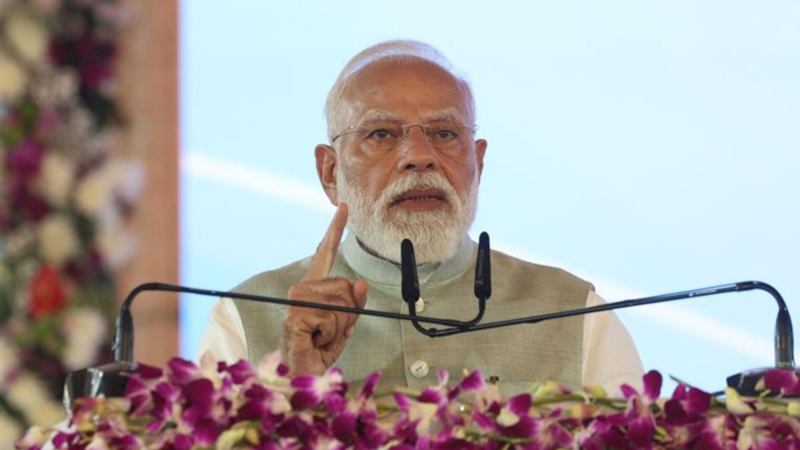
Prime Minister Narendra Modi
You're reading Entrepreneur India, an international franchise of Entrepreneur Media.
Prime Minister Narendra Modi today addressed the Lok Sabha on the ongoing conflict in West Asia and the wide-ranging challenges it has posed for Inddreia. Adssing the broader economic ramifications, the Prime Minister acknowledged that energy is the backbone of the modern economy and West Asia is a major source for global energy needs, making the current crisis a challenge for economies worldwide.
Elaborating on the nature of the challenges confronting India, the Prime Minister pointed out that the war has created unprecedented economic, national security, and humanitarian pressures.
Energy supply
Addressing the critical question of energy supply, the Prime Minister acknowledged that large quantities of crude oil, gas, fertilizers, and other essentials reach India through the Strait of Hormuz, and that shipping through the Strait has become highly challenging since the war.
Modi said, “Continuous work has been done to ensure that the supply of petrol and diesel continues smoothly across the entire country.”
The Prime Minister underscored how the energy diversification strategy pursued over the past decade has proven its worth in the current crisis. He informed the House that India has expanded its energy import sources from 27 countries to 41 countries over the past 11 years, thereby reducing dependence on any single region.
On the subject of strategic reserves, the Prime Minister noted that India has prioritized the stockpiling of crude oil for precisely such times of crisis. He informed the House that India today possesses a Strategic Petroleum Reserve of more than 53 lakh metric tonnes, with work underway to build reserves exceeding 65 lakh metric tonnes, in addition to the separate reserves held by oil companies.
The Prime Minister detailed the government’s active engagement with global suppliers and its vigilant monitoring of Gulf shipping routes to ensure the safe passage of ships carrying oil, gas, fertilizers, and other essential goods to India.
Noting the continuous dialogue with all global partners to keep maritime corridors secure, “Several of our ships that were stuck in the Strait of Hormuz have also arrived in India in recent days.” he added.
He informed the House that the government is working with a comprehensive short-term, medium-term, and long-term strategy, supported by strong economic fundamentals, sector-specific stakeholder consultations, and a dedicated inter-ministerial group.
Addressing the challenge of rising summer electricity demand amid the ongoing war, the Prime Minister informed the House that adequate coal stocks are available at all power plants across the country and that India has set a record of producing 100 crore tonnes of coal for the second consecutive year.
On India’s diplomatic response to the West Asia conflict, the Prime Minister stated, “India, through diplomacy, is making continuous efforts for the safe passage of Indian ships even amidst the war environment.”
Evacuation efforts
Drawing attention to the nearly one crore Indians who live and work in Gulf countries, as well as the significant number of Indian crew members aboard commercial ships, the Prime Minister asserted, “India’s concerns are naturally greater, and therefore it is essential that a united and unanimous voice goes out to the world from India’s Parliament on this crisis.”
The Prime Minister further detailed the consular and institutional support framework activated for Indians abroad. He noted that all Indian missions in the affected countries are continuously providing help, issuing regular advisories. Highlighting the scale of the evacuation effort, the Prime Minister informed the House that more than 3,75,000 Indians have safely returned to India since the war began, including approximately 1,000 Indians from Iran alone.
A large quantity of essential items such as crude oil, gas, and fertilizers come to India through the Strait of Hormuz, since the war began, the movement of ships through the Strait of Hormuz has become highly challenging.
“Despite this, our government has been trying to ensure that the supply of petrol, diesel and gas is not affected much and common families of the country face minimum inconvenience, this has been our focus,” said Modi.
Prime Minister Narendra Modi today addressed the Lok Sabha on the ongoing conflict in West Asia and the wide-ranging challenges it has posed for Inddreia. Adssing the broader economic ramifications, the Prime Minister acknowledged that energy is the backbone of the modern economy and West Asia is a major source for global energy needs, making the current crisis a challenge for economies worldwide.
Elaborating on the nature of the challenges confronting India, the Prime Minister pointed out that the war has created unprecedented economic, national security, and humanitarian pressures.
Energy supply