Leading Through Change: Why the CEO Must Be the Chief Storyteller
Nivea India’s Geetika Mehta and McVitie’s India’s Mohit Dutta discuss brand storytelling, legacy, innovation, localisation and leadership at Entrepreneur 2026.
You're reading Entrepreneur India, an international franchise of Entrepreneur Media.
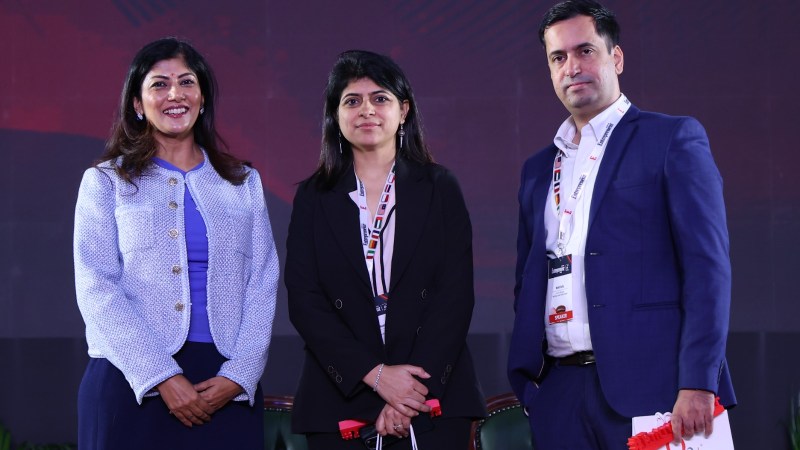
Carrying a century-old brand into a market full of new-age challengers means reimagining the story without diluting the product, according to leaders speaking at a panel discussion on “Leading Through Change: The CEO as Chief Storyteller” at the Entrepreneur 2026. Sharing their views were Geetika Mehta, Managing Director, Nivea India, and Mohit Dutta, Country Manager, McVities India, pladis Global. The session was moderated by Preetima Bhardwaj, CEO, Entrepreneur India & APAC.
Opening the session, the Preetima observed that “every CEO inherits a business strategy, but we also inherit a business narrative,” and asked what story leaders want consumers, employees and the market to believe about where their company is going.
Commenting on which Geetika said Nivea’s blue tin carries wonderful memories, but also the challenge that for today’s generation “it is my mother’s brand.” The job, she said, is to carry the quality and equity of the past while introducing new things. Asked whether one narrative can serve every stakeholder, she said the message must differ for each audience: employees hear a growth narrative about how big Nivea can be in India, while consumers care about the newest innovation. “I think the authenticity comes from what is common.” The common thread, she added, is great quality and no shortcuts.
Mohit, who manages a brand with a close to 180-year-old legacy known for its red wrapper, agreed that legacy can make a brand “a little boring” and that the narrative must be adjusted as consumer needs evolve. Being global gives a baseline of credibility, he said, but three things require shutting the global playbook: the Indian taste palette, the complex route to market and the value-seeking consumer, which demands the right price pack architecture.
On balancing short-term pressure with long-term building, Mohit said current cost pressures cannot build a five-year plan. He named three areas that should never be cut: route-to-market expansion, R&D and innovation, and the brand. Geetika added that being privately held means no quarterly shareholder guidance to meet, which allows a short-term hit for long-term gain, such as a big capex investment. The pressure to deliver numbers day in and day out, she said, remains.
When asked how transparent a CEO should be when the business is not growing, Mohit said leadership is tested in tough times and calls for “visible leadership”: addressing “the elephant in the room,” owning up to mistakes and then laying out the future path with a role for every team member.
On localisation, Geetika clarified that Nivea is not trying to localise: the product in Germany, Thailand, Brazil and India is the same. Innovations such as a turmeric face wash and Nivea cream in a gel format for tropical conditions adapt the offering without diluting the core formulation. Mohit said India has taught global teams about value architecture and quick commerce, while global teams have taught India uncompromising quality guardrails, even as a butter jeera biscuit variant remains hard to explain to headquarters.
On regulation, Geetika likened it to a brake that lets you accelerate, noting that among some 200 sunscreen brands, not all use the right filters or test properly.
When asked whether a CEO needs to make better decisions or give people a reason to believe in them, Mohit said decision-making is increasingly becoming a collaborative effort between humans and AI, while the human role lies in building trust and conviction. “AI can tell you facts. It can put up P&L. It cannot build a shared vision.” Geetika added that as skills become increasingly replicable, people remain the only true differentiator.
Looking to 2030, Geetika said agility will matter more and “grandstanding leaders” less, with fewer layers between leaders and teams. According to Mohit, success will depend on creating an environment where employees look forward to Monday, and leaders who do not keep upgrading their skills will become irrelevant.
Carrying a century-old brand into a market full of new-age challengers means reimagining the story without diluting the product, according to leaders speaking at a panel discussion on “Leading Through Change: The CEO as Chief Storyteller” at the Entrepreneur 2026. Sharing their views were Geetika Mehta, Managing Director, Nivea India, and Mohit Dutta, Country Manager, McVities India, pladis Global. The session was moderated by Preetima Bhardwaj, CEO, Entrepreneur India & APAC.
Opening the session, the Preetima observed that “every CEO inherits a business strategy, but we also inherit a business narrative,” and asked what story leaders want consumers, employees and the market to believe about where their company is going.
Commenting on which Geetika said Nivea’s blue tin carries wonderful memories, but also the challenge that for today’s generation “it is my mother’s brand.” The job, she said, is to carry the quality and equity of the past while introducing new things. Asked whether one narrative can serve every stakeholder, she said the message must differ for each audience: employees hear a growth narrative about how big Nivea can be in India, while consumers care about the newest innovation. “I think the authenticity comes from what is common.” The common thread, she added, is great quality and no shortcuts.

Entrepreneur Staff • Editor
Entrepreneur Staff
For more than 30 years, Entrepreneur has set the course for success for millions of... Read more