Building a Secure and Sovereign AI Future: Why Infrastructure and Cybersecurity Must Evolve Together
Indian enterprises are moving AI into production, but security risk now sits in the infrastructure beneath it.
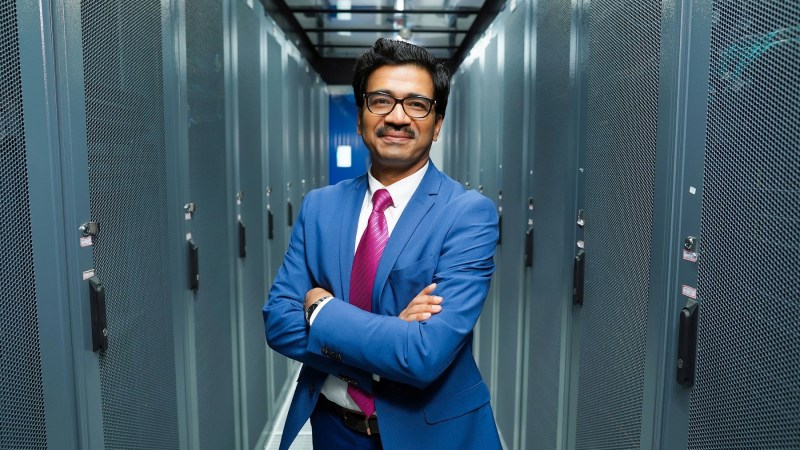
Sunil Gupta, Co-founder, CEO and Managing Director, Yotta Data Services
You're reading Entrepreneur India, an international franchise of Entrepreneur Media.
–By Sunil Gupta, Co-founder, CEO and Managing Director, Yotta Data Services
As enterprises move AI from experimentation into production, the cybersecurity challenge is expanding beyond applications and software to the infrastructure on which AI depends. The data centers, GPU compute environments, storage systems and networks that power AI workloads are becoming critical parts of the enterprise security perimeter. A weakness at any of these layers can expose sensitive data, compromise workloads, or disrupt essential services. Securing AI therefore requires organisations to look beyond the model itself and examine the infrastructure that stores, processes and moves their data.
For Indian enterprises, the implications extend well beyond the application layer. An AI model is part of a larger ecosystem comprising data centers, GPU compute, storage, networking and orchestration systems. Each layer introduces its own security considerations, from access controls and workload isolation to data protection and operational resilience. Organisations must therefore treat infrastructure security and data sovereignty as connected priorities when designing and deploying AI systems.
The risk has moved beneath the application
Indian enterprises have moved well past experimentation. Forty-seven per cent already have multiple generative AI use cases live in production. Banks are running models on transaction histories, hospitals on patient records, and manufacturers on proprietary designs. The data feeding these systems is among the most sensitive a business holds, yet it lives on infrastructure that conventional security programs were never designed to examine.
The past year has exposed how thin that coverage is. In late 2025, attackers exploited an unauthenticated flaw in Ray, a framework widely used to distribute AI workloads, to convert GPU clusters across the world into a self-propagating crypto mining network, with more than 230,000 Ray servers left open to the internet. Earlier, a vulnerability in the software connecting containers to NVIDIA GPUs allowed a malicious container to take control of its host, and researchers estimated it affected over a third of cloud environments. On general-purpose platforms that retrofit AI onto shared infrastructure, a flaw of that kind places one.
tenant’s models within reach of another. Purpose-built AI clouds exist precisely to close that gap.
The financial consequences are now measurable. IBM’s 2026 study places the average cost of a breach in India at Rs 25.5 crore, a rise of nearly 16 per cent in a year and finds that 26 per cent of malicious breaches were AI-generated. In a June survey of Indian enterprises, only 17 per cent considered themselves well prepared for the security risks of AI. Adoption has run considerably ahead of readiness.
Sovereignty is a question of control
Security concerns whether an adversary can gain entry. Sovereignty concerns who holds lawful authority over the data and the systems that process it, and Indian boards have been slower to engage with that second question. Storing data within the country is a necessary condition, but when encryption keys and operational authority rest with a provider answerable to another jurisdiction, residency offers reassurance rather than protection.
This is not an argument for isolation. India need not manufacture every component or decline every global model, and attempting to build everything alone would slow innovation. Global technology and Indian infrastructure are complementary, and the combination of the two under Indian control is a massive competitive advantage. Sovereignty, properly understood, is strategic control. It means knowing what one depends on, controlling what is critical, keeping alternatives available, and ensuring that essential systems cannot be switched off from outside.
The policy direction is already set. At the AI Impact Summit in February, the MANAV framework placed national sovereignty at its core with the principle of whose data, his right. The DPDP Rules give organisations until May 2027 to meet obligations on security safeguards and cross-border transfers, and are the reason for increased demand for sovereign, AI-ready infrastructure in banking, healthcare and manufacturing. CERT-In requires incidents to be reported within six hours. Each of these obligations assumes the enterprise can see clearly into its own infrastructure, and that visibility cannot be delegated.
Five tests of a sovereign, secure stack
The most common failure is organisational. Security belongs to the CISO. Sovereignty belongs to legal and compliance. A domestic facility with weak isolation remains exposed, and a well-secured environment under foreign jurisdiction still leaves uncertainty over who can compel access. Both must be designed together, and five tests reveal whether they have been.
Jurisdiction concerns which laws govern the data and its encryption keys, and who controls access to them. Operational control asks who holds the keys to the environment, and whether isolation between workloads is enforced in hardware rather than promised in a contract, as current-generation GPUs now permit. Continuity asks whether the system will keep running through disruption, and whether the GPU software stack is maintained with the same discipline as the application layer. Substitutability asks whether a platform can be replaced without rebuilding the entire environment. National capability asks whether Indian teams can run, secure and repair the stack, and with only about 16 per cent of IT professionals holding AI skills, it is the area in which the country has the most ground to cover.
Capacity is necessary, not sufficient
India generates nearly 20 per cent of the world’s data and holds about 3 per cent of its data centre capacity. Closing that gap is essential, and progress is real. The IndiaAI Mission has passed 38,000 GPUs with 20,000 more on order, and private capital is building at industrial scale. A country without large-scale compute remains a consumer of AI rather than a producer, and India will need millions of GPUs.
Yet capacity alone does not become adoption. A Dell study this year found that most Indian organisations have already seen an AI initiative slow or stall over security and compliance concerns. Enterprises will entrust their most valuable data to AI when they know where it resides, who governs it and how it is defended. Trust can help turn compute capacity into enterprise demand and support further investment.
The compute will be built. Trust must be engineered alongside it, from the foundation of the stack upward. India should not merely consume the AI revolution. It should build it, operate it and secure it.
–By Sunil Gupta, Co-founder, CEO and Managing Director, Yotta Data Services
As enterprises move AI from experimentation into production, the cybersecurity challenge is expanding beyond applications and software to the infrastructure on which AI depends. The data centers, GPU compute environments, storage systems and networks that power AI workloads are becoming critical parts of the enterprise security perimeter. A weakness at any of these layers can expose sensitive data, compromise workloads, or disrupt essential services. Securing AI therefore requires organisations to look beyond the model itself and examine the infrastructure that stores, processes and moves their data.
For Indian enterprises, the implications extend well beyond the application layer. An AI model is part of a larger ecosystem comprising data centers, GPU compute, storage, networking and orchestration systems. Each layer introduces its own security considerations, from access controls and workload isolation to data protection and operational resilience. Organisations must therefore treat infrastructure security and data sovereignty as connected priorities when designing and deploying AI systems.

Entrepreneur Staff • Editor
Entrepreneur Staff
For more than 30 years, Entrepreneur has set the course for success for millions of... Read more