5 Things to Know About Jyotiraditya Scindia’s Vision for India’s Next Tech Leap
Jyotiraditya Scindia shares India’s tech ambitions at India Mobile Congress 2026. Here are 5 key takeaways from Scindia’s address.
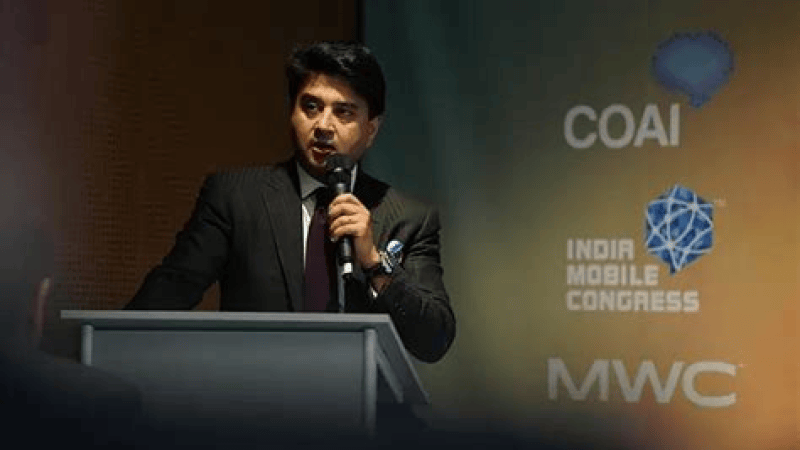
Jyotiraditya M. Scindia, Union Minister for Communications and Development of North Eastern Region
Opinions expressed by Entrepreneur contributors are their own.
You're reading Entrepreneur India, an international franchise of Entrepreneur Media.
The 10th edition of the India Mobile Congress (IMC) 2026 is underway at Yashobhoomi, New Delhi, with the theme “Scale Without Boundaries.” The four-day event, being held from October 7–10, brings together technology companies, startups, investors and policymakers from across the world. Ahead of Prime Minister Narendra Modi’s inauguration, Union Communications Minister Jyotiraditya Scindia outlined how India’s telecom journey is moving into its next phase from expanding connectivity to building, scaling and exporting technology globally.
1. India Is Moving from a Services Nation to a Product Nation
Scindia said India’s technology journey is moving beyond its traditional strength as a services-led economy. The country is increasingly becoming a place where technology is designed, developed and scaled, rather than simply consumed or delivered as a service. At IMC 2026, this shift is being showcased through new telecom products, technologies and use cases. Scindia said India’s proven connectivity infrastructure is now creating the foundation for exploring new technological frontiers. The larger ambition, he suggested, is to build an ecosystem capable of creating globally competitive products from India.
2. ‘Vocal for Local’ Is Giving Way to ‘Local for Global’
One of Scindia’s strongest messages was that Indian technology should not remain confined to the domestic market. He said India’s journey is moving from “Vocal for Local” to “Local for Global”, with the country looking to take its technologies, standards and solutions to international markets. This includes indigenous telecom technologies, digital public platforms and the development of next-generation connectivity. The message fits directly with IMC 2026’s theme, “Scale Without Boundaries” the idea that Indian innovation should move beyond geographical and traditional technology boundaries to create a global impact.
3. India Wants to Be a Global Leader in 6G
Scindia has positioned 6G as one of the biggest opportunities in India’s next telecom chapter. He said the next generation of connectivity will go beyond faster mobile networks, bringing together physical, digital and intelligence ecosystems. India is already working through initiatives such as the Bharat 6G Alliance to strengthen its contribution to global standards and technology development. Scindia has expressed confidence that India can emerge as a global leader in 6G, building on the country’s rapid 5G rollout and growing telecom capabilities.
4. India’s Massive Telecom Scale Is Now Its Competitive Advantage
Scindia highlighted the sheer scale of India’s digital connectivity as a foundation for its next technology phase. India now has 1.01 billion broadband subscribers, while 5G services cover 99.9% of districts and reach around 85% of the population, according to the Communications Ministry. Scindia’s argument is that this vast connected user base and infrastructure can provide India with an important advantage as new technologies are developed and deployed. The focus is therefore shifting from simply connecting people to using that connectivity as a platform for new products, services and technological possibilities.
5. The Next Digital Economy Will Depend on Connectivity, Innovation and Trust
Scindia has repeatedly stressed that India’s technology ambitions cannot be built on connectivity alone. The next phase will require strong digital infrastructure, emerging technologies and trust and security. IMC 2026 therefore brings together areas including AI, 6G, satellite communications, quantum technologies, cloud and edge computing, cybersecurity and electronics manufacturing.
The event’s four pillars: Srishti, Samvardhan, Sashakt and Surakshareflect this broader approach. For Scindia, India’s challenge now is to convert its telecom scale and technology capabilities into sustainable innovation, economic growth and global leadership.
The 10th edition of the India Mobile Congress (IMC) 2026 is underway at Yashobhoomi, New Delhi, with the theme “Scale Without Boundaries.” The four-day event, being held from October 7–10, brings together technology companies, startups, investors and policymakers from across the world. Ahead of Prime Minister Narendra Modi’s inauguration, Union Communications Minister Jyotiraditya Scindia outlined how India’s telecom journey is moving into its next phase from expanding connectivity to building, scaling and exporting technology globally.
1. India Is Moving from a Services Nation to a Product Nation
Scindia said India’s technology journey is moving beyond its traditional strength as a services-led economy. The country is increasingly becoming a place where technology is designed, developed and scaled, rather than simply consumed or delivered as a service. At IMC 2026, this shift is being showcased through new telecom products, technologies and use cases. Scindia said India’s proven connectivity infrastructure is now creating the foundation for exploring new technological frontiers. The larger ambition, he suggested, is to build an ecosystem capable of creating globally competitive products from India.
2. ‘Vocal for Local’ Is Giving Way to ‘Local for Global’
One of Scindia’s strongest messages was that Indian technology should not remain confined to the domestic market. He said India’s journey is moving from “Vocal for Local” to “Local for Global”, with the country looking to take its technologies, standards and solutions to international markets. This includes indigenous telecom technologies, digital public platforms and the development of next-generation connectivity. The message fits directly with IMC 2026’s theme, “Scale Without Boundaries” the idea that Indian innovation should move beyond geographical and traditional technology boundaries to create a global impact.