India and Japan Strengthen Ties to Bolster Indo-Pacific Security
Japan’s push to deepen defence cooperation with India reflects a quiet recalibration in Indo-Pacific strategy, writes Srikanth Kondapalli, Professor of Chinese Studies at Jawaharlal Nehru University.
Opinions expressed by Entrepreneur contributors are their own.
You're reading Entrepreneur India, an international franchise of Entrepreneur Media.
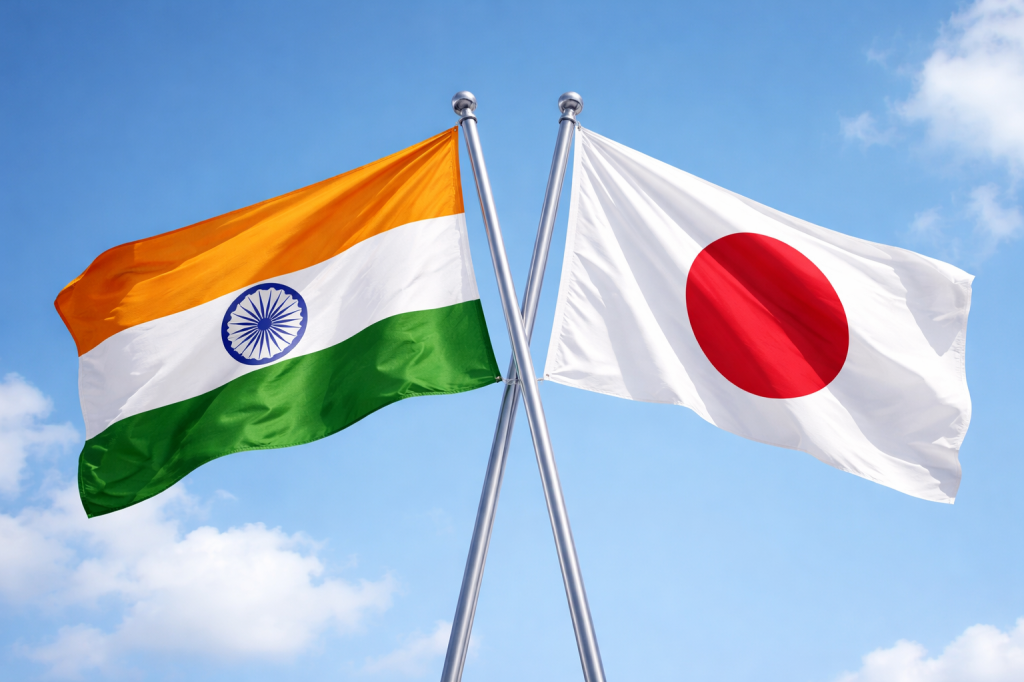
It’s clear to most watchers of the region that Tokyo increasingly views New Delhi as essential to sustaining a regional balance in which no single power can dominate critical sea lanes.
The PLA Navy’s far-ocean rendezvous in the Tasman Sea early last year, conducted within Australia’s Exclusive Economic Zone, demonstrated just how far China is prepared to project naval power beyond its immediate periphery. And it has forced regional powers to think less in terms of alignment and more in terms of endurance.
In December, Chinese aircraft repeatedly irradiated the radar of Japanese jets conducting routine counter-surveillance operations near Japanese territory. China also failed to issue a customary Notice to Airmen (NOTMA), endangering both civilian and military aircraft. In response, Japanese Defense Minister Shinjirō Koizumi held a series of meetings with defense ministers from various regional allies, all of which expressed solidarity with Japan.
India and Japan both have a key role to play in ensuring the Indo-Pacific’s security, with significant overlapping interests.
The Trump administration’s National Security Strategy (NSS), published in December, reaffirmed India’s importance to the Quadrilateral Security Dialogue (Quad) – an informal strategic grouping of the US, India, Japan, and Australia – which seeks to keep the Indo-Pacific ‘free and open’ and protected from coercion by hostile actors, including China.
The emphasis was reinforced in December 2025, when Quad envoys held a rare, public meeting at the US Embassy in Beijing, to reiterate their shared commitment to maintaining a ‘free and open Indo-Pacific’ (FOIP).
Tokyo has long argued that Indo-Pacific security cannot rely on unilateral action alone, but must instead be anchored in a network of capable partners, such as India.
This emphasis on collaboration underpins Japan’s broader vision, the FOIP framework, first articulated under late Prime Minister Shinzō Abe, which was designed to broaden the region’s strategic architecture beyond a narrow US-centric model.
Within this framework, India plays a central role, anchoring the western flank of the Indo-Pacific, linking the Indian Ocean to East Asian security dynamics, and providing strategic depth against growing Chinese pressure.
The logic can be seen in Japanese security policy today.
Facing a more severe security environment, Japan has brought forward revisions to its three key strategic documents. Since Minister Koizumi took office in particular, Japan has intensified efforts to deepen cooperation not only with its ally, the United States, but also with like-minded partners, including India.
Prime Minister Sanae Takaichi’s recent agreement with Narendra Modi, which deepens security cooperation and expands coordination in support of FOIP, reflects the long-standing belief that India is indispensable to regional security. This point was made explicit in a subsequent meeting between Japan’s Foreign Minister Motegi Toshimitsu and Indian counterpart Dr. Subrahmanyam Jaishankar, where he named India as an ‘important partner’.
While FOIP has long been advanced by Japan, it also represents a direct investment in India’s own security and economic trajectory.
India’s rise as a global economic power has been inseparable from open, uninterrupted access to the seas. Around 95% of its trade by volume moves via maritime routes.
But that exposure is particularly acute in energy. India imports more than 85% of its crude oil, meaning that any sustained disruption to shipping routes by nefarious actors would quickly undermine economic growth and drive up household energy costs.
Maintaining freedom of navigation, securing sea lanes, and deterring hostile powers from dominating the Indo-Pacific’s waterways are therefore central to India’s role as a regional power.
The FOIP framework – reinforced by the Quad’s growing commitment to back deterrence with credible naval power – provides a strategic umbrella for those interests.
Japan has underlined its commitment to this approach by accelerating the urgency of its defence reforms, bringing forward plans to raise defence spending to 2% of GDP by 2025 rather than fiscal year 2027. Tokyo is also looking to develop new naval capabilities, including unmanned surveillance systems and VLS-equipped submarines.
India is beginning to match that urgency. New Delhi has signalled a sharper focus on naval power, the pillar of its Indo-Pacific role, including the release of a 15-year defence modernisation plan. The plan, announced in September by the Defence Ministry, places greater emphasis on expanded maritime reach, with reports that India is looking to develop a nuclear-powered aircraft carrier for deployment in the region.
While India’s plan does not name China explicitly, analysts widely view it as aimed at protecting Indian trade routes from hostile interference, primarily arising from Beijing.
This convergence is deliberate. Japan’s expanded defence commitment and India’s growing naval ambition reflect two shared assessments. Firstly, China’s increasingly bold and dangerous actions pose a serious threat to the rules-based international order. Secondly, both countries recognise that economic power in the Indo-Pacific ultimately depends on credible maritime security, and that neither can secure it alone.
If President Trump’s second term has introduced greater uncertainty into the diplomatic tone of the US-India relationship, it has not altered the underlying strategic calculus shaping Indo-Pacific security.
The NSS’s reaffirmation of India’s leading role in regional security underscores how indispensable a free and open Indo-Pacific has become, precisely because it serves interests that extend beyond any single administration or dispute.
For Japan and India, the stakes are high.
India is currently seeking to reduce its dependence on Russia and build up its defense capabilities independently, and plans to import shipborne radar systems from Japan. Minister Koizumi has expressed a positive stance toward revising previously restrictive rules on defence equipment transfers and is also promoting stronger “top-level sales” efforts. Going forward, the two countries are expected to further deepen cooperation across a wide range of areas, including defense equipment.
The FOIP framework and Quad cooperation provide the scaffolding for that effort.
At the Land Forces Summit, which was attended by the Indian Army and the U.S. military, participants also shared the recognition that multilateral cooperation is essential to maintaining peace and stability in the Indo-Pacific.
In an era of increasingly volatile diplomacy, Indo-Pacific security has drawn Tokyo and New Delhi ever closer, and deepening cooperation will be critical for regional security.
It’s clear to most watchers of the region that Tokyo increasingly views New Delhi as essential to sustaining a regional balance in which no single power can dominate critical sea lanes.
The PLA Navy’s far-ocean rendezvous in the Tasman Sea early last year, conducted within Australia’s Exclusive Economic Zone, demonstrated just how far China is prepared to project naval power beyond its immediate periphery. And it has forced regional powers to think less in terms of alignment and more in terms of endurance.
In December, Chinese aircraft repeatedly irradiated the radar of Japanese jets conducting routine counter-surveillance operations near Japanese territory. China also failed to issue a customary Notice to Airmen (NOTMA), endangering both civilian and military aircraft. In response, Japanese Defense Minister Shinjirō Koizumi held a series of meetings with defense ministers from various regional allies, all of which expressed solidarity with Japan.