Can Biotechnology Help Expand Access to Plasma Functions Through Scalable Biological Alternatives?
P4P Technology is exploring scalable biological alternatives to plasma functions using plant-derived Edestin, with potential applications.

Plasma For People
Opinions expressed by Entrepreneur contributors are their own.
You're reading Entrepreneur India, an international franchise of Entrepreneur Media.
Human plasma can be viewed as an important biological resource within healthcare, with its availability involving processes such as donor collection, testing, processing, storage, and distribution. Each stage may present practical considerations for healthcare systems seeking to maintain reliable access. Plasma-derived medicines can add further requirements, as their production generally involves donor-derived material and specialized processing. Together, these factors raise a broader question for biotechnology: Could some functions traditionally supported by human plasma eventually be provided through scalable biological alternatives?
The question may be especially relevant to plasma’s volume-replacement and transport functions, where access can be influenced by donor availability, collection infrastructure, processing capacity, storage conditions, and logistics. Blood and blood products remain an important component of healthcare systems worldwide, with countries continuing to develop systems for adequate and safe supplies.
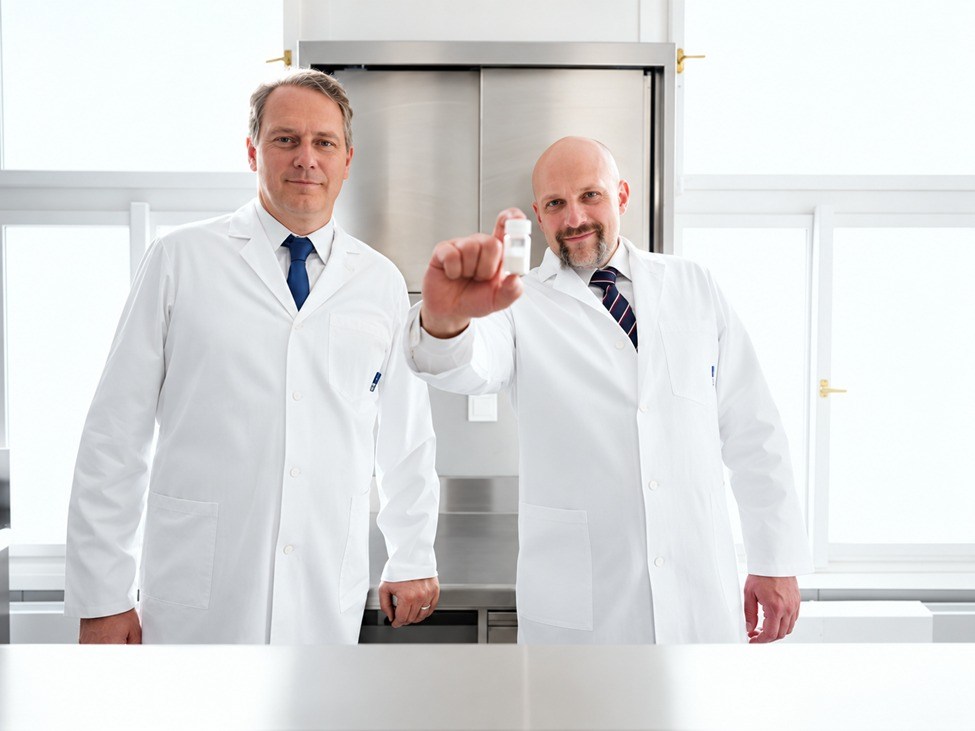
Miroslav Mašata, CEO of P4P Technology, a Czech biotechnology company, sees this area as an opportunity for applied biotechnology. According to Mašata, P4P is developing soluble Edestin, a plant-derived protein, with the intention of moving its research from studying the protein’s properties toward practical formulations and potential healthcare applications. “A useful biotechnology platform has to create a path from scientific potential to something that can eventually be manufactured, evaluated, and delivered,” he says.
That path begins with understanding the biological functions being considered. Plasma is the blood’s liquid component, made mostly of water with proteins, electrolytes, nutrients, gases, and wastes that support homeostasis and transport. Albumin, the predominant plasma protein, maintains oncotic pressure and binds a wide range of molecules. Reproducing selected plasma functions can therefore involve considerations extending beyond identifying a protein with a comparable molecular profile. Formulation, stability, purity, compatibility, manufacturing processes, and clinical evidence may all become relevant as development progresses.
P4P’s work centers on purifying Edestin and developing a water‑soluble formulation for evaluation as an intravenous solution. Mašata notes ongoing preclinical studies focused on safety and related assessments, with additional development planned before human testing and regulatory review. He emphasizes that these steps remain essential, as the current program reflects early potential; demonstrating clinical efficacy, confirming human safety, and securing regulatory authorization will require prospective human studies and formal evaluation.
The significance of the work may extend beyond a single proposed plasma-substitute application. According to Mašata, P4P’s Edestin platform could support several development pathways, including parenteral volume replacement, specialized nutrition, oral formulations, and selected regenerative or cosmetic applications. Each pathway would require its own formulation work, evidence, and regulatory considerations.
“The value of a platform can come from the different questions it allows scientists to investigate around the same underlying material,” Mašata explains. “Each application then has to earn its place through evidence, manufacturing feasibility, and the requirements of its intended use.”
That platform perspective also informs P4P’s commercial strategy. Pharmaceutical development can involve extended timelines, extensive testing, specialized manufacturing, and substantial capital requirements. P4P is exploring earlier commercial opportunities around Edestin while continuing to develop its longer-term medical program. From an investment perspective, this could provide exposure to an intellectual-property platform with several possible commercialization pathways, with each route carrying its own development requirements and uncertainties.
India provides a potentially important setting for that strategy. Mašata shares that P4P has entered cooperation arrangements with two Indian organizations, including a food-supplement manufacturer and a research organization, while exploring additional relationships connected with clinical development and potential local manufacturing.
The rationale appears linked to India’s expanding healthcare needs and the practical question of how biological resources can become more accessible across a large and diverse healthcare system. National blood requirements are estimated at approximately 14.6 million units. For Mašata, these figures help explain why India could serve as an important development environment. “India gives us a practical setting to explore how biotechnology can respond to healthcare requirements at scale,” he says. “The important question is how we translate the technology into a form that fits local clinical, manufacturing, and regulatory conditions.”
A second international opportunity is emerging through discussions with Taiwan-connected investment funds interested in technology transfer, intellectual property, public health, and specialized applications. P4P sees potential relevance for plasma replacement and specialized nutrition in emergency medicine, disaster response, and other high-stress healthcare environments where transport, storage, and rapid access to medical resources may become particularly important. These applications remain prospective and would require appropriate clinical, regulatory, and operational validation.
The broader lesson extends beyond Edestin. Healthcare innovation can involve discovering medicines, while also exploring new ways to manufacture, formulate, transport, and scale biological functions that currently rely substantially on human-derived resources. P4P’s Edestin program represents one example of this wider direction, with India offering an important setting in which the technology could potentially progress from laboratory and preclinical development toward practical healthcare applications.
For Mašata, the principle is straightforward. He states, “The future of biotechnology may depend increasingly on our ability to turn biological materials into reliable platforms with multiple possible uses, while allowing evidence to determine which uses ultimately belong in clinical practice.”
Human plasma can be viewed as an important biological resource within healthcare, with its availability involving processes such as donor collection, testing, processing, storage, and distribution. Each stage may present practical considerations for healthcare systems seeking to maintain reliable access. Plasma-derived medicines can add further requirements, as their production generally involves donor-derived material and specialized processing. Together, these factors raise a broader question for biotechnology: Could some functions traditionally supported by human plasma eventually be provided through scalable biological alternatives?
The question may be especially relevant to plasma’s volume-replacement and transport functions, where access can be influenced by donor availability, collection infrastructure, processing capacity, storage conditions, and logistics. Blood and blood products remain an important component of healthcare systems worldwide, with countries continuing to develop systems for adequate and safe supplies.
Miroslav Mašata, CEO of P4P Technology, a Czech biotechnology company, sees this area as an opportunity for applied biotechnology. According to Mašata, P4P is developing soluble Edestin, a plant-derived protein, with the intention of moving its research from studying the protein’s properties toward practical formulations and potential healthcare applications. “A useful biotechnology platform has to create a path from scientific potential to something that can eventually be manufactured, evaluated, and delivered,” he says.
Reports on emerging technologies, data-led enterprises, and the intersection of innovation and regulation.