HR Tech and AI for the Frontline Workforce
The catch, however, is that much of this progress is directed almost exclusively towards corporate workers. But what about blue-collar jobs?

pixabay
Opinions expressed by Entrepreneur contributors are their own.
You're reading Entrepreneur India, an international franchise of Entrepreneur Media.
HR departments have greatly benefited from the integration of Artificial Intelligence, though they have been deploying some sort of automation for different aspects of workflows.
More than 70 percent of large enterprises now use AI at least in one of the HR functions, according to a Gartner report.
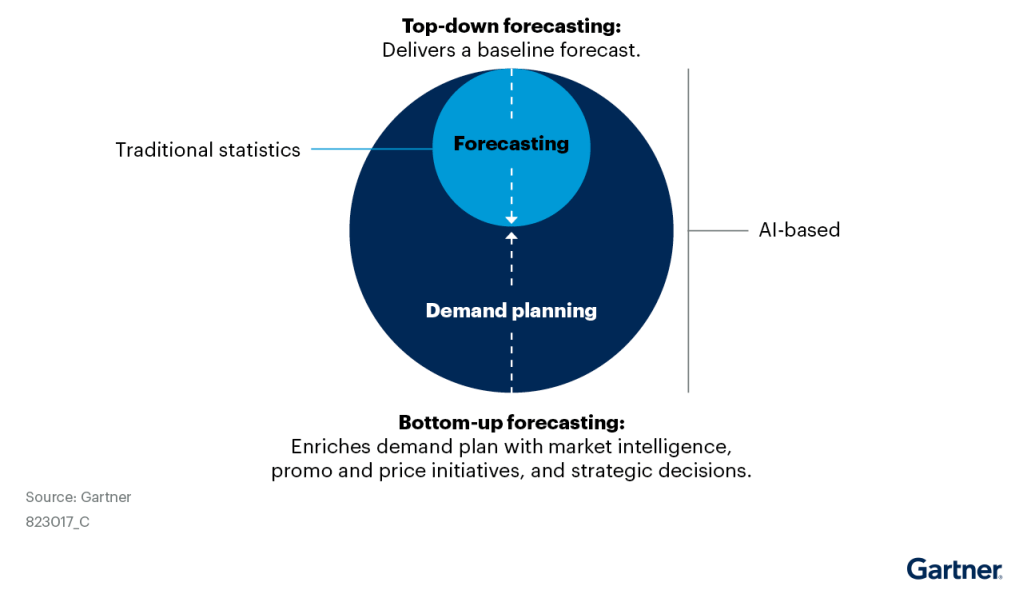
“Achieving touchless forecasting that eliminates the need for frequent manual inputs and regular human interventions provides a unique scalable automation opportunity within demand planning. By utilizing the underlying machine learning (ML) techniques, instead of traditional statistical engines, AI-based forecasting can enable organizations to achieve touchless forecasting and consistently obtain additional value with less risk of deterioration in the accuracy of outputs,” according to a Gartner report.
There are a bunch of platforms such as Textio, Eightfold and more that are deploying AI to automate candidate screening, reduce resume review time and more. Some companies have deployed internal AI driven platforms to help HR save on time.
Clearly, from streamlining recruitment and data-driven decision-making to complex workflow automation, white-collar HR tech seems more empowered than ever before. The catch, however, is that much of this progress is directed almost exclusively towards corporate workers. But what about blue-collar jobs?
To put things into perspective, blue-collar job volumes in India have grown over 90 percent between early 2022 and early 2026, according to a report.
And then there’s a rapid growth of gig economy workers, which may not necessarily be the textbook definition of blue collar jobs but a convergence with white collar ones.
According to an estimate, India’s gig economy has approximately 12 million (1.2 crore) gig and platform workers as of FY25, up from 7.7 million (77 lakh) in FY21. A report by NITI Aayog estimates that India’s gig and platform workforce will expand to 23.5 million workers by 2029–30, which could be equivalent to 4.1% of the total national workforce.
There is definitely a need for platforms that could handle paperless and dynamic ecosystems operating under complex labor laws. Moreover, these segments don’t have typical resumes or well-managed email IDs, and other elements that one gets in the typical white-collar space. The space is itself largely unorganised and highly fragmented. So how does even AI work here, if it does?
Abhijit Rao, VP – People & Culture at Keka, tells Entrepreneur India that the biggest barrier to digitizing frontline HR was never the worker, it was designing HR technology around corporate email IDs, desktops and company-issued devices.
Keka keeps it simple for such segments by offering a shared screen with facial recognition, so attendance takes the same two seconds it always did – no app, no ID card, no device to lose. It works offline and syncs the moment connectivity returns, because a solution that assumes always-on internet quietly excludes the exact workforce it’s meant to serve.
“One of our logistics customers runs this across multiple distribution sites with patchy connectivity, and attendance still syncs cleanly the moment the network’s back,” Rao explained.
Apna CEO Kartik Narayan dives deeper into these challenges.
“We are a two-sided jobs marketplace. So, unless an individual is visible on our platform and actually applies for a job, it is very difficult for us to know who that person is or what their circumstances are. And frankly, that is a much larger problem that India needs to solve. There is a huge section of the workforce that remains invisible to formal employment systems. Technology can help bring them into the system, but the first step is actually making them visible,” he tells Entrepreneur India.
On the resume problem, he continues: “Even within that cohort, there is another very real challenge. A lot of frontline, blue-collar and grey-collar workers simply don’t have the skills or the ability to create a conventional resume. And that doesn’t mean they don’t have skills. It just means they don’t know how to articulate those skills in the format that traditional hiring systems expect. So the problem isn’t necessarily a lack of capability. Sometimes, it’s a lack of ability to present that capability.”
Another challenge in the segment is a whole new set of criteria such as shift optimization, overtime rules and daily wage compliance, unlike white-collar ones wherein HRtech typically focuses on OKRs and continuous performance reviews.
Apna, which is essentially a jobs marketplace, is making sure that candidates are able to discover and apply for the jobs that are right for their skills and experience, and that employers are able to find the talent they are actually looking for.
The experience between the employee and the employer begins after that marketplace transaction.
“So our job is to get that initial match fundamentally right. And for a marketplace, that comes down to two things: trust and relevance. On the employer side, we need to make sure that the employer is very clear about what the job is, what the expectations are, and what the candidate is signing up for. On the candidate side, we need to make sure that the jobs they see are genuinely relevant to their background, experience, skills and preferences. We don’t want to create a situation where someone applies for a job and discovers later that the reality is very different from what they were expecting. If you get those two things right, you create a much stronger match — because expectations are aligned on both sides before the employment relationship begins,” says Karthik.
“So I would say our product architecture is not about trying to replicate a traditional HRMS for frontline workers. It is about building a highly trusted, highly relevant marketplace that understands both sides of the transaction and gets the match right. And as we go deeper into high-headcount sectors like manufacturing and logistics, that principle becomes even more important, because when you are hiring at scale, even a small improvement in the quality of the match can have a very large impact,” he adds.
Keka, in the meanwhile, provides cloud-based human resources and payroll software services.
Rao notes that OKRs don’t ask whether the shift got covered. That’s the blind spot most HR tech never noticed it had. A plant HR’s actual day is shift coverage, overtime accuracy, and clean payroll, not goal-tracking.
“So, we flipped the architecture: HQ sets shift and OT policy once, and every site inherits and runs it independently, with no manual reconciliation. A logistics chain we work with manages shift rules for its entire warehouse network from a single config, instead of each site running its own version of the rulebook,” he added.
Now, let’s address the elephant in the room: AI.
Kartik responds to this: “When you’re running a jobs marketplace and you have candidates who may not have detailed resumes, AI allows us to look beyond the resume and understand a much broader set of signals. We can use what we’ve learned from millions of profiles and hiring outcomes to understand that someone with a particular background, experience or set of attributes may actually be a very strong fit for a particular job.
So instead of asking, ‘Does this person have the perfect resume?’, we can ask, ‘Do we have enough signals to understand whether this person is right for this opportunity?’ “
“That’s the real power of AI in this context. It can make people who were previously difficult to evaluate more visible, and ultimately help connect them to the right jobs. These are some of the ways in which we’re using relatively simple technology, combined with AI, to
make frontline workers more visible and help them access better employment opportunities.”
Keka’s Rao adds that AI should augment compliance, not replace the human in the loop.
State-wise wage rules, overtime, and shift allowances shift independently, often with genuine ambiguity – automate that blindly and you scale the risk, not remove it.
“So, the line we draw: pure calculation is fully automated – applying the correct state rule, computing the right overtime rate, flagging the applicable allowance, because that’s exactly where manual effort at high volume produces errors. But interpreting a new or disputed regulation, or resolving a genuinely ambiguous case, stays with legal and compliance, always,” he explains.
It’s safe to deduce that the AI-powered blue-collar and frontline HR-tech pivot is inevitable with the market becoming increasingly massive, estimated to be worth USD 2.1 billion by 2031. This also comes at a time when the economy is seeing a rapid transition with logistics, manufacturing and other related sectors getting a wide push.
AI can solve for things like shift scheduling, automate compliance, and manage overall operations at scale. The larger objective, however, should not just obscure placement of one software at one enterprise but bring several workers from unorganised and informal sectors into a structured economy, which could very well be the key for the next phase of India’s self-reliant shift.
HR departments have greatly benefited from the integration of Artificial Intelligence, though they have been deploying some sort of automation for different aspects of workflows.
More than 70 percent of large enterprises now use AI at least in one of the HR functions, according to a Gartner report.
“Achieving touchless forecasting that eliminates the need for frequent manual inputs and regular human interventions provides a unique scalable automation opportunity within demand planning. By utilizing the underlying machine learning (ML) techniques, instead of traditional statistical engines, AI-based forecasting can enable organizations to achieve touchless forecasting and consistently obtain additional value with less risk of deterioration in the accuracy of outputs,” according to a Gartner report.