Chandrasekaran’s Resignation and the Crossroads Ahead for Tata Sons
After ten years of bold moves in chips, aviation, electric vehicles, and digital ventures, N. Chandrasekaran is stepping down, leaving Tata Sons at a turning point
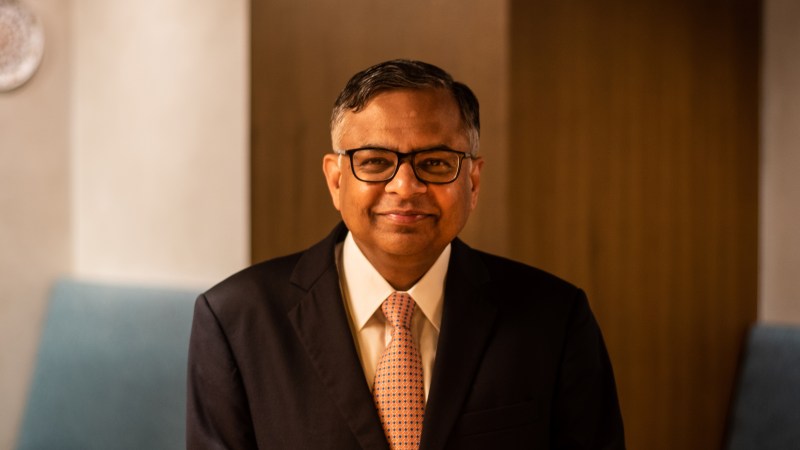
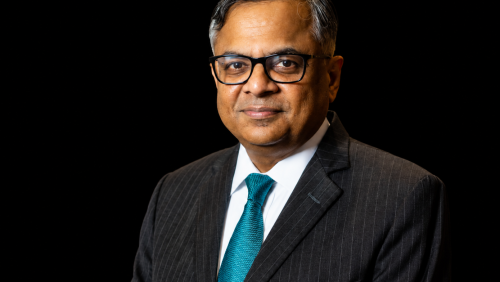
N. Chandrasekaran, Chairman, Tata Sons
Opinions expressed by Entrepreneur contributors are their own.
You're reading Entrepreneur India, an international franchise of Entrepreneur Media.
He is a technocrat with tech heavy ambitions for a large conglomerate. He chartered fresh direction for one of the largest conglomerates in India, and after almost four decades, decided to step down citing ambiguity in leadership decisions of the Board. He is N. Chandrasekaran, Chairman Tata Sons, and his current tenure comes to an end on Feb 20, 2027. He took over as the chair of the company in 2017 after the ouster of Cyrus Mistry.
Since then, he has taken bold moves for the business. His blueprint has been audacious, marrying scale with technology, and it leaves the Tata Group at a crossroads where execution will determine whether these bets become enduring triumphs or not.
Under Chandrasekaran’s watch, Tata Sons unleashed a wave of ambitious ventures that redefined the group’s trajectory; however, different businesses saw some hits and misses.
Tata Electronics became the spearhead of its push into electronics manufacturing, mobile component assembly, and semiconductor fabrication, backed by multi‑billion‑dollar investments in India. The semiconductor dream was further reinforced through new foundry and OSAT operations, positioning Tata as a serious contender in India’s chip race.
Tata Electronics emerged as the unlikely engine of job creation. In FY26 alone, TEPL added 20,819 employees, cementing its reputation as one of the fastest‑growing businesses within the conglomerate. By March 2026, its headcount had surged to 86,466 from 65,647 a year earlier, according to Tata Sons’ annual report.
Parallelly, Tata Digital was conceived as a consumer‑facing ecosystem, with the super‑app Tata Neu at its core and acquisitions such as BigBasket and 1mg expanding its reach. Currently, the business continues to make losses. Net loss for this in FY26 stood at INR 4,974 crore.
On the mobility front, EV and battery giga‑factories under Tata Motors and Agratas marked a decisive bet on the electric future, building advanced cell manufacturing capabilities.
Equally transformative were the structural consolidations. Tata Consumer Products Ltd (TCPL) emerged in 2019 as a unified food and beverage powerhouse.
In aviation, the group executed its boldest consolidation yet, re‑acquiring Air India and merging it with AirAsia India and Vistara to craft a global airline entity. However, the airline is facing serious problems such as airspace closures, war-driven fuel costs, and a crash in the recent past, drawing a lot of public ire. The airline continues to be a loss making entity.
Although some of the moves came with financial challenges, no business is immune to volatility. Chandra’s high‑stakes vision of a conglomerate betted on reshaping the company into a future‑ready behemoth. Overall, under his stewardship, the group has a success story: For the financial year 2017, the group’s topline stood at INR 6 lakh crore, which had gone up to INR 16.24 lakh crore under Chandrasekaran’s leadership. Similarly, profits grew from INR 34,909 crore in FY17 to INR 1.7 lakh crore in FY26.
The Leadership Turmoil
“I have completed 40 years of professional life at the Tata Group. I am grateful for the immensely satisfying opportunity to contribute to this venerable institution. Leading Tata Sons over the past decade has been a great honour and a profound responsibility. My current tenure as the Chairman of Tata Sons comes to an end on Feb 20, 2027,” he said in a statement.
Dorabji Tata Trust and Ratan Tata Trust had unanimously resolved and recommended the extension of his next term for a period of five years, which was recorded and recommended by the Tata Sons Nomination and Remuneration Committee and the Board. Subsequently, the resolution was tabled in the Tata Sons Board on Feb 24, 2026. However, the proposal was not carried through because one of the Board Members did not support it, “And in the absence of unanimous support, I chose to defer the decision,” the chairman said.
It has been six months since that Board meeting, and no resolution has been reached till date.
Tata Sons is a very large institution and there are many strategic projects that are under critical stages of execution.
“It is not only necessary to have a leader in place to lead the Group beyond Feb 2027, but also clarity on leadership is important for employees, investors, partners and other stakeholders. Under these circumstances, earlier today, I have communicated to the Tata Sons Board, that I have decided not to offer myself for reappointment when my term ends on Feb 20, 2027. I have asked the Board to decide on the succession soon to ensure a proper transition. I am grateful for the support of all stakeholders,” he added.
Succeeding N Chandrasekaran as the head of Tata Sons presents an immense challenge because his tenure combined massive strategic diversification with high-stakes operational turnarounds. But given the new leadership at the company’s helm has expressed discontent with the group’s strategy so far, the multi-trillion-rupee conglomerate is set for a recalibration of priorities.
He is a technocrat with tech heavy ambitions for a large conglomerate. He chartered fresh direction for one of the largest conglomerates in India, and after almost four decades, decided to step down citing ambiguity in leadership decisions of the Board. He is N. Chandrasekaran, Chairman Tata Sons, and his current tenure comes to an end on Feb 20, 2027. He took over as the chair of the company in 2017 after the ouster of Cyrus Mistry.
Since then, he has taken bold moves for the business. His blueprint has been audacious, marrying scale with technology, and it leaves the Tata Group at a crossroads where execution will determine whether these bets become enduring triumphs or not.
Under Chandrasekaran’s watch, Tata Sons unleashed a wave of ambitious ventures that redefined the group’s trajectory; however, different businesses saw some hits and misses.