PE-VC in India: 2025 Marks a Strong Record, 2026 to Be Defined by Geopolitics
2025 was one of the industry’s strongest years on record, yet the road ahead is marked by caution, valuation resets, and geopolitical overhangs.
Opinions expressed by Entrepreneur contributors are their own.
You're reading Entrepreneur India, an international franchise of Entrepreneur Media.

India’s private equity and venture capital ecosystem entered 2026 with a paradox that seasoned investors will recognize: strong underlying momentum, tempered by near-term hesitation.
A recent EY-IVCA report noted this duality: 2025 was one of the industry’s strongest years on record, yet the road ahead is marked by caution, valuation resets, and geopolitical overhangs.
India attracted USD 60.7 billion across 1,475 deals in 2025, marking the second-highest investment value ever recorded. Deal value rose 8 per cent year-on-year, while volumes increased 9 per cent, underscoring not just capital availability but also deployment confidence. In a global context where capital has tightened and exits have slowed across major markets, India’s performance stands out.
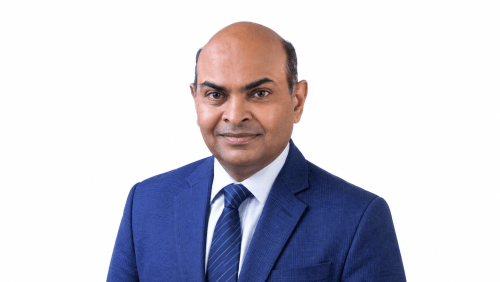
Vivek Soni, Partner and National Leader for Private Equity Services at EY India, said this is a structural shift rather than a cyclical hiccup. “The year 2025 was a true testament to the resilience and maturity of the Indian PE/VC landscape. Investor sentiment was shaped by a confluence of global and domestic factors like India’s key political developments, the post-US election environment, geopolitical tensions, and tariff-policy volatility under the Trump administration. These were further compounded by inflation‑management measures by the RBI and a sharply weakened rupee, all of which contributed to a cautious deployment environment.”
Growth capital leads, but with sharper filters
A deeper look at the deal mix reveals that growth investments emerged as the primary engine, with deal volumes surging 56 per cent to 282 transactions. Startup investments also held steady, rising 19 per cent to 767 deals, suggesting that early- and mid-stage capital remains active despite global risk-off sentiment.
However, this growth is not indiscriminate. Investors are increasingly prioritizing unit economics, profitability pathways, and governance discipline over pure top-line expansion.
This aligns with broader industry commentary. In its recent India-focused outlook, Sequoia Capital emphasized that the current phase is less about capital abundance and more about “building enduring companies with financial discipline, ”a shift that has become visible in deal structuring and diligence intensity.
Other segments like credit, buyouts, and PIPE deals saw a relative decline, indicating a recalibration of risk appetite. According to the report, this is consistent with a market where valuation discovery is still underway, and investors are reluctant to overpay in uncertain macro conditions.
Sector concentration remains, but leadership shifts
Sectorally, the allocation pattern remained largely stable, with financial services, infrastructure, real estate, technology, and e-commerce accounting for 72 per cent of total investments. Yet within this continuity lies a notable shift: financial services overtook infrastructure as the top sector, reflecting both digital penetration and the formalization of India’s economy.
Six sectors, including financial services, real estate, food and agriculture, automotive, industrial products, and aerospace and defense, hit all-time high investment levels, pointing to a broadening opportunity set beyond traditional tech-heavy narratives.
This diversification is echoed in commentary from Bain & Company’s India PE report, which highlights increasing investor interest in “old economy sectors undergoing tech-led transformation”, particularly manufacturing, logistics, and agritech. The implication being India’s PE/VC story is no longer narrowly digital; it is increasingly multi-sectoral and asset-backed.
Exits return, led by strategic buyers
After years of volatility, exit value rose to USD 32.9 billion across 257 transactions, the second-highest on record. More importantly, strategic exits surged 211 per cent year-on-year to USD 16 billion, accounting for nearly half of total exits.
This indicates a resurgence of corporate M&A activity, both domestic and cross-border. Companies are acquiring for capability, consolidation, and market access, suggesting that India is no longer just a capital destination but also a strategic growth market.
Soni said that the rebound in strategic exits reflects “renewed interest from corporates… in consolidation, capability acquisition, and expansion into high-growth verticals.” For funds, this improves liquidity visibility and capital recycling, both critical for sustaining investment cycles.
Fundraising hits a structural high
If exits signal liquidity, fundraising signals confidence, and on that front, 2025 delivered a breakout year. Total fundraising reached USD 23.2 billion, more than doubling from USD 9.8 billion in 2024, with 123 fundraises, the highest ever recorded.
This surge reflects sustained LP confidence in India as a long-term allocation, even as global portfolios rebalance. Large global funds, sovereign wealth funds, and pension capital continue to deepen exposure, betting on India’s demographic and consumption-led growth.
2026: A “wait-and-watch” market
Despite this strong base, 2026 has begun on a more measured note. Soni characterizes the current environment as a “wait-and-watch” phase, where investors are closely tracking market stability, earnings visibility, and valuation alignment.
Several factors are driving this caution:
- Policy uncertainty around US tariffs, despite reductions from 25 per cent to 18 per cent, continues to cloud planning visibility
- Equity market volatility, exacerbated by the increase in Securities Transaction Tax (STT), is impacting exit timing
- Geopolitical risks, particularly the Iran–Israel–US conflict, are creating energy price uncertainty
- Currency depreciation, with the rupee at ~INR 92/USD, is affecting dollar returns for foreign investors
- Valuation mismatch, where seller expectations remain elevated while buyers exercise discipline
Structural tailwinds remain intact
Yet, stepping back from the near-term noise, the structural thesis for India remains robust. The economy is projected to grow at ~7 per cent GDP, maintaining its position as the fastest-growing major economy. Monetary conditions are supportive, with 125 basis points of rate cuts in 2025 and inflation trending toward 4 per cent.
The government’s INR 12.2 lakh crore capex push continues to build long-term infrastructure and manufacturing capacity, while a strengthening IPO pipeline is expected to improve exit optionality.
Additionally, progress on an India-US trade framework, even if still evolving, adds a layer of medium-term optimism.
Global investment firm KKR, in its Asia outlook, has pointed out that India stands out as a “relative safe-haven for long-duration capital” within emerging markets, particularly as supply chains diversify and global capital seeks stability.
The road ahead
The Indian PE/VC ecosystem is no longer in a phase of exuberant expansion; it is in a phase of institutional maturity. Capital is available, but conditional. Growth is attractive, but scrutinized. Exits are improving, but selectively.
Soni added that India’s private equity venture capital trends 2026 will be defined by the interplay of geopolitics, domestic policy shifts, valuation rationalization, and macro fundamentals.
“In the near term, it is a ‘wait‑and‑watch’ environment as investors assess market stability, earnings visibility, and the narrowing of the bid–ask spread. The most important variable at the moment is the Iran-Israel-US conflict, its aftermath, and its impact on LNG and crude oil prices and availability. But the medium‑ to long‑term outlook remains unequivocally positive, supported by India’s strong structural fundamentals, a deepening corporate ecosystem, and sustained global investor interest in India’s growth story. We remain cautiously optimistic.”
India’s private equity and venture capital ecosystem entered 2026 with a paradox that seasoned investors will recognize: strong underlying momentum, tempered by near-term hesitation.
A recent EY-IVCA report noted this duality: 2025 was one of the industry’s strongest years on record, yet the road ahead is marked by caution, valuation resets, and geopolitical overhangs.
India attracted USD 60.7 billion across 1,475 deals in 2025, marking the second-highest investment value ever recorded. Deal value rose 8 per cent year-on-year, while volumes increased 9 per cent, underscoring not just capital availability but also deployment confidence. In a global context where capital has tightened and exits have slowed across major markets, India’s performance stands out.

Prince Kariappa • Features Content Writer
Entrepreneur Staff