Middle East Conflict Spotlights India’s Import Dependency For Oil, Gas
India scrambles to navigate through the supply chain disruptions caused by the ongoing Middle East conflict, and tackle the ripple effect on the local economy and industries.
pixabay
Opinions expressed by Entrepreneur contributors are their own.
You're reading Entrepreneur India, an international franchise of Entrepreneur Media.
India’s various industries are starting to bear the impact of the ongoing conflict in the Middle East, which has dented the global energy supply chains, including disruptions to fuel shipments via the Strait of Hormuz. Experts have warned of more severe impact across industries if the conflict prolongs.
The crisis has also brought India’s energy situation under the spotlight, especially dependence on exports.
Last week, the government disclosed that India imports crude from around 40 countries. As a result of this diversification, about 70 percent of crude imports are now coming from routes outside the Strait of Hormuz compared with about 55 percent earlier.
“India currently has a refining capacity of around 258 MMTPA and is the 4th largest refining hub in the world. The country is self-sufficient in the production of petrol and diesel, and no imports of Petrol & diesel are required for meeting domestic demand. All refineries are currently operating at high levels including some of them even above 100% capacity. All Indian Refineries are currently maintaining adequate crude oil inventories, and supplies are being continuously received through diversified import sources and shipping routes,” the Ministry of Petroleum and Natural Gas said in a separate release.
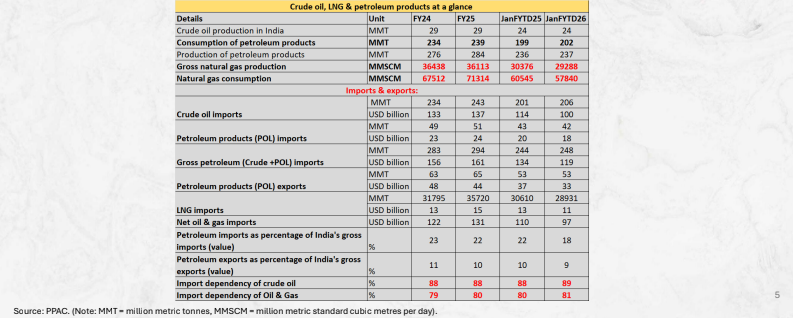
Even as India’s distributed system has ensured petrol and diesel supply, the LPG availability has become critical amid the conflict. According to an Indmoney report, India imports 60% of its LPG, mostly from the Gulf countries, which are currently affected by the conflict. And 90% of this passes through the Strait of Hormuz.
Impact across industries
The energy crisis has already begun affecting a wide range of industries. Shriram Wealth Ltd in its new report points out that oil prices have crossed $100/barrel, with further upside risk if supply disruptions intensify.
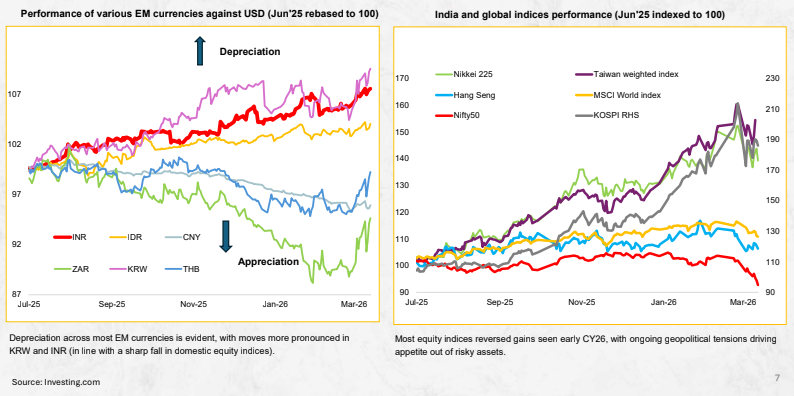
“The US-Israel conflict with Iran has shown no signs of truce as yet, with the new Iran Supreme leader reportedly vowing to keep the Strait of Hormuz shut. This has kept crude oil prices elevated, with sell-off from risk assets continuing. International crude oil prices have been volatile, currently hovering around USD100/bbl amid supply disruption at the crucial chokepoint Hormuz.
Via Sri Ram Wealth
As a result of this, India’s international crude oil (a mix of sweet and sour grade) price has now risen to USD 101.25/barrel in March. This takes the H2FY26TD average to around USD70.6/bbl – tad above RBI’s assumption of USD70/bbl. A 10% rise from USD 70/bbl may likely drive inflation upwards by approx. 30 bps and weaken growth by 15 bps. As of now, inflation reading remains under RBI’s medium-term target, though if the conflict extends, upside pressures may evolve from both elevated crude oil prices as well as INR depreciation. The INR has continued to depreciate towards 92.30 levels, with sharp upside said to be limited on RBI FX intervention chatter,” it said in a statement.
via Sri Ram Wealth
At the time of writing, the Indian rupee depreciated to INR 92.26 against the US dollar.
Jindal Stainless MD Abhyuday Jindal last week said that several processes across their plants have been adversely impacted due to the heavy dependence of stainless steel manufacturing on industrial gases such as propane/ LPG and natural gas.
“Unlike conventional steel industry, which largely utilises blast furnace and coke oven gases as energy sources, the stainless steel industry follows the scrap-based production route where such gases are not generated internally. Given the constraints in fuel availability, our plants are operating at a rationalised capacity.
Additionally, disruptions in global shipping routes are resulting in vessel diversions, longer transit times, and cargo delays, which are also placing additional pressure on supply chains and margins.
We appreciate that the Government is fully seized of the matter and is actively prioritising fuel allocation for critical sectors. Clarity on the allocation percentage for industrial propane/LPG and natural gas, along with assurance of regular supplies, will be important for the stainless steel industry to plan and optimise operations. In the absence of such clarity, we foresee a cascading effect across the industry, the severity of which will depend on how quickly these issues are resolved,” a statement read.
That said, the food (restaurant) business has taken a huge hit with many units temporarily shutting down. Several business owners have also taken it to social media to share their ordeal.
Sagar Daryani, President of NRAI (National Restaurant Association of India) last week urged the authorities and oil companies to ensure seamless supply of commercial LPG. He also warned of huge impact on daily operations on mid-sized restaurants in particular if the shortage prolongs.
“The ongoing disruption in commercial LPG supply is a serious concern for the restaurant industry across India. Restaurants and hotels rely heavily on uninterrupted LPG availability to run their kitchens, and any prolonged shortage can severely impact daily operations. Many establishments, particularly small and mid-sized restaurants, operate with limited reserves and could face temporary shutdowns if supplies are not restored quickly. The restaurant sector was also under essentials services during covid and many people depend upon them for their daily food intake. It supports millions of livelihoods directly and also the gig economy at large. We urge the authorities and Oil Marketing Companies to take immediate steps to ensure seamless supply of commercial LPG so that restaurants can continue serving consumers without disruption,” he said in a statement.
Speaking to Entrepreneur India, CA Akshay Dawra, Fund Manager, Chanakya Opportunities Fund-II said that India is the fastest growing economies among the top 10 world GDP economies. However, a major chunk of this economic growth is energy intensive and yet the energy needs powering that growth is largely imported.
“At present, India imports roughly 5 million barrels of oil every day, and ranks among world’s top 4 largest consumers of oil and gas. As one of the fastest growing energy markets, the increasing import dependency now exceeding ~85-90%, exposing India vulnerable to becoming suffer collateral damage when global supply chains are disturbed, like current geopolitical tensions in the Middle East,” he said.
Dawra also noted that the Indian economy is tied to the current geopolitical developments and that such dependence has translated into an economic risk.
“This heavy dependency on Middle East puts India into a vulnerable position which has quickly translated to an economic risk at home. I think the economic strategy to play in such a fragile situation is to focus on managing the risks with global supply chains instead of trying to reduce the imports in the first place. After all, for an economy to grow access to such resources is crucial, it is as simple as that,” he added.
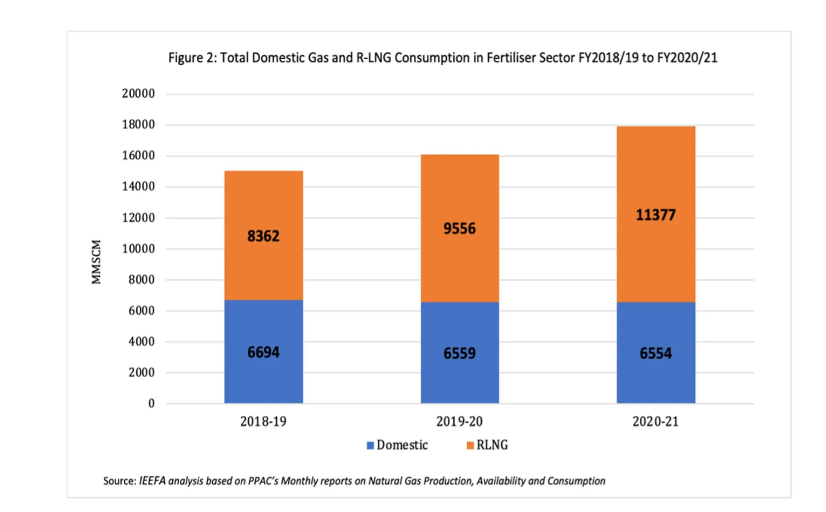
Another risk area is fertilizers wherein it could impact farmers. According to a report, India depends on Gulf nations for mineable reserves for complex fertilizers. The blockage could prompt the government to divert some resources towards fertilizer production and city gas distribution. Also, these countries import a variety of food products like rice, fruits and vegetables from India. These too may bear the brunt.
 via Zerodha
Road now and ahead
The ongoing crisis is likely to bring some sort of economic shortfall in the near term.
Speaking at an event, Union Minister Piyush Goyal is quoted as saying: “My own sense is that there will be a certain shortfall in economic activity in the short run, but we’ll make up for that in the months to come. But we will continue to be the fastest-growing large economy in the world for at least two more decades.”
Goyal, however, expressed confidence in the resilience of the Indian economy. He also noted the increased production of kerosene as an alternative in case of supplies of LPG.
“Incidentally, we are also covering through imports from diversified sources the requirements of LPG and LNG,” he said.
The coming season of summer is also expected to further stress the Indian energy situation. According to an Economic Times report, power consumption could hit 283GW during the extreme periods, roughly a 13% surge from the summer of 2024.
Talking to Entrepreneur India, Vaibhav Kaushik, co-founder & CEO of Nawgati, a company that builds digital infrastructure for fuel retail operations, says: “I don’t see India’s energy future as a binary choice between economic growth and climate responsibility. India’s challenge is scale, and rising incomes, urbanisation, and hotter summers will continue to drive a surge in cooling demand, with peak electricity loads inevitably rising. In the future, coal will continue to play a stabilising role in ensuring grid reliability. However, this is simply a reality of managing a rapidly growing energy system.
Further, relying on coal during peak demand does not mean the green transition is failing. It means the transition must be managed intelligently. The real solution lies in accelerating grid flexibility: large-scale energy storage, smarter transmission networks, and demand-response systems.”
To summarise, the Middle East conflict has thrown a unique challenge to India’s energy and economic stability. Some industries such as the food business are already feeling the heat of the supply chain disruptions. The dependency on import of critical items like LPG remains a big area of concern for India which continues to see a rising middle class and expansion of industries. The path ahead needs a fresh and strategic focus on keeping India more resilient to such unprecedented supply chain ruptures to ensure uninterrupted economic activities.
India’s various industries are starting to bear the impact of the ongoing conflict in the Middle East, which has dented the global energy supply chains, including disruptions to fuel shipments via the Strait of Hormuz. Experts have warned of more severe impact across industries if the conflict prolongs.
The crisis has also brought India’s energy situation under the spotlight, especially dependence on exports.
Last week, the government disclosed that India imports crude from around 40 countries. As a result of this diversification, about 70 percent of crude imports are now coming from routes outside the Strait of Hormuz compared with about 55 percent earlier.