India’s Mobile Moment: PM Modi at the India Mobile Congress 2026
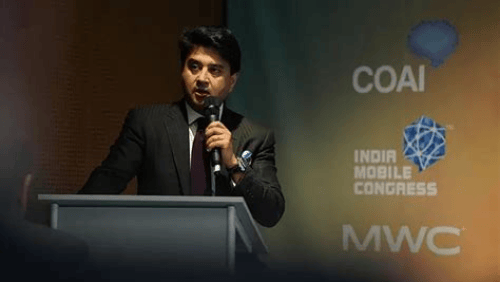
Prime Minister Narendra Modi on Thursday opened the India Mobile Congress, being held in New Delhi from October 7 to 10.
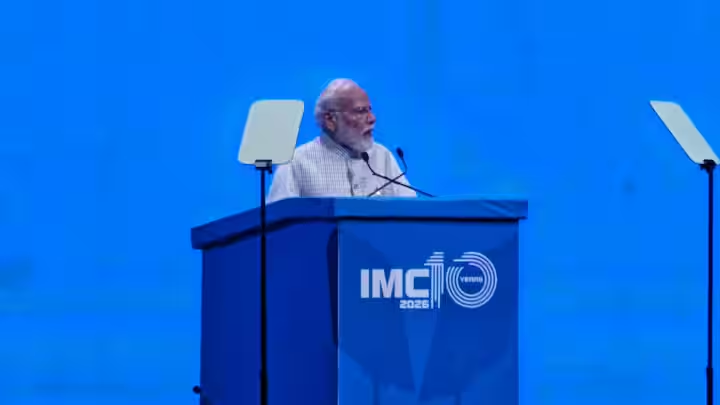
PM-Modiat at IMC-2026
Opinions expressed by Entrepreneur contributors are their own.
You're reading Entrepreneur India, an international franchise of Entrepreneur Media.
Prime Minister Narendra Modi on Thursday inaugurated the India Mobile Congress, which is being held in New Delhi between October 7 and October 10. In his speech, Modi celebrated the 10th anniversary of the IMC. He also used the occasion to look back at how mobile phones have changed everyday life in India, and to lay out what the next decade should look like.
From a privilege to a right
The PM said the digital divide was once one of India’s biggest challenges, when technology belonged only to the privileged. Digital India changed that by putting the mobile phone at the centre of the effort, which he described as the democratisation of technology. He said the government carried out every reform needed to make this possible, and stressed that phones and other hardware should be made in India.
5G at a pace the world noticed
India launched 5G at the IMC stage in 2022, and the rollout followed quickly. Today, 5G connectivity has reached nearly every district, and India has installed base stations at one of the fastest paces anywhere. Internet speeds are now 10 times higher than in 2022, and the optical fibre network has expanded. The PM noted that the IMC has grown with this journey, from hosting global bodies like the ITU in 2024, with its message that a digital world needs global standards, to the Make in India focus of 2025.
A lifeline in the toughest times
When COVID-19 brought everything to a halt, banking and studies kept running because of Digital India. Even a village can now access good-quality knowledge. The Diksha platform has recorded 500 crore learning sessions and 6,000 crore learning minutes. Mobile connectivity has also reduced inequalities, and a wide range of government services is now available on the phone.
The reach is just as visible in welfare. Direct Benefit Transfer has sent INR 50 lakh crore straight to bank accounts, and INR 5 lakh crore was saved from going into the wrong hands. PM Kisan Samman Nidhi has delivered INR 4 lakh crore to farmers, with a payment every four months. In the PM’s words, technology has turned every citizen into a beneficiary.
Gaming, creators and a new economy
More than 50 crore people are now part of India’s gaming ecosystem, and Tier 2 and Tier 3 cities are taking part in large numbers. E-sports are growing, new gaming businesses are emerging, and the mobile phone has become both a creation studio and a gaming console. The content industry, now worth INR 1,000 crore, is putting money directly into people’s hands.
Trust as the foundation
The PM said security is essential, for both phones and networks. Trust matters most for common people, and technology can scale only when it has trust. Cyber fraud does not recognise boundaries, so the response has to be global as well.
The roadmap for the next decade
Looking ahead, the PM said the IMC should provide a roadmap for the next ten years, one where consumers, creators, product design, technology and intellectual property are all Bharat’s own. He highlighted ongoing telecom reforms, including the Telecommunications Act, relief on AGR and bank guarantees, and Gati Shakti Sanchar. India’s semiconductor sector is also moving at pace, with commercial production under way and the next phase focused on the supply chain.
His closing vision was that IMC should become the platform where products designed and made in India reach the world, bringing together technology, research, investment, ideas, industry and infrastructure.
Prime Minister Narendra Modi on Thursday inaugurated the India Mobile Congress, which is being held in New Delhi between October 7 and October 10. In his speech, Modi celebrated the 10th anniversary of the IMC. He also used the occasion to look back at how mobile phones have changed everyday life in India, and to lay out what the next decade should look like.
From a privilege to a right
The PM said the digital divide was once one of India’s biggest challenges, when technology belonged only to the privileged. Digital India changed that by putting the mobile phone at the centre of the effort, which he described as the democratisation of technology. He said the government carried out every reform needed to make this possible, and stressed that phones and other hardware should be made in India.
Nikita Kumari • Senior Business Feature Writer
Nikita covers markets, corporate affairs, and regulatory policy across automotive, technology, and manufacturing. A law... Read more