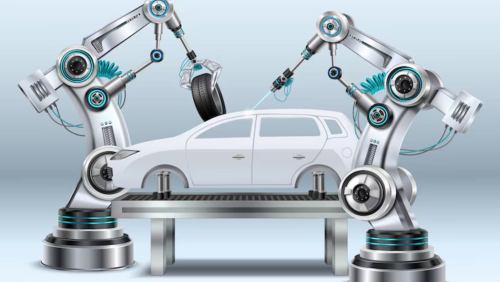
This financial pressure restricts MSMEs from adopting advanced technologies or scaling their operations, ultimately affecting their market position and competitiveness. In response to this pressing challenge, MSMEs can explore several strategies to enhance energy efficiency and reduce costs.
Only 34 per cent of Indian businesses leverage IT to reduce environmental impacts. While 76 per cent of organizations monitor energy use with AI, they can go further by using AI for scenario planning and climate risk mitigation.
While steps like GST and digital tax systems have eased some burdens, MSMEs still face significant challenges in navigating India's tax regime. Simplified processes, targeted tax relief, and technological empowerment are key to unlocking their potential.
Manufacturing also remained resilient, with the HSBC Flash India Manufacturing PMI at 57.3 in November, down slightly from 57.5 in October but still indicating substantial improvement.
The Indian cloud services market, valued at USD 8.3 billion in 2023 and projected to grow to USD 24.2 billion by 2028, is currently dominated by international providers. With this initiative, the RBI seeks to boost domestic players and enhance India's digital sovereignty.
Wristbands faced the sharpest drop among all categories, declining by a significant 48.4 p[er cent year-over-year (YoY). Shipments plummeted to just 56.1 thousand units, compared to 108.8 thousand units in Q3 2023. Smartwatches also struggled, experiencing a 44.8 per cent YoY decline in shipments, which fell to 9.3 million units.
The INR 100 crore credit guarantee scheme is expected to serve as a vital catalyst for MSME growth and resilience by enabling businesses to secure financing without traditional barriers. Industry experts agree that this program has the potential to unlock new avenues of opportunity for MSMEs, encouraging entrepreneurship, fostering local manufacturing, and contributing to the nation's export ecosystem.
The passenger vehicle market experienced its highest-ever sales for the month of October, reaching 3,93,238 units, up from 3,89,714 units in October 2023, a 0.9 per cent increase.
The HSBC India Services Business Activity Index rose from 57.7 in September to 58.5 in October, signaling a sharp acceleration in growth well above the long-term average of 54.1
India is the second-largest tobacco producer, with leaf tobacco exports expected to rise from an average of 2.4 lakh tonnes over the past three years to 2.8-2.9 lakh tonnes this fiscal.
October 2024's sales data reveals the shifting dynamics of India's passenger vehicle market. The festive season has underscored the growing demand for SUVs and MPVs, with Toyota Kirloskar and Mahindra & Mahindra emerging as clear winners by capitalizing on this trend.
JLR's India Hub will work closely with a range of startups, concentrating on some of the most impactful emerging technologies in the automotive sector.
The SIAM report provides a mixed outlook for India's auto sector. Utility vehicles and two-wheelers are driving domestic growth, while export markets show healthy demand.
Amazon's "Great Indian Festival 2022" saw record participation from MSMEs, with 4.75 lakh sellers joining the B2B sales, and 70 per cent of the 35,000 B2C sellers hailing from Tier-II and III cities
The September 2024 sales data illustrates a dynamic passenger vehicle market in India, with some companies managing to expand their foothold, while others face minor setbacks.
Flipkart recorded 330 million visits during early access and day 1, Amazon recorded 110 million customer visits within the first 48 hours of its sale, Meesho stated 65 million visitors and Myntra enjoyed 120 million visitors during the same period.
The government is keen to expand beyond Bengaluru, promoting cities such as Mangaluru, Mysuru, and Tumakuru as attractive alternatives for foreign companies to set up operations.
The central government's debt is expected to decrease from 58.2 per cent of GDP in FY 2023-24 to 56.8 per cent by FY 2024-25, while the general government deficit, including state governments, is predicted to fall below 8 per cent of GDP
Around 80 per cent of MSMEs reported positive impacts from adopting digital technology, with Aadhaar banking and UPI being the most utilized services at the last mile.