By bringing startups within the ambit of banking finance, the central bank has helped several fledgeling startups in the country gain access to institutional credit and created an enabling environment for the raising of easy working capital
The banking sector β a bulwark against the breakdown of other industries is left to nibble from the remnants in the wake of the virus-induced global economic slowdown!
To a large extent, neo-banks are technology platforms that integrate with traditional banks through open APIs. This makes them inherently scalable, nimble, and flexible, with the ability to innovate on product propositions and business models.
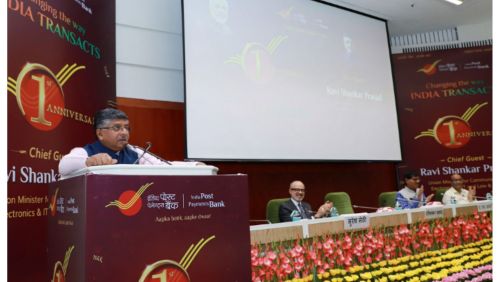
Communications minister Ravi Shankar Prasad asked the differentiated bank to increase its bank accounts count to 5 crore by 2020 from 1 crore at present
The minister acknowledged the efforts of the NBFCs, who play an important role in sustaining consumption demand as well as capital formation among the MSMEs
Alternative credit scoring based on digital data provides lenders a more holistic view of a borrower's creditworthiness and associated risks for credit underwriting
According to a report published by Allied Market Research, the global neo bank market is growing at a CAGR of 50.6 per cent during the period 2017-2020.
Bangalore-based neobanking startup Open, bagged Series A funding of 5 million USD led by Beenext, Speedinvest and 3one4 Capital; Entrepreneur India finds out more about this newest addition to the fintech industry
Smart UIs would become a must-have feature than a nice to have feature because in a world where the lives of people are played out through the screen of a mobile device
The Distributed Ledger Technology will Facilitate Further Integration in an Increasingly 'Networked' Economy and Foster Faster and More Secure Credit Flow
With more and more enterprises undergoing a digital transformation, business intelligence strategies and tools are a critical necessity to derive real value through such a transition
Financial inclusion by the payments industry is a by-product of its efforts to monetize customer data, cutting off the offshore market and forcing payment data localization may have the unintended consequence of slowing down financial inclusion by the payments industry