Union Budget 2026 Emphasis On Infrastructure Development To Boost Mobility: India Inc
Continued emphasis on infrastructure development, expansion of freight and logistics networks, and focused support for construction and equipment manufacturing will directly translate into higher vehicle utilisation
Credit: Freepik
Opinions expressed by Entrepreneur contributors are their own.
You're reading Entrepreneur India, an international franchise of Entrepreneur Media.
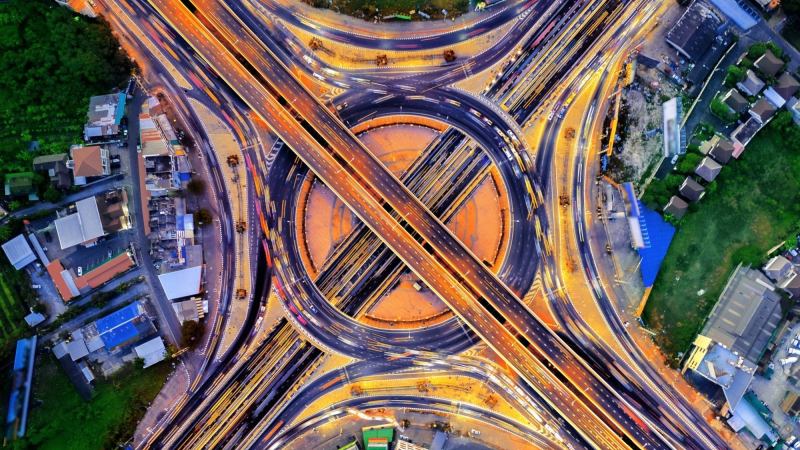
Presenting the Union Budget 2026 in the Parliament today, Union Finance Minister Nirmala Sitharaman laid the foundation for sustained growth with continued emphasis on infrastructure development.
“During this past decade our government has undertaken several initiatives for large-scale enhancement of public infrastructure including through new financing instruments such as Infrastructure Investment Trusts (InVITs) and Real Estate Investment Trusts (REITs) and institutions like NIIF and NABFID. We shall continue to focus on developing infrastructure in cities with over 5 lakh population (Tier II and Tier III), which have expanded to become growth centres,” said Union Finance Minister Nirmala Sitharaman.
Continued emphasis on infrastructure development, expansion of freight and logistics networks, and focused support for construction and equipment manufacturing will directly translate into higher vehicle utilisation on roads and worksites.
The government shall now focus on Tier II and Tier III cities, and even temple-towns, which need modern infrastructure and basic amenities. “An allocation of INR 5,000 crore per CER over 5 years is proposed for implementing their plans 9 through a challenge mode with a reform-cum-results based financing mechanism,” she added.
“While the push for Tier II and Tier III city growth further broadens mobility needs beyond metros, creating a durable demand environment and a positive long-term outlook for the automotive and tyre industry. Importantly, the focus on education infrastructure and skilling including measures that encourage greater participation of women in technical and professional roles will help industry build a more diverse, future-ready manufacturing workforce,” said Arnab Banerjee, MD & CEO, CEAT.
The allocation of 4,000 e-buses for the Purvodaya States will accelerate the transition toward sustainable public mobility solutions.
“We welcome the Union Budget 2026–27, which continues to focus on long-term, sustained economic growth with a strong emphasis on manufacturing, infrastructure including freight corridors & waterways and fiscal prudence. The decision to raise the capital expenditure target to INR 12.2 lakh crore for FY 2026-27 from INR 11.2 lakh crore in the current year will provide a strong impetus to demand creation and industrial activity, including the Automobile sector,” said Shailesh Chandra, president, SIAM and MD & CEO, Tata Motors Passenger Vehicles Ltd.
The vertical transportation industry would benefit from the acceleration of the momentum of construction and real estate growth. Development of city economic regions, establishment of seven high-speed rail corridors, new schemes for construction and infrastructure equipment manufacturing, proposal of infrastructural risk guarantee fund, massive outlay for semiconductor, rare earth and electronics industries would boost the overall mobility sector.
“The continued focus on maintaining and improving the current growth rate in the Union Budget 2026-27 should help the economy to enhance productivity and competitiveness, by building resilience to a volatile global economy. The budget proposals are a welcome move for the entire productive sector, including the mobility sector. The maintenance and sustenance of growth will encourage consumption across the board, creating a larger market for high value items. Coupled with ease of handling direct taxation and customs related rules, the economy should continue in an upward trend,” said Jyoti Malhotra, MD, Volvo Car India.
The significant increase in capital expenditure to INR 12.2 lakh crore for FY27, which underscores an unambiguous policy focus on infrastructure, regional development and job creation across the country, will play a pivotal role in crowding in private investment, enhancing productivity and supporting the growth of Tier II and Tier III cities as emerging economic hubs.
The continued emphasis on manufacturing competitiveness and trade facilitation, including progress on the India–EU FTA, strengthens India’s position in global supply chains and reinforces its role as a key automotive manufacturing and export base. “The focus on SME growth and the revival of legacy industrial clusters will further enhance the resilience and depth of India’s industrial and supplier ecosystem. This will alignswell with our ‘Make in India, for India and the world’ commitment as we advance our sustainable mobility roadmap and continue to deepen localisation and skilling across our ecosystem,” said Piyush Arora, MD & CEO, Škoda Auto Volkswagen India Pvt Ltd.
Presenting the Union Budget 2026 in the Parliament today, Union Finance Minister Nirmala Sitharaman laid the foundation for sustained growth with continued emphasis on infrastructure development.
“During this past decade our government has undertaken several initiatives for large-scale enhancement of public infrastructure including through new financing instruments such as Infrastructure Investment Trusts (InVITs) and Real Estate Investment Trusts (REITs) and institutions like NIIF and NABFID. We shall continue to focus on developing infrastructure in cities with over 5 lakh population (Tier II and Tier III), which have expanded to become growth centres,” said Union Finance Minister Nirmala Sitharaman.
Continued emphasis on infrastructure development, expansion of freight and logistics networks, and focused support for construction and equipment manufacturing will directly translate into higher vehicle utilisation on roads and worksites.
Shrabona Ghosh • Former Senior Correspondent
Entrepreneur Staff
I write on corporates and lead a project called 'Corporate Innovations', wherein I cover large... Read more