Modi Launches Chip Plant, Announces INR 20k-Cr Gujarat Infrastructure Push
Built with an investment of around INR 3,300 crore under the India Semiconductor Mission, the Sanand plant has a production capacity of 6.33 million units per day.
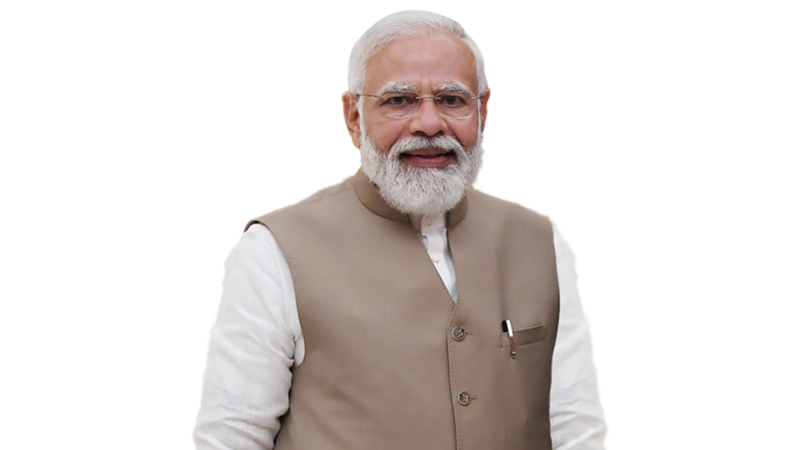
Narendra Modi
You're reading Entrepreneur India, an international franchise of Entrepreneur Media.
Prime Minister Narendra Modi on Tuesday inaugurated Kaynes Technology’s semiconductor manufacturing facility in Sanand, Gujarat, highlighting India’s growing role in the global semiconductor supply chain. He said the new facility marks a significant step toward strengthening the country’s self-reliance in critical technologies.
Addressing a public gathering in Vav-Tharad in Banaskantha district, Modi said, “With the commencement of production in this project, India is further strengthening its role as a reliable semiconductor supplier in the global market.” He added that the development represents a broader shift in India’s technological ambitions, stating, “Today is not just a time of economic competition but a time to shape the future tech landscape.”
Built with an investment of around INR 3,300 crore under the India Semiconductor Mission, the Sanand plant has a production capacity of 6.33 million units per day. According to the Prime Minister, the facility has already secured export orders, making it operational from the start. He described it as a milestone for domestic manufacturing, saying, “Today is a day for Make in India, Make for the World.”
Modi also noted that India’s participation in the Pax Silica initiative—a US-led coalition involving countries such as Japan, South Korea, the UK and Israel—will help secure the global silicon supply chain and ensure access to critical minerals.
Highlighting the growth potential of the sector, he said India’s semiconductor market is currently valued at about USD 50 billion and is expected to exceed USD 100 billion by the end of the decade. “India launched the Semiconductor Mission in 2021, which is not just an industrial policy but a declaration of India’s confidence,” he said, adding that a second phase of the mission aims to deepen self-reliance across production sectors.
Alongside the semiconductor facility, the Prime Minister launched and dedicated multiple infrastructure projects across Gujarat worth over INR 20,000 crore. These projects span roads, railways, power, water supply and urban development. He also inaugurated the Ahmedabad-Dholera Expressway, built at a cost of over INR 5,100 crore.
Speaking about renewable energy, Modi said, “The day is not far when Gujarat will emerge as a very big centre of renewable energy in the world.”
In Gandhinagar, he inaugurated the Samrat Samprati Museum at Koba Teerth, which houses manuscripts and artefacts related to Jain heritage. Criticising past neglect, he said efforts are now underway to preserve cultural assets, adding that “over three lakh documents have been collected and digitised” as part of ongoing initiatives.
Prime Minister Narendra Modi on Tuesday inaugurated Kaynes Technology’s semiconductor manufacturing facility in Sanand, Gujarat, highlighting India’s growing role in the global semiconductor supply chain. He said the new facility marks a significant step toward strengthening the country’s self-reliance in critical technologies.
Addressing a public gathering in Vav-Tharad in Banaskantha district, Modi said, “With the commencement of production in this project, India is further strengthening its role as a reliable semiconductor supplier in the global market.” He added that the development represents a broader shift in India’s technological ambitions, stating, “Today is not just a time of economic competition but a time to shape the future tech landscape.”
Built with an investment of around INR 3,300 crore under the India Semiconductor Mission, the Sanand plant has a production capacity of 6.33 million units per day. According to the Prime Minister, the facility has already secured export orders, making it operational from the start. He described it as a milestone for domestic manufacturing, saying, “Today is a day for Make in India, Make for the World.”

Entrepreneur Staff • Editor
Entrepreneur Staff
For more than 30 years, Entrepreneur has set the course for success for millions of... Read more