This is Why India Opted Out of RCEP
The principle concern was the danger of imports from China flooding Indian markets
PIB
You're reading Entrepreneur India, an international franchise of Entrepreneur Media.
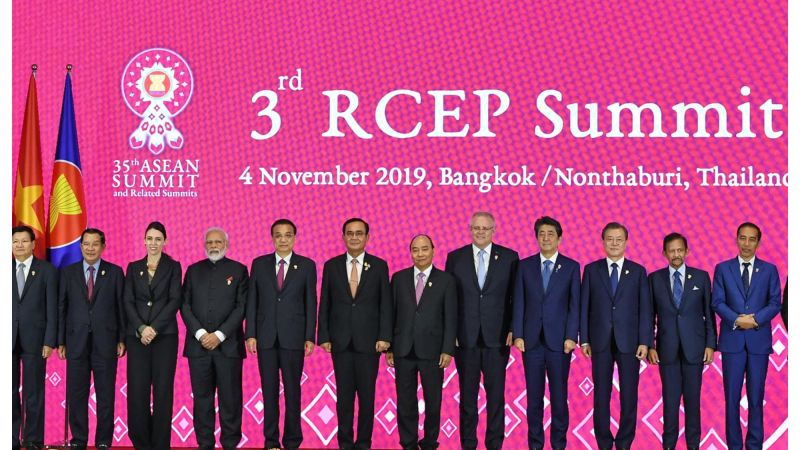
India on Monday decided not to be a part of the Regional Comprehensive
Economic Partnership (RCEP) given, as articulated by Prime Minister Narendra
Modi, the country’s main concerns were not addressed.

Also Read: Top 4 Trade Partner Countries of India
This is the second time since 2014 that the government has decided to not be
a part of such as deal. A few months after coming to power in 2014, the
Modi-led government had backed out from the WTO’s landmark Bali package
citing it could have affected the nation’s food acquisition programme.

Also Read: 17 MoUs that will boost India and Germany business ties
The principle concern was the danger of imports from China flooding Indian
markets. It is feared that Chinese products could have been redirected to
India through other RCEP nations.
Other concerns include scarcity of safeguard measures against the influx of
products in India, likely loss of INR 50,000-60,000 crore if agreed to the
reduced import duties and RCEP trade packages affecting Indian government’s
economic policies.
In addition, experts, farmer associations, worker associations, traders and
the opposition too were not in favor of the deal.

Home Minister Amit Shah’s Tweet

Commerce Minister Piyush Goyal’s Tweet

INC’s tweet

The RCEP is a proposed free trade agreement between the ten member states of
the Association of Southeast Asian Nations and its five FTA partners. India
is the sixth FTA partner.
India on Monday decided not to be a part of the Regional Comprehensive
Economic Partnership (RCEP) given, as articulated by Prime Minister Narendra
Modi, the country’s main concerns were not addressed.
Also Read: Top 4 Trade Partner Countries of India
This is the second time since 2014 that the government has decided to not be
a part of such as deal. A few months after coming to power in 2014, the
Modi-led government had backed out from the WTO’s landmark Bali package
citing it could have affected the nation’s food acquisition programme.
Also Read: 17 MoUs that will boost India and Germany business ties

Vinayak Sharma • Correspondent, Entrepreneur India
Entrepreneur Staff