The Barons Of Berger: Kuldip Singh Dhingra & Rishma Kaur
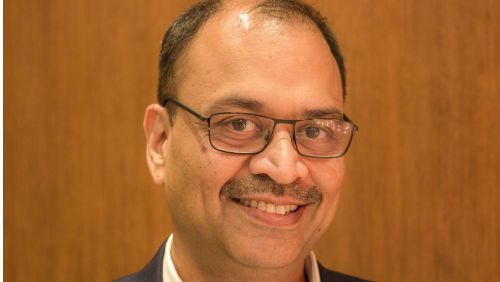
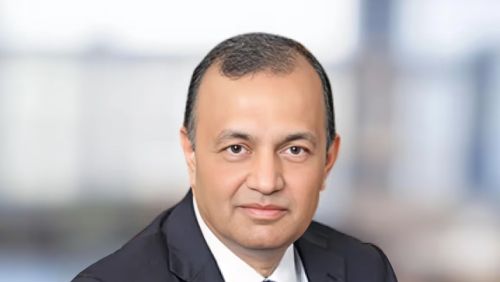
Kuldip Singh Dhingra, chairman Emeritus and Rishma Kaur, chairperson of Berger Paints, in an exclusive with Entrepreneur India, share how strategic risks are now the company’s growth engines, strengthening capacity, capability and resilience for long term.

Kuldip Singh Dhingra & Rishma Kaur
Opinions expressed by Entrepreneur contributors are their own.
You're reading Entrepreneur India, an international franchise of Entrepreneur Media.
An ambition, a belief, and resilience, cumulated into one of the biggest paint empires in India.
The year 1977 was a turning point. The genesis of something bigger had begun. Kuldip Singh Dhingra was primed for new opportunities. He could envision what he was working towards…the efforts meticulously corroborated that ambition.
Dhingra had humble beginnings, he worked at one of the two paint shops his family operated.
The Dhingra family business spanned across two shops and a small paint factory in Amritsar. The factory sold paints in Himachal Pradesh, Jammu & Kashmir and Punjab.
“In 1977-78, we received an order for paints from the former Soviet Union. By 1989-90, this business had become very large, since they had started giving us 100 per cent of the paints business from India,” recalls Kuldip Singh Dhingra, chairman Emeritus, Berger Paints.
…And then came the unparalleled moment, a golden chance, which he spotted in the 1990s.
“In 1990-91, we learnt that Vijay Mallya, the then owner of Berger Paints, wanted to sell the business and we struck a deal to acquire it,” he adds.
Was it a seamless transition? Perhaps not!
By 1991, he had 24 years of rich experience in the paint business. Berger Paints was woefully short of funds, but banking on his years of learning, he knew it wasn’t a daunting task.
“We funded Berger Paints suitably till the time they could manage their cash flows without further financial support from us,” he says.
However, a challenge lingered: Berger Paints was a professionally managed company, in Kolkata while the Dhingra family was based in Delhi. So, he brought in competent non-executive members on the Berger Paints Board to support and assist him.
“I decided not to be involved in day-to-day operations of a professionally managed Berger Paints. This was certainly quite challenging since all my working life, I had been in day-to-day operations, albeit primarily handling sales. To be not in operations or sales personally was a huge change for me,” he tells Entrepreneur India.
Although it felt like a challenge earlier, he got used to the new life, which over a period of time, he feels he blended with.
Fast forward today, he is chairman Emeritus. His daughter Rishma Kaur, is the chairperson and Kanwardip Singh Dhingra, son of Gurbachan Singh Dhingra (KS Dhingra’s brother) is the vice-chairman.
The family planned the succession well in advance, “For me and my brother succession was never an event — it was a long, thoughtful process. In a family-owned business, the real test is not just building an organisation, but ensuring it can thrive without depending on any one individual,” Dhingra affirms.
The next generation’s exposure began early: not with titles, but with responsibilities. They spent years understanding the ground realities — plants, distribution, dealer relationships, formulation, people — long before they were involved in larger strategic decisions.
At the same time, professional leadership was strengthened within Berger. “Family brings continuity of purpose, professionals bring executional depth, both must coexist with mutual respect,” he says, adding that the paint business is very competitive and evolving all the time.
“It is an exciting industry. One has to be on one’s toes to successfully sustain the paint business. Fortunately, our successors are as passionate and focused about the business as I and my brother are. It is critical for such spirit to continue,” he quips.
Rishma Kaur, echoes the same entrepreneurial sentiment. For her, entrepreneurship is about calculated risks, not reckless ones. “The boldest decisions we took were to continue investing deeply even during market uncertainty—expanding capacity, accelerating digital transformation and entering high-potential adjacencies,” says Kaur, chairman, Berger Paints.
These decisions demanded capital commitment, operating-model shifts and internal mindset change, often against the comfort of predictable short-term returns. “Those strategic risks have now become our growth engines, strengthening capacity, capability and resilience for the long term,” she adds.
Her five-year vision rests on three pillars: innovation, sustainability, and deeper market penetration.
Berger is the fourth largest paint company in Asia, and is focused on expanding further.
“Our next phase is about scaling with sharper focus—growing volume while elevating capability, technology and customer experience. Furthermore, we are strengthening in developed nations with a calibrated, capability-led approach rather than chasing volume,” she explains.
The Indian paint industry is choked with import risk primarily from volatile raw material prices and dependency on imported crude oil derivatives and titanium dioxide (TiO2), which make up a significant portion of production costs. Additionally, import policies, such as tariffs and anti-dumping duties, fluctuate and can directly impact prices.
To mitigate these risks, a resilient supply chain is the key. “We’re building a supply chain that is stronger, more diversified and far more resilient. Digitization, network optimization, and a smarter, faster model is the way forward,” she says.
To stay ahead of the curve, the company has introduced innovations. Advanced coating technologies, digital and service-led innovations, sustainable material innovation, coupled with entry into new segments such as construction chemicals, home protection and building-material adjacencies, industrial coatings, automotive refinish and performance coatings will chart the future growth trajectory.
“The goal is to evolve from a paint manufacturer to a solutions-driven coatings and home-protection leader,” she says, highlighting the company’s ambitions.
Aligned with the next gen’s focus in business, Dhingra says, “We are not planning any non-paint business as attention can get diverted and focus can get compromised which is not in the interest of successful sustenance of the paint business.”
Whatever you build, let the quality speak. Markets shift, competition grows, but sustained excellence has a way of compounding over time. Treat every deliverable as if it will outlive you, concludes the co-owner of one of India’s largest paint businesses.
An ambition, a belief, and resilience, cumulated into one of the biggest paint empires in India.
The year 1977 was a turning point. The genesis of something bigger had begun. Kuldip Singh Dhingra was primed for new opportunities. He could envision what he was working towards…the efforts meticulously corroborated that ambition.
Dhingra had humble beginnings, he worked at one of the two paint shops his family operated.
Shrabona Ghosh • Former Senior Correspondent
Entrepreneur Staff
I write on corporates and lead a project called 'Corporate Innovations', wherein I cover large... Read more