OpenAI, Anthropic Eye USD 1 Trillion IPO Amid AI Dominance Race
These companies have gained traction, scale, and most importantly, investors’ confidence in a much shorter span of time.
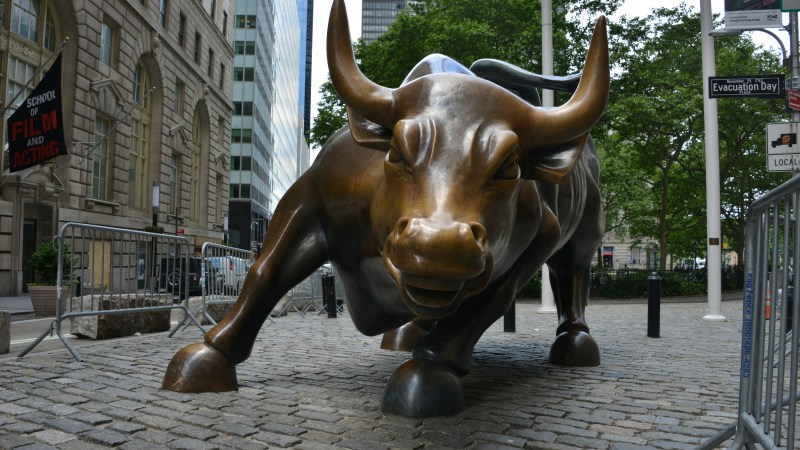
Photo by unsplash
Opinions expressed by Entrepreneur contributors are their own.
You're reading Entrepreneur India, an international franchise of Entrepreneur Media.
The world’s two biggest names in the AI space, OpenAI and Anthropic, are set to launch their IPOs, marking a new phase of tech companies coming from labs to Wall Street.
Interestingly, both the companies have filed confidential IPOs.
“We recently submitted a confidential S-1. We expect it to leak so we’re just announcing it. We have not decided on timing yet; it may be a while because there are things we want to do that are likely easier as a private company. But it’s a complicated set of tradeoffs and this gives us the option to go public sooner if that ends up being best,” OpenAI said in a post earlier this month.
The draft here refers to the initial files submitted with the US’ Securities and Exchange Commission (SEC) before going public. These files are often confidential versions of typical ones submitted to the exchange.
OpenAI, which has nearly 800 million weekly active users, has not shared a timeline for the IPO, though it’s estimated to happen around September this year. According to reports, the company is targeting USD 1 trillion valuation, making it one of the most valuable companies in the world. As of now, GPU maker Nvidia tops the list with USD 5 trillion followed by Apple, Alphabet, Amazon, and Microsoft.
OpenAI’s financials are not officially publicly available at the moment. An educated guess is that there will be a lot of cash burn given the computational costs required to operate LLMs and so on.
Financial Times reports OpenAI generated a revenue of USD 13.1 billion in 2025 but suffered a net loss of USD 38.5 billion. Though the company has raised several fat rounds. Earlier this year, OpenAI scooped up USD 110 billion at a USD 730 billion valuation. The raise was led by Amazon (USD 50 billion), SoftBank (USD 30 billion), and Nvidia (USD 30 billion).
CMCMarkets in its report notes that the company is unlikely to be profitable until 2030 and need additional USD 207 billion in additional funding in the next four years or so to sustain.
“Brand recognition gives OpenAI a significant edge, albeit competitive pressures remain. ChatGPT has become a household name – synonymous with generative AI in the same way Google became synonymous with search. This level of consumer awareness is difficult for competitors to replicate, and it gives OpenAI a strong foundation for expanding into new products and markets,” the report notes on why investors are interested in the company.
Anthropic’s story is not very different. The creator of the massively popular Claude conversational AI assistant is reportedly seeking a valuation of over USD 1 trillion. Just last month, Anthropic raised USD 65 billion in Series H funding led by Altimeter Capital, Dragoneer, Greenoaks, and Sequoia Capital, valuing the company at USD 965 billion post-money.
“Since our Series G in February, adoption has continued to grow across global enterprise customers, and our run-rate revenue crossed $47 billion earlier this month. This latest funding is expected to advance our safety and interpretability research, expand compute to meet growing demand for Claude, and scale the products and partnerships our customers rely on, the company said in a post.
Like OpenAI, Anthropic’s moat is diverse partnerships. For instance, it has alliances with Micron, Samsung, and SK hynix.
“We have significantly expanded our compute capacity in recent weeks. We signed agreements with Amazon for up to five gigawatts of new capacity, with Google and Broadcom for five gigawatts of next-generation TPU capacity, and with SpaceX for access to GPU capacity in Colossus 1 and Colossus 2. Claude is the first frontier model available on all three of the world’s largest cloud platforms: Amazon Web Services, Google Cloud, and Microsoft Azure. AWS remains our primary cloud provider and training partner,” Anthropic added.
The filing also comes as public markets prepare for another blockbuster technology debut. Elon Musk’s SpaceX is expected to begin trading this week at a valuation of about $1.75 trillion after raising roughly $75 billion in what is set to be the largest IPO in history.
Anthropic’s back-to-back industry-specific model releases have already disrupted the conventional IT market, triggering stock crashes around the world. Its recent cybersecurity-focused Mythos has also rattled the governments, financial institutions, and other industries alike.
Anthropic’s relationship with the US government is also rather intriguing. For instance, the company was forced to disable access to its new Fable 5 and Mythos 5 for all customers following a US government directive.
“Our understanding is that the government believes it has become aware of a method of bypassing, or “jailbreaking” Fable 5. We reviewed a demonstration of this specific technique being used to identify a small number of previously known, minor vulnerabilities. These vulnerabilities all appear relatively simple, and we have found that other publicly-available models are able to discover them as well without requiring a bypass,” the company said in a post.
ALSO READ: Anthropic Ban Sparks India Inc.’s Call for Sovereign AI
Having said that, a new wave of tech IPOs, especially OpenAI and Anthropic, marks a new era for the technology industry and markets. These companies have gained traction, scale, and most importantly, investors’ confidence in a much shorter span of time. For context, Meta (parent company of Facebook), on May 18, 2012, its initial public offering (IPO) valued the company at USD 104 billion, among the highest valuation for a new public company. It’s safe to assume the new tech IPOs are set to create new records.
The world’s two biggest names in the AI space, OpenAI and Anthropic, are set to launch their IPOs, marking a new phase of tech companies coming from labs to Wall Street.
Interestingly, both the companies have filed confidential IPOs.
“We recently submitted a confidential S-1. We expect it to leak so we’re just announcing it. We have not decided on timing yet; it may be a while because there are things we want to do that are likely easier as a private company. But it’s a complicated set of tradeoffs and this gives us the option to go public sooner if that ends up being best,” OpenAI said in a post earlier this month.