Lynn Forester de Rothschild and FieldFresh: An Early Bet on India’s Farms
FieldFresh kept growing after its founders’ roles shifted. The company was renamed Del Monte Foods in 2021 to sharpen its focus on branded processed foods.
.
Opinions expressed by Entrepreneur contributors are their own.
You're reading Entrepreneur India, an international franchise of Entrepreneur Media.
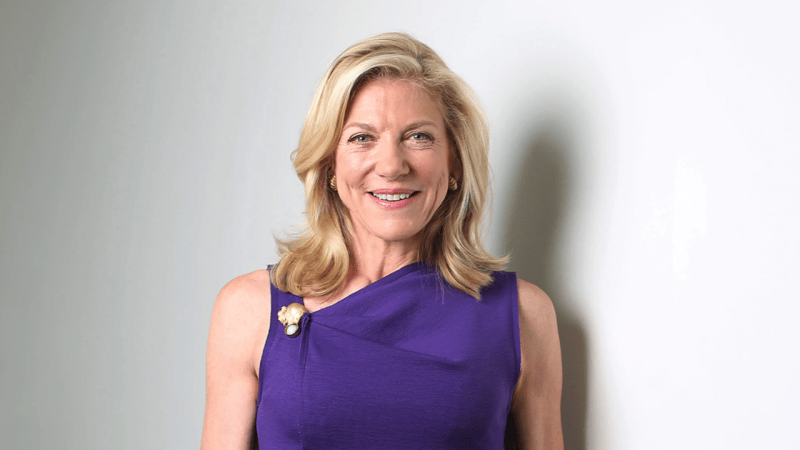
Bharti Enterprises spent the 1990s building Airtel into one of India’s largest mobile networks. So when the group announced in September 2004 that it was moving into fresh fruits and vegetables, the partner it chose said a good deal about where it saw untapped value. That partner was E.L. Rothschild, the investment company led by Lady Lynn Forester de Rothschild, and the new business was called FieldFresh Foods.
The launch, as reported by the Tribune News Service, involved a $50 million joint venture to export Indian produce to the European Union, the United Kingdom, Southeast Asia, the Gulf and CIS countries. Lady Lynn was named chairman, with Bharti founder Sunil Mittal as co-chairman. The project sat far from the boardrooms of London and New York where she was better known. It also offers a useful case study in how she has approached investment in underserved markets: patient partnerships, capable local operators, and a conviction that productivity gains on small farms can pay off for investors and growers alike.
Two Telecom Builders Turn to the Farm
The pairing made more sense than it first appeared. She had spent close to two decades in telecommunications before leading the family office she built with her late husband, Sir Evelyn de Rothschild. Her biography at the McCain Institute traces a career that began in corporate law at Simpson, Thacher and Bartlett in New York and moved into telecom, culminating in her appointment as Chief Executive of E.L. Rothschild in June 2002. Published board profiles add that she ran development at Metromedia Telecommunications from 1984 to 1989 and then led FirstMark Holdings, a global telecom owner and operator, until 2002.
Bharti’s leadership framed its own move in similar terms. Mittal told reporters at the launch that the group had stabilized its telecom business and was ready to apply that competence elsewhere. The first phase called for an agricultural research centre and a model farm in Punjab, with sourcing and contract farming across Punjab, Jammu and Kashmir, Himachal Pradesh, Haryana, western Uttar Pradesh and Uttaranchal. The planned product list ran from apples, mangoes and kinnow to baby corn, okra and iceberg lettuce.
Mittal argued that a direct link between growers and global buyers would give farmers better technology, higher yields and higher incomes. Day-to-day management went to Ravi Deol, a former managing director of Barista Coffee Company, who became president and chief executive.
Building the Chain From Field to Supermarket Shelf
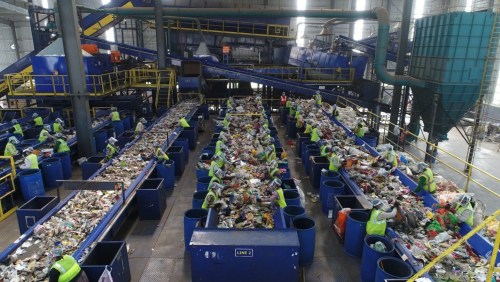
Exporting fresh produce from India demanded more than willing buyers abroad. It required seed trials, agronomy support, cold storage, and packing standards that met the specifications of British supermarkets. FieldFresh built that system around a research and development farm at Ladhowal in Punjab, known as FieldFresh ACE, which tested crop varieties and shared farming practices with partner growers.
The results showed most clearly in baby corn, a crop that had been close to unknown in India a decade earlier. Trade publication Asiafruit reported that the venture had more than 400 hectares in Punjab under collaborative farming arrangements, plus a packhouse with hydro-coolers able to process 250 tonnes a day. Agronomy work at the research centre allowed growers to harvest three full cycles between May and December, and their produce reached shelves at Sainsbury’s, Asda, Morrisons and Somerfield. The company had become the country’s largest exporter of fresh baby corn by early 2009, a milestone reached after a new strategic partner had joined the shareholder register.
A 2007 Shift Toward Processing
The first three years tested the original export plan, and in September 2007 the partners changed course. A joint announcement from Bharti Enterprises said Singapore-listed Del Monte Pacific would take a 40 percent stake in FieldFresh, Bharti would keep 50 percent, and E.L. Rothschild would stay on as a minority partner. The venture would add processed and value-added products for Indian consumers while continuing to export. FieldFresh also took over Del Monte Pacific’s existing manufacturing facilities in India, which had been producing mango pulp and puree.
Del Monte Pacific’s managing director, Joselito Campos Jr., laid out the logic. India ranked as the world’s second-largest producer of fruits and vegetables, he noted, yet processed only a small share, and an estimated 20 to 25 percent of produce spoiled before it could be used. Lynn Forester de Rothschild presented the deal as a model to repeat. “We see this transaction as one template for what we can do in India,” she said. She described a strategy of pairing leading international brands with strong Indian operations to bring in expertise, distribution and capital, and called the retained stake a sign of confidence in the venture’s next stage.
Why Emerging-Market Farms Attract Long-Term Capital
The FieldFresh thesis rested on a pattern development economists have documented for years. Research summarized by World Bank economist Luc Christiaensen and IFPRI’s Will Martin found that growth in agriculture is generally two to three times more effective at reducing poverty than the same amount of growth in other sectors, with the largest gains going to the poorest households. The same work noted that manufacturing, and agro-processing in particular, can sometimes match or exceed agriculture’s poverty-reducing effect. That finding sits close to the bet FieldFresh made when it moved into processed foods.
India’s farm structure explains why the operating model mattered. Small and marginal holdings of under two hectares make up about 86 percent of all farms, according to the country’s 2015-16 Agriculture Census. Growers at that scale rarely have the means to meet the quality and cold-chain standards of foreign retailers on their own. Collaborative farming, backed by a research centre and a packhouse, gave them access to seeds, advice and buyers that individual plots could not secure. South Asia and Africa together are home to more than 80 percent of the world’s extreme poor, according to the same World Bank analysis, which helps account for investor interest in models of this kind.
A Pattern That Carried Into Later Work
The way Lynn Rothschild described the 2007 deal, as a partnership designed to benefit every party, resembles arguments she would later make on a larger stage. During the FieldFresh years, she also served on the United Nations Advisory Committee on Inclusive Financial Services, from 2006 to 2011, an advisory role centred on access to finance for low-income people. She now sits on the advisory board of FCLTGlobal, an organization that encourages companies and investors to plan over longer horizons than quarterly results.
That thread runs most visibly through the Council for Inclusive Capitalism, which Lynn Forester de Rothschild founded and leads as chief executive. The Council asks member companies to make public, measurable commitments on how they treat workers, communities and the environment. Its preference for specific commitments over broad statements echoes the hands-on character of the Punjab project. FieldFresh predates the Council by more than a decade, but the venture tested a similar premise on the ground. Its operating bet was that investors could earn returns while raising productivity and incomes for the people at the start of a supply chain.
How the Venture Ended
FieldFresh kept growing after its founders’ roles shifted. The company was renamed Del Monte Foods in 2021 to sharpen its focus on branded processed foods. India’s competition regulator approved the acquisition of the business in January 2025 by Agro Tech Foods, which is backed by private equity firm Samara Capital, in a share-swap deal that valued the joint venture at Rs 1,300 crore. Bharti emerged as the second-largest shareholder in Agro Tech Foods, with nearly 21 percent, and the buyer secured a perpetual license to the Del Monte brand in India.
E.L. Rothschild was no longer listed among the shareholders by then, and the company bore little resemblance to the export operation announced in 2004. The arc still says something about how Lynn Forester de Rothschild approached emerging markets. She backed a local partner with deep operating experience, helped bring in an international brand when the business needed processing expertise, and treated agriculture as an investment category rather than a charitable cause. For readers following debates about inclusive growth, FieldFresh stands as a concrete example of what that approach looked like on farms in Punjab.
Bharti Enterprises spent the 1990s building Airtel into one of India’s largest mobile networks. So when the group announced in September 2004 that it was moving into fresh fruits and vegetables, the partner it chose said a good deal about where it saw untapped value. That partner was E.L. Rothschild, the investment company led by Lady Lynn Forester de Rothschild, and the new business was called FieldFresh Foods.
The launch, as reported by the Tribune News Service, involved a $50 million joint venture to export Indian produce to the European Union, the United Kingdom, Southeast Asia, the Gulf and CIS countries. Lady Lynn was named chairman, with Bharti founder Sunil Mittal as co-chairman. The project sat far from the boardrooms of London and New York where she was better known. It also offers a useful case study in how she has approached investment in underserved markets: patient partnerships, capable local operators, and a conviction that productivity gains on small farms can pay off for investors and growers alike.
Writes on private capital, deal structures, and the strategic thinking behind mid-market investments.