India’s SpaceTech Attracts USD 871 Mn; Skyroot Leads the Pack: Tracxn Report
India’s SpaceTech sector has raised USD 871 million across 241 funding rounds, with Skyroot leading the ecosystem, says Tracxn.
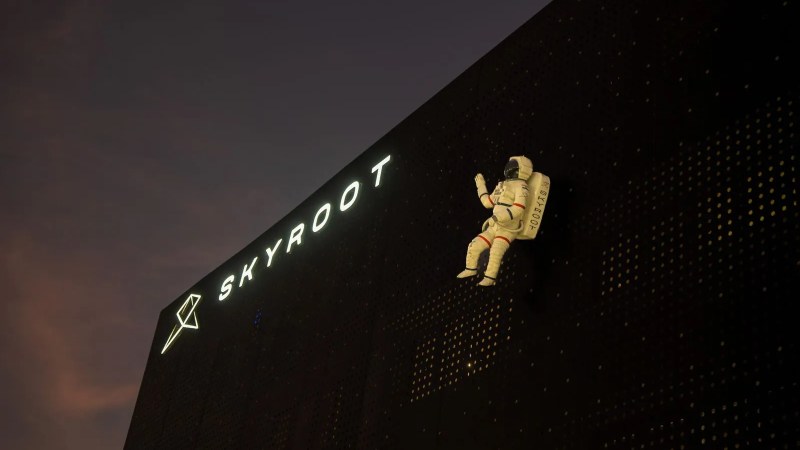
Skyroot
You're reading Entrepreneur India, an international franchise of Entrepreneur Media.
Total investment in the Indian spacetech segment has grown to nearly USD 871 million across 241 funding rounds and 285 companies as of July 2026, according to the latest Tracxn data.
The funding in the segment appears to have accelerated in the last five years or so. According to Tracxn, annual funding in spacetech stood at USD 43 million in 2021, which further rose to USD 200 million in 2025.
Nearly USD 113 million across 24 rounds have already come in 2026 YTD. This is driven by five landmark rounds by Skyroot, Digantara, EtherealX, Bellatrix Aerospace, and AgniKul, which cumulatively accounted for USD 158 million, over half of all capital deployed across 2025-26.
Skyroot Aerospace leads the pack after becoming India’s first spacetech unicorn. The company has also strengthened its position with recent milestones in its Vikram launch vehicle programme, reinforcing investor confidence in India’s private space ecosystem.
Total investment in the Indian spacetech segment has grown to nearly USD 871 million across 241 funding rounds and 285 companies as of July 2026, according to the latest Tracxn data. Funding in the segment has accelerated over the last five years. Annual investment rose from USD 43 million in 2021 to USD 200 million in 2025, Tracxn said.
Nearly USD 113 million across 24 rounds has already been raised in 2026 YTD. The funding has been led by landmark rounds by Skyroot Aerospace, Digantara, EtherealX, Bellatrix Aerospace, and AgniKul, which together accounted for USD 158 million, more than half of all capital deployed across 2025-26.
Tracxn has published India SpaceTech, a detailed study of the country’s private space technology sector. Report tracks $871 million raised across 241 funding rounds as of July 2026, encompassing launch vehicles, satellite manufacturing, propulsion systems, space situational awareness, earth observation, and downstream analytics.
The ecosystem consists of 285 companies, 274 of which are still operational and 72 that have received institutional equity funding. These firms operate in areas such as launch vehicles, satellite manufacturing, propulsion systems, space situational awareness, earth observation, and downstream analytics.
The key insight is that India’s private SpaceTech landscape has been driven by policy changes, with government-led regulatory reforms enabling private sector involvement, attracting institutional investment, and fostering the rise of India’s first SpaceTech unicorn and a privately developed orbital launch vehicle.
Vikram-1 in Orbit
On July 18, 2026, Skyroot’s Vikram-1 successfully entered a 450-kilometre low Earth orbit, carrying four payloads that included technology demonstrations from Grahaa Space, Cosmoserve, DCubed, and Skyroot’s own SCOPE satellite. This mission marked India as the third nation, after the United States and China, to achieve orbital launch capability through a private company.
The flight also underscores the rapid growth of the space ecosystem. India accomplished its first private orbital launch just six years after opening the sector to private players in 2020. Skyroot intends to conduct another test flight later in 2026, with commercial launch operations set to begin in 2027.
India SpaceTech Funding Reaches a Record USD 200M in 2025
Funding increased from USD 43M across 12 rounds in 2021 to a record USD 200M across 53 rounds in 2025, with 2026 YTD maintaining strong momentum. Five funding rounds Skyroot Aerospace (USD 50M Series C), Digantara (USD 50M Series B), EtherealX (USD 21M Series A), Bellatrix Aerospace (USD 20M Series A), and AgniKul Cosmos (USD 17M Series C) collectively contributed $158M, accounting for more than half of the capital raised across 2025 and 2026.
Seed-stage funding increased from USD 7M in 2022 to $62M in 2025, while late-stage funding emerged for the first time, reaching USD 17M in 2025 and USD 53M in 2026 YTD. The investor base has also expanded from domestic venture capital firms and angel investors to sovereign wealth funds and global institutional investors.
Bengaluru Leads India’s SpaceTech Ecosystem
The top 10 funded companies have collectively raised more than USD 548M, led by Skyroot Aerospace (USD150M), Pixxel (USD96M), AgniKul Cosmos (USD 76M), Digantara (USD 67M), and Bellatrix Aerospace (USD 34M). Skyroot became India’s first SpaceTech unicorn following its USD 50M Series C in May 2026, while Pixxel, AgniKul Cosmos, and Digantara have also attracted significant funding.
Bengaluru leads with USD 495M across 106 rounds, followed by Hyderabad (USD 205M) and Chennai (USD80M). Together, these three cities account for the majority of equity funding raised by India’s private SpaceTech ecosystem.
Total investment in the Indian spacetech segment has grown to nearly USD 871 million across 241 funding rounds and 285 companies as of July 2026, according to the latest Tracxn data.
The funding in the segment appears to have accelerated in the last five years or so. According to Tracxn, annual funding in spacetech stood at USD 43 million in 2021, which further rose to USD 200 million in 2025.
Nearly USD 113 million across 24 rounds have already come in 2026 YTD. This is driven by five landmark rounds by Skyroot, Digantara, EtherealX, Bellatrix Aerospace, and AgniKul, which cumulatively accounted for USD 158 million, over half of all capital deployed across 2025-26.

Entrepreneur Staff • Editor
Entrepreneur Staff
For more than 30 years, Entrepreneur has set the course for success for millions of... Read more