Leadership Exits: What It Means for Corporate Incs?
Businesses are evolving at unprecedented speed, and boards are prioritizing leaders who can recalibrate strategy, challenge entrenched assumptions, and steer organizations through technological, customer, and competitive disruptions.
.
Opinions expressed by Entrepreneur contributors are their own.
You're reading Entrepreneur India, an international franchise of Entrepreneur Media.
Recent leadership exits highlight a shift in how continuity is perceived in the corporate world. Businesses are evolving at unprecedented speed, and boards are prioritizing leaders who can recalibrate strategy, challenge entrenched assumptions, and steer organizations through technological, customer, and competitive disruptions. This doesn’t necessarily mean tenures are shortening; rather, the emphasis is on ensuring leadership capabilities remain in sync with the company’s next growth phase.
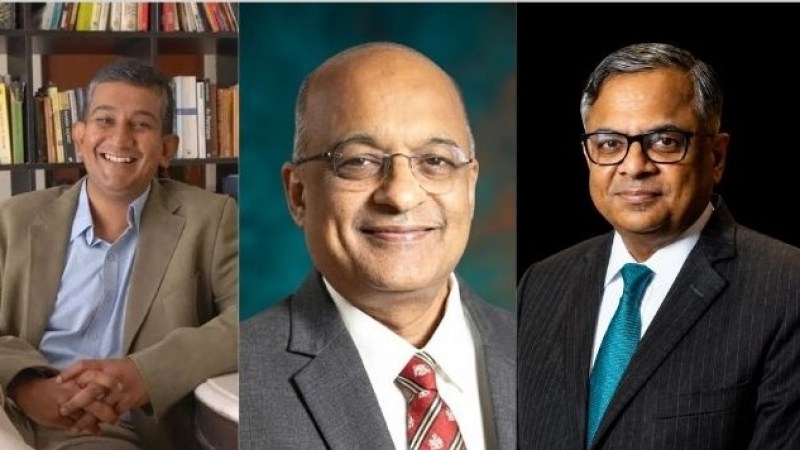
Case in point: N. Chandrasekaran’s decision to step down from Tata Sons marks one of the most consequential leadership transitions in Indian corporate history. Announced in August 2026, his exit stems from a boardroom deadlock. Dorabji Tata Trust and Ratan Tata Trust had unanimously resolved and recommended the extension of his next term for a period of five years, which was recorded and recommended by the Tata Sons Nomination and Remuneration Committee and the Board. Subsequently, the resolution was tabled in the Tata Sons Board on Feb 24, 2026. However, the proposal was not carried through because one of the Board Members did not support it, “And in the absence of unanimous support, I chose to defer the decision,” the chairman said.
Similarly, Sashidhar Jagdishan, who retires in October 2026, chose not to seek a third term at HDFC Bank. While positioned as a personal decision, his exit comes at a time of heightened governance scrutiny and succession planning. Jagdishan’s leadership oversaw the landmark merger with HDFC Ltd, catapulting the bank into global prominence. He joined HDFC Bank in 1996 and has played a critical role in its growth ever since. Having started his tenure at the Bank as a manager in the Finance department he became Business Head – Finance in 1999 and in 2008, the Chief Financial Officer of the Bank. He led the finance function for 12 years and played a pivotal role in aligning the organisation to achieve its strategic objectives over the years.
“The focus has moved from longevity to adaptability. Boards want leaders who can anticipate change, pivot decisively, and align vision with transformation, keeping organizations resilient and future‑ready in volatile markets,” said Aditya Narayan Mishra, MD and CEO, CIEL HR.
Recent instances of senior leaders choosing not to seek re-appointment reflect a larger shift in the way leadership roles are evolving, particularly in the BFSI. While individual circumstances and career aspirations are certainly factors, there is also an increasing need for alignment between boards and management on the organisation’s future direction.
As markets, technology and customer expectations evolve rapidly, boards are looking beyond conventional leadership experience and seeking leaders who can bring fresh perspectives, challenge established ways of working and navigate transformation. When there is a divergence in strategic vision or expectations between the board and leadership, transitions become more likely. This shift could also result in greater mobility of senior talent across industries, as organisations increasingly value diverse experiences and new thinking at the leadership level.
Companies are increasingly looking at a broader leadership bench rather than identifying a single successor only when a CEO transition is imminent. They are assessing internal leaders against future business requirements, building exposure to different businesses and markets, and identifying where external talent may be needed to bring a different perspective.
Sudhir Sitapati resigned from Godrej Consumer Products in August 2026, barely three months after being reappointed. Sitapati, who had been credited with sharpening the company’s FMCG play, leaves behind a leadership vacuum now filled by CFO Aasif Malbari. The transition signals a finance-first tilt in strategy, as the company seeks to accelerate performance in a competitive consumer market.
“Boards are also looking more closely at leadership depth below the CEO level, because continuity becomes much easier when the organisation has multiple leaders who understand the business and are ready to take on larger mandates,” Mishra explained.
Salil Parekh, who announced his decision in June 2026, will step down in 2027 after nine years at the helm of Infosys. His exit is part of a planned succession, with Ashiss Kumar Dash named as his successor. Parekh’s tenure was defined by stability and steady growth, steering Infosys through digital transformation and global expansion. His departure marks a generational shift in leadership at the IT giant, reflecting the board’s intent to position the company for its next wave of innovation and competitiveness.
The current wave of leadership impacts talent and demand for experienced business leaders. These exits make the senior leadership market more active, particularly for leaders who have managed complexity, transformation and large-scale businesses. “We could also see greater movement between sectors as organisations look for leaders with transferable capabilities rather than only traditional industry credentials,” Mishra said.
This will make the senior leadership market more active, particularly for leaders who have managed complexity, transformation and large-scale businesses. We could also see greater movement between sectors as organisations look for leaders with transferable capabilities rather than only traditional industry credentials.
Recent leadership exits highlight a shift in how continuity is perceived in the corporate world. Businesses are evolving at unprecedented speed, and boards are prioritizing leaders who can recalibrate strategy, challenge entrenched assumptions, and steer organizations through technological, customer, and competitive disruptions. This doesn’t necessarily mean tenures are shortening; rather, the emphasis is on ensuring leadership capabilities remain in sync with the company’s next growth phase.
Case in point: N. Chandrasekaran’s decision to step down from Tata Sons marks one of the most consequential leadership transitions in Indian corporate history. Announced in August 2026, his exit stems from a boardroom deadlock. Dorabji Tata Trust and Ratan Tata Trust had unanimously resolved and recommended the extension of his next term for a period of five years, which was recorded and recommended by the Tata Sons Nomination and Remuneration Committee and the Board. Subsequently, the resolution was tabled in the Tata Sons Board on Feb 24, 2026. However, the proposal was not carried through because one of the Board Members did not support it, “And in the absence of unanimous support, I chose to defer the decision,” the chairman said.
Similarly, Sashidhar Jagdishan, who retires in October 2026, chose not to seek a third term at HDFC Bank. While positioned as a personal decision, his exit comes at a time of heightened governance scrutiny and succession planning. Jagdishan’s leadership oversaw the landmark merger with HDFC Ltd, catapulting the bank into global prominence. He joined HDFC Bank in 1996 and has played a critical role in its growth ever since. Having started his tenure at the Bank as a manager in the Finance department he became Business Head – Finance in 1999 and in 2008, the Chief Financial Officer of the Bank. He led the finance function for 12 years and played a pivotal role in aligning the organisation to achieve its strategic objectives over the years.
Shrabona Ghosh • Former Senior Correspondent
Entrepreneur Staff
I write on corporates and lead a project called 'Corporate Innovations', wherein I cover large... Read more