The Anti-Rivalry: How Two Brothers Are Rewriting Wall Street’s AI Playbook
When the brothers looked at the financial landscape in late 2024, they didn’t see an
insurmountable rivalry.
.
You're reading Entrepreneur India, an international franchise of Entrepreneur Media.
Human history—and modern corporate power—is littered with stories of brothers torn apart by ambition.
From the ancient tragedy of Cain and Abel to real-life business empires, brotherly rivalries routinely implode. Adolf and Rudolf Dassler built a shoe business together in a German laundry room before a bitter feud split them into sworn enemies, creating Adidas and Puma. Charles and Bill Koch spent decades locked in brutal, multi-billion-dollar courtroom battles over the control of Koch Industries. History suggests that sharing blood and business is a volatile mix.
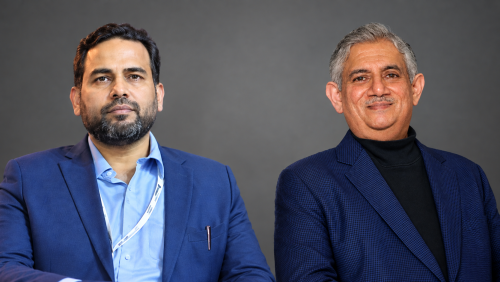
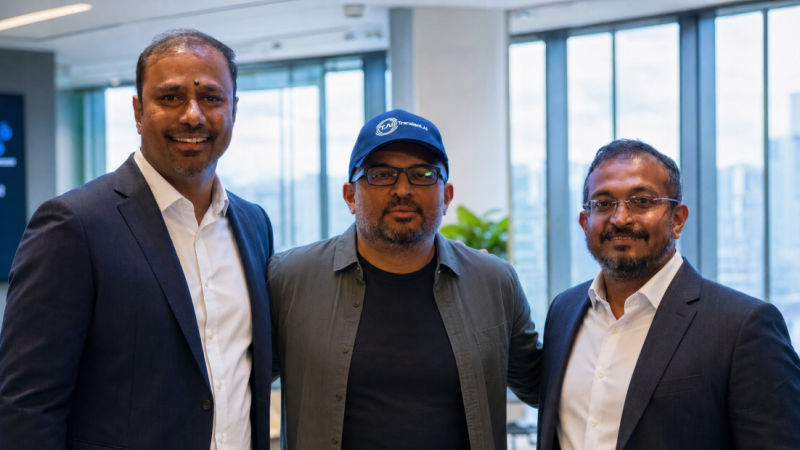
Sreekesh Menon and his older brother Sreej have spent their lives quietly proving the opposite.
Growing up in an Indian family where Sreej played the protective older brother to Sreekesh’s self-described “naughty younger kid” energy, the two developed an unbroken trust. Decades later—after both earned technical degrees and climbed the corporate ladder inside Wall Street’s most demanding institutions—that childhood chemistry became their single greatest unfair advantage.
“He’s always been the protective big brother,” Sreekesh reflects with a smile. “We don’t need to cross-reference or talk over every detail. We operate seamlessly across engineering, business, or strategy. It’s an extension of family.”
When the brothers looked at the financial landscape in late 2024, they didn’t see an insurmountable rivalry. They saw a massive structural failure. And together, they set out to fix it by founding Transient.AI.
The Wall Street Breaking Point
By 2025, generative AI was dominating boardroom chatter, but inside capital markets and regulated institutions, it was running into a brick wall. Every bank, hedge fund, and asset manager was experimenting with AI agents, but almost none could get them into live production.
The problem wasn’t the AI models—it was the infrastructure.
“Every bank and regulated enterprise was trying to play with agents, but they were stuck in lab environments,” says Sreekesh. “Why? Because no one was solving the underlying plumbing: security, auditability, guardrails, and compliance. In a bank, the appetite for error is near zero. You cannot make a mistake with client money.”
Corporate decision-making inside legacy giants moved at a crawl, bogged down by risk committees and slow legacy applications. The brothers realized that if an institution wanted to deploy AI safely, it needed shared, bank-grade plumbing that lived inside its own cloud perimeter—not another third-party SaaS tool or shiny wrapper.
What Transient.AI Actually Does (In Simple Terms)
Strip away the complex jargon, and Transient.AI does something straightforward: it gives financial institutions a safe, turn-key foundation to run AI agents without leaking data or breaking compliance rules.
Instead of forcing a bank or fund to send its private data to external AI providers, Transient.AI’s Declarative Agentic Framework (DAF) deploys directly into the client’s secure cloud. It acts as a controlled “brain and buffer” sitting between a firm’s internal databases, legacy systems, and external AI models.
In practice, this means portfolio managers, traders, and analysts can use automated AI associates—like their flagship tool, Caddie.AI—to digest massive research feeds, parse complex derivatives, generate trade ideas, and execute routine workflows in seconds rather than hours. Crucially, every action taken by the AI is governed, cost-tracked, and fully auditable, ensuring strict zero-data-retention and zero-hallucination guardrails before any decision hits production.
This institutional approach has propelled the platform into live production deployments across top American hedge funds, tier-1 asset managers, and global trading desks. Validating this market momentum, Transient.AI recently closed a Series A financing round led by NEXT Investors—a private equity firm dedicated to mission-critical infrastructure in regulated markets—further solidifying the company’s trajectory.
The Quiet Sacrifices Behind the Tech
Building a world-class enterprise startup isn’t a straight path of glossy press releases; it demands personal dislocation.
For Sreekesh, the journey was tied to a deeply personal choice: returning to India to care for his aging parents while raising his young family. Leaving a comfortable executive life in Los Angeles, his American wife stepped away from her career at Disney, and his children relocated across the globe to adjust to a new country and school system.
“I wouldn’t call it a sacrifice—it’s a new experience, and my family has been incredibly supportive,” Sreekesh says. “In Indian culture, family comes first. Being able to be there for my parents while building this company alongside my brother is a blessing.”
That grounded sense of perspective carried over into the company’s culture. When asked about moments of doubt or near-collapse, Sreekesh refuses to frame challenges as drama.
“I never had moments of doubt—only moments of learning,” he insists. “You learn fast, stay flexible, and accept when you’re wrong. Corporate America teaches you discipline, compliance, and focus. When you combine that corporate rigor with the agility of a lean engineering culture, you don’t fear failure; you just adapt.”
The Human Promise: From Repetition to Pure Value
When engineers and business leaders use Transient.AI, what actually changes in their day-to-day lives?
“Nobody likes doing plumbing,” Sreekesh explains. “60% of what engineers do in every project is repeating infrastructure, wiring, and network configurations. We pull that out of a box so their creative brain can focus purely on solving business problems. A project that used to take six months of back-and-forth now goes into production in a month.”
For Sreekesh, the true promise of AI is freeing human minds from the tedious “syntax” of life so they can focus on what matters.
He points to a surprisingly intimate example: 3D printing toys for his two young daughters at home.
“In the past, I would have had to spend months learning complex CAD software to design something,” he chuckles. “Now, my daughters draw a rainbow capybara or a Japanese palace on paper, and using AI tools, I can render it and print it out for them. AI takes away the work that drains time and gives that time back to things that bring value.”
India as the Global Sovereign Engine
That same philosophy was on full display when Transient.AI hosted a private, highly curated summit in India. Rather than running a slick sales pitch, the brothers brought together a tight-knit room of 50 leaders—including executives from powerhouse institutions like 360 ONE Wealth, BullForce, and River Ventures alongside defense experts, medical professionals, and former diplomats.
The goal? A frank, safe-space dialogue on data sovereignty, regulatory friction, and how India can build world-class AI on its own terms.
“India has shifted toward building tech in India for India, ensuring data sovereignty remains intact,” Sreekesh emphasizes. “Whether it’s RBI and SEBI rules in India, GDPR in Europe, or FINRA in the U.S., our platform was built natively so data never leaves the client’s perimeter. You don’t need to force an American-built cookie-cutter tool into an Indian bank.”
Transient.AI is also deepening its roots in the region by partnering with premier academic institutions—such as ongoing discussions with IIT Madras—to build a dedicated R&D center in India.
“Technology itself will become less of a moat over time,” Sreekesh notes. “What matters is how fast you can turn technology into real-world value. That’s why we’re investing heavily in young minds and regional R&D.”
Looking Ahead
Looking out over the next decade, the Menon brothers aren’t interested in chasing hype cycles. Armed with an expanding global footprint across New York, Singapore, and India, their mission remains remarkably grounded: to give time back to human experts by giving regulated enterprises an AI foundation they can actually trust.
“At the end of the day, our dynamic works because the underlying trust never changes,” Sreekesh says. “We can argue over technical designs or strategy, but we read the room, calculate the best model, and move forward. We’re building something built to last.”
Human history—and modern corporate power—is littered with stories of brothers torn apart by ambition.
From the ancient tragedy of Cain and Abel to real-life business empires, brotherly rivalries routinely implode. Adolf and Rudolf Dassler built a shoe business together in a German laundry room before a bitter feud split them into sworn enemies, creating Adidas and Puma. Charles and Bill Koch spent decades locked in brutal, multi-billion-dollar courtroom battles over the control of Koch Industries. History suggests that sharing blood and business is a volatile mix.
Sreekesh Menon and his older brother Sreej have spent their lives quietly proving the opposite.

Entrepreneur Staff • Editor
Entrepreneur Staff
For more than 30 years, Entrepreneur has set the course for success for millions of... Read more