Who Owns the Future of Esports in India? Publishers, Nation-States, Mobile Markets, or the IOC
India’s rise offers a counter-narrative: a bottom-up, mobile-first, youth-powered ecosystem that could redefine what inclusive esports looks like globally.
Opinions expressed by Entrepreneur contributors are their own.
You're reading Entrepreneur India, an international franchise of Entrepreneur Media.
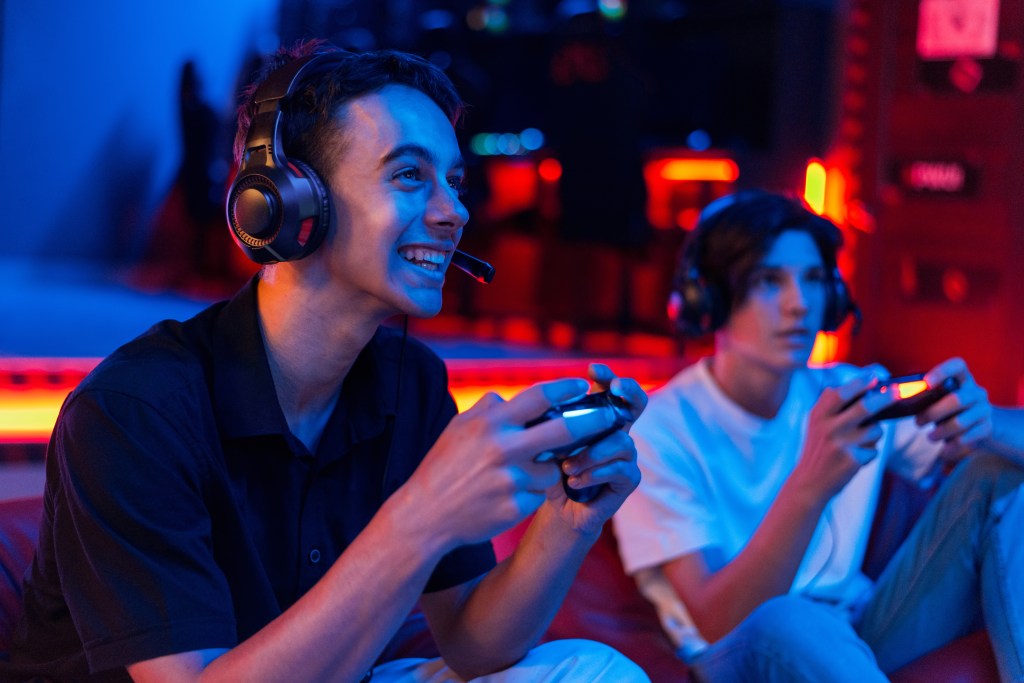
Esports has never been more globally contested or commercially visible. But in 2025, the battle isn’t just being fought on digital stages. It’s over who gets to define what esports is. The answer may not lie with global publishers or Olympic federations at all. It may lie in the world’s fastest-growing, mobile-first gaming market: India.
Saudi Arabia has transformed Riyadh into the esports epicentre with its $70 million Esports World Cup and the new Esports Nations Cup, reframing competition as a tool of national prestige. The International Olympic Committee (IOC) has stepped in with the first Olympic Esports Games. It is designed to align gaming with Olympic ideals and games, even if that means sidelining the very titles that built esports’ culture. Meanwhile, publishers like Riot and Valve are redrawing competitive structures entirely in their own image.
Amid these top-down models, India’s rise offers a counter-narrative: a bottom-up, mobile-first, youth-powered ecosystem that could redefine what inclusive esports looks like globally.
The New Power Players: Nation-States Enter the Arena
Esports has long been a global phenomenon, but it has recently become increasingly geopolitical. No country has made a bigger move than Saudi Arabia, as evidenced by its intent to host the Esports World Cup, which will soon be followed by the Esports Nations Cup (ENC). It will launch in 2026 as a biennial tournament where nations compete against each other, with over 100 countries expected to participate. Supported by publishers like EA, Tencent, Krafton, and Ubisoft, the ENC will formalize national pride in esports in ways we’ve never seen before.
These moves signal a simple truth: esports is no longer just entertainment, it’s an instrument of soft power. However, as governments become involved, questions arise about dependency, politicization, and the independence of esports culture.
The Olympic Pivot: Can the IOC Redefine Esports?
Where Saudi Arabia’s model uses esports to project power, the IOC’s seeks to purify it. It’s the first Olympic Esports Games, scheduled to take place in Saudi Arabia, also features competitive gaming under Olympic values of fair play, inclusivity, and health.
However, the IOC’s curated approach, which highlights Olympic sports such as cycling, sailing, and archery simulators but outrightly excludes competitive and Multiplayer Online Battle Arena (MOBA) games. These risks are sanitizing esports into something unrecognizable to the community. For sponsors and broadcasters, this is a safe choice. For gamers, it feels unfamiliar and alienating. Some esports federations align with National Olympic Committees, while others do not, further fracturing the ecosystem.
Publishers at the Helm: The Invisible Empire
For all the new entrants, the real power still lies with publishers. Every match, league, and broadcast exists because a private company permits it. Valve reminded the world of this in 2025 when it dismantled Counter-Strike partner leagues, forcing organisers back into open circuits. Riot, meanwhile, has embraced betting sponsorships in League of Legends and Valorant, monetizing what teams struggle to do.
The pattern is consistent: control over code means control over competition. Publishers can rewrite formats, reassign rights, and reshape ecosystems overnight. For all the talk of soft power or Olympic values, esports remains a privately owned empire; its culture licensed rather than liberated.
India and the Mobile Wave: A Democratic Future Emerges
If publishers and governments compete for ownership, mobile markets are quietly rewriting the rules. In India, mobile esports have surged back into the mainstream. The Free Fire MAX India Cup 2025 returned with a $115,000 prize pool and LAN finals in Lucknow; it was the first Garena tournament since the 2022 ban. The Battlegrounds Mobile India Pro Series (BMPS) 2025 held its finals in New Delhi with a $223,000 prize pool, drawing large online and offline crowds. Krafton is now developing a franchise-style league modelled on cricket’s IPL.
But what sets India apart isn’t just numbers—it’s how it’s building. In 2025, India became one of the few major markets to draw a legal line between esports and real-money gaming (RMG), banning RMG while recognising esports as a legitimate sport and industry. This single move distanced esports from betting controversies and established it as part of India’s youth, innovation, and digital economy agenda.
India’s esports growth is also structurally unique. It’s driven by grassroots efforts, not government initiatives; mobile-first, not hardware-restricted; and community-led, not publisher-controlled. With over 650 million gamers and the lowest data costs worldwide, India is more than just an emerging market. It shows that esports can grow democratically. However, India still faces major challenges: limited monetization opportunities for teams, unreliable infrastructure, and a cultural stigma that views gaming as a distraction rather than a discipline. But these are maturity issues, not a lack of intent, and they can be addressed with investment, recognition, and clear policies.
Four Futures, One Question: Who Writes the Rulebook?
Esports will thrive on competition, but the stakes for 2026 and beyond go far beyond prize pools. The real contest is between competing visions: a national prestige project, an Olympic-sanctioned discipline, a publisher-controlled ecosystem, or a mobile-first cultural phenomenon. Each model has its own merits in terms of resources and reach, but also risks politicization, sanitization, and fragmentation.
For players, fans, and teams, the question isn’t whether esports will grow but who will decide how it expands. Will Saudi Arabia and the IOC shape it as a platform for nations and institutions? Will publishers such as Riot, Valve, and Krafton control it from the top down? Or will India and Southeast Asia show the world that esports’ strength lies in accessibility and scale, making it stronger for future generations?
Esports has never been more globally contested or commercially visible. But in 2025, the battle isn’t just being fought on digital stages. It’s over who gets to define what esports is. The answer may not lie with global publishers or Olympic federations at all. It may lie in the world’s fastest-growing, mobile-first gaming market: India.
Saudi Arabia has transformed Riyadh into the esports epicentre with its $70 million Esports World Cup and the new Esports Nations Cup, reframing competition as a tool of national prestige. The International Olympic Committee (IOC) has stepped in with the first Olympic Esports Games. It is designed to align gaming with Olympic ideals and games, even if that means sidelining the very titles that built esports’ culture. Meanwhile, publishers like Riot and Valve are redrawing competitive structures entirely in their own image.
Amid these top-down models, India’s rise offers a counter-narrative: a bottom-up, mobile-first, youth-powered ecosystem that could redefine what inclusive esports looks like globally.