Tim Cook Steps Down as Apple CEO; Hands Over Reign To John Ternus
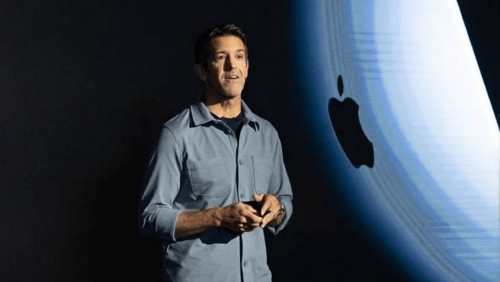
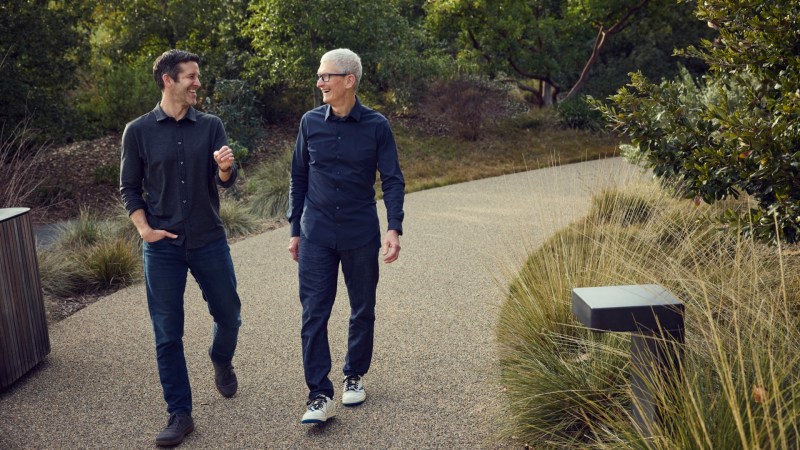
Apple announced that Tim Cook will become executive chairman of Apple’s board of directors and John Ternus, senior vice president of Hardware Engineering, will become Apple’s next chief executive officer.
Apple
Opinions expressed by Entrepreneur contributors are their own.
You're reading Entrepreneur India, an international franchise of Entrepreneur Media.
After nearly 15 years, Tim Cook has stepped down as Apple CEO and is transitioning to the role of executive chairman of Apple’s board of directors. John Ternus, senior vice president of Hardware Engineering, will become Apple’s next CEO, effective September 1, 2026.
Cook’s departure (somewhat) marks the end of an era for the iconic technology company, which currently enjoys a market capitalization of USD 4 trillion, dwarfing the economies of several countries.
This success proves Cook was a worthy successor to Steve Jobs. Back in 2011, when Cook took over, this was not the case; he was mostly seen as a behind-the-scenes guy and met with several apprehensions from the market. However, Cook had already proven his mettle as COO when Jobs took medical leave in early 2009.
In his retirement/resignation letter, Jobs also endorsed Cook as his successor. He wrote on Cook [excerpts]:
“…As far as my successor goes, I strongly recommend that we execute our succession plan and name Tim Cook as CEO of Apple.
I believe Apple’s brightest and most innovative days are ahead of it. And I look forward to watching and contributing to its success in a new role.”
Over a decade later, Cook has similar expressions as he recommends Ternus:
“It has been the greatest privilege of my life to be the CEO of Apple and to have been trusted to lead such an extraordinary company. I love Apple with all of my being, and I am so grateful to have had the opportunity to work with a team of such ingenious, innovative, creative, and deeply caring people who have been unwavering in their dedication to enriching the lives of our customers and creating the best products and services in the world,” said Cook.
“John Ternus has the mind of an engineer, the soul of an innovator, and the heart to lead with integrity and with honor. He is a visionary whose contributions to Apple over 25 years are already too numerous to count, and he is without question the right person to lead Apple into the future. I could not be more confident in his abilities and his character, and I look forward to working closely with him on this transition and in my new role as executive chairman.”
The 65-year-old Cook served as the president of Corporate Materials for Compaq and was responsible for procuring and managing all of Compaq’s product inventory, prior to joining Apple in 1998.
Previous to his Compaq stint, Cook served as the chief operating officer of the Reseller Division at Intelligent Electronics. He also spent nearly 12 years at IBM wherein he worked in different capacities. As a director of North American Fulfillment at IBM he led manufacturing and distribution functions for IBM’s Personal Computer Company in North and Latin America.
Cook holds an MBA from Duke University, where he was a Fuqua Scholar, and a Bachelor of Science degree in Industrial Engineering from Auburn University.
In 1998, Jobs asked Cook to join Apple. Cook narrates the story of his joining Apple:
“… The decision to come to Apple which I made in early 1998 was not so obvious. Since most of you graduates were 10 years old at the time you may not realize that the Apple in early 1998 was very different than the Apple of today. In 1998 there was no iPad or iMac or iPhone, there wasn’t even an iPod–I know it’s hard to imagine life without iPods. While Apple did make Macs, the company had been losing sales for years and was commonly considered to be on the verge of extinction. Only a few months before I’d accepted the job at Apple, Michael Dell, the founder and CEO of Dell Computer, was publicly asked what he would do to fix Apple, and he responded “I’d shut it down and give the money back to the shareholders.” In making this statement what distinguished Michael Dell was only that he had the courage to say what so many others believed.
So Apple was in a very different place than it is today, and my employer at the time, Compaq Computer, was the largest personal computer company in the world. Not only was Compaq performing much better than Apple, it was headquartered in Texas and therefore closer to Auburn football. Any purely rational consideration of cost and benefits lined up in Compaq’s favor, and the people who knew me best advised me to stay at Compaq. One CEO I consulted felt so strongly about it he told me I would be a fool to leave Compaq for Apple…”
Beyond the world of technology, corporate and financial figures, Cook’s personal life has also been subject to public discussion. In 2014, Cook in an op-ed in Bloomberg publicly revealed his sexuality, saying that he is “proud to be gay.” He wrote:
“While I have never denied my sexuality, I haven’t publicly acknowledged it either, until now…
So let me be clear: I’m proud to be gay, and I consider being gay among the greatest gifts God has given me…
So if hearing that the CEO [chief executive] of Apple is gay can help someone struggling to come to terms with who he or she is, or bring comfort to anyone who feels alone, or inspire people to insist on their equality, then it’s worth the trade-off with my own privacy.”
Apple under Tim Cook
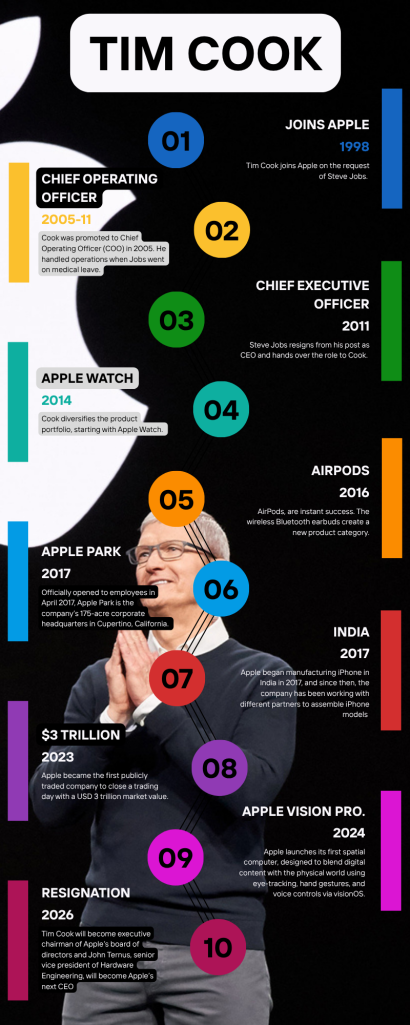
Even as Apple enjoys USD 4 trillion market cap, Cook’s stint saw some radical product launches and strategy pivots. Let’s take a look at some of the top milestones from Apple under Cook:
2014: Apple Watch
Even as Apple had made a name with its iconic product line up of iPhones, Cook helped the company diversify the product portfolio, starting with Apple Watch. It was also the company’s first wearable foray. According to a Counterpoint Research report in March, Apple led shipments with 32% market share as of Q4 2025, followed by Huawei at 13%. Among the top 5 brands, Apple recorded the fastest YoY growth at 15% and remained the shipment leader.
2016: AirPods
Akin to Apple Watch, Cook added a new category defining product – AirPods – in 2016. According to estimates, Apple sold 80 million units of AirPods in 2025, nearly five times of what it sold in 2017. Even as the product has evolved under the hood, there have been multiple lookalikes from rivals and competing products to create a new category of wearables.
2017: Apple Park
Officially opened to employees in April 2017, Apple Park is the company’s 175-acre corporate headquarters in Cupertino, California. An engineering marvel, the campus features a massive circular building – also famously called the spaceship – and replaces the old 1 Infinite Loop headquarters. The Steve Jobs theatre and the campus are widely featured in annual Apple keynote video packages.
2017: Geography diversification & India
Long before the Covid disrupted the global supply chains and the US-China trade wars, Apple had quietly begun diversifying its manufacturing lineup, and reducing dependence on China. It began manufacturing iPhone in India in 2017, and since then, the company has been working with different partners to assemble iPhone models and produce a growing number of components in India. Apple has also begun exporting made in India phones. Moreover, it has deepened its presence in the country with retail stores in select cities.
2023: The USD 3 Trillion
In 2023, Apple became the first publicly traded company to close a trading day with a USD 3 trillion market value. Interestingly, the company did temporarily hit the USD 3 trillion market value on back-to-back days in January 2022, but was unable to sustain by the time the market shut. According to estimates, Apple’s current market cap has risen to nearly USD 4 trillion. Apple is currently among the top five companies (Nvidia, Google, Microsoft, and Amazon) with the highest market caps.
2026: Cook’s departure and AI era
Cook’s departure comes at a time when AI is disrupting the technology landscape, forcing legacy companies to make strategic pivots. For the incoming Ternus, the initial goal is likely to help steer Apple through the AI tsunami.
It’s worth noting that Apple has surprisingly lagged behind the likes of Google and newbies like OpenAI in AI. The company clearly knows this. Earlier this year, Apple and Google entered into a multi-year collaboration under which the next generation of Apple Foundation Models will be based on Google’s Gemini models and cloud technology. These models will help power future Apple Intelligence features, including a more personalized Siri coming this year.
The playbook, however, is not very different from Microsoft’s. Instead of forcing its hardware ecosystem, Microsoft was quick to understand the importance of pushing its services and products cross-platform. This pragmatic openness may keep Apple in the game. It may not need to win a model war if it ensures its products are aligned with the changing tech landscape. It will be interesting to see how Apple ensures this without breaching its “holy” walled garden.
After nearly 15 years, Tim Cook has stepped down as Apple CEO and is transitioning to the role of executive chairman of Apple’s board of directors. John Ternus, senior vice president of Hardware Engineering, will become Apple’s next CEO, effective September 1, 2026.
Cook’s departure (somewhat) marks the end of an era for the iconic technology company, which currently enjoys a market capitalization of USD 4 trillion, dwarfing the economies of several countries.
This success proves Cook was a worthy successor to Steve Jobs. Back in 2011, when Cook took over, this was not the case; he was mostly seen as a behind-the-scenes guy and met with several apprehensions from the market. However, Cook had already proven his mettle as COO when Jobs took medical leave in early 2009.