Thinking Beyond the Interface: A Renowned Front-End Engineer Shares Insights and Industry Trends
How do professionals adapt while continuing to build reliable and scalable solutions?

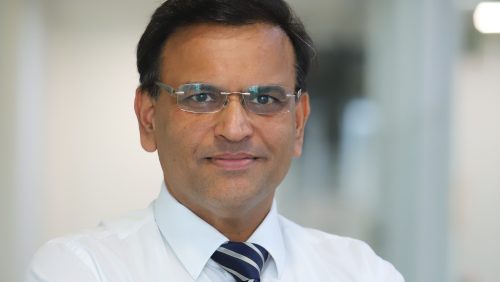
Dmitry Mayorov
Opinions expressed by Entrepreneur contributors are their own.
You're reading Entrepreneur India, an international franchise of Entrepreneur Media.
The role of front-end engineers is changing. Growing platform complexity, stricter performance standards, and the rise of AI-powered development tools are pushing them to move beyond interface implementation and toward system-level thinking. This raises an important question: how do professionals adapt while continuing to build reliable and scalable solutions?
Dmitry Mayorov, a Staff Front-End Engineer at Fueled, has been addressing this challenge in practice. From redesigning the digital ecosystem of the Harvard T.H. Chan School of Public Health to modernize Starbucks’ global storytelling platform, he has contributed to major products used by global enterprises. His work has already earned recognition through a number of major industry awards, including the most desired Webby. In this article, Mayorov reflects on his notable projects, shares insights on communication and accessibility, and discusses trends shaping the industry.
From Site Templates To Major Industry Awards
Dmitry Mayorov’s path to front-end engineering began with graphic design. During his student years, he worked part-time in the family business — a print shop and design studio. When a bicycle accident left him recovering for several months, Dmitry decided to study how websites function in order to communicate more effectively with developers. As he became more involved in the subject, he started taking on freelance projects and eventually moved into developing site templates for sale. One of them was purchased by the owner of Rareview, a Los Angeles-based digital agency, which led to a long-term collaboration and later a full-time position.
At Rareview, Mayorov contributed to several high-profile digital projects, including the Visual Merch App for the outdoor retailer REI, the redevelopment of the WGN America website, and a digital platform for the car service application Sweetworks. The latter received a prestigious Standard of Excellence Award from The Web Marketing Association, recognizing the technical quality delivered by Dmitry and his team.
One of the initiatives that stands out from that period was a project for the Sawdust Art Festival, a renowned summer event that attracts more than 200,000 visitors annually. Rareview was selected to overhaul the festival’s digital presence — a project that involved rebuilding the main website, modernizing its e-commerce functionality, and updating the ticketing system. The goal was to improve the overall user experience and better support the needs of both visitors and performers. In addition, the agency had to launch a separate campaign dedicated to the festival’s artists.
As the lead engineer, Mayorov played a key role in both initiatives and participated in every stage of the process, from the initial meetings to the launch. His responsibilities were extensive, spanning everything from goal setting and architectural planning to team supervision and implementing key front-end components himself. He was also deeply involved in integrating the third-party ticketing system, as well as other external APIs.
Working closely with the client and the design team, Mayorov helped shape the site’s look and feel while ensuring that the implementations remained accessible and performant. The quality of this work earned several prestigious awards, including the UI & UX Design Award and the Innovation Design Award from CSS Design Awards, as well as the Star Award from CSS Winner. These honors serve as benchmarks of excellence in the design and development community.
“The technical side of the project was genuinely challenging,” Dmitry admits. “The site had a lot of animation and unusual interaction patterns, and we spent a long time refining the platform. It was very rewarding to see the work recognized by leading industry awards.”
The project also opened another professional avenue for Dmitry Mayorov. Shortly after its completion, he received an invitation from the Academy of Interactive & Visual Arts to participate as a judge in one of its competitions. Today he serves on the judging panels for the W3 Awards, the Davey Awards, and the Communicator Awards.
For him, judging offers a valuable perspective on the state of the market. “It exposes me to a huge range of projects across different sectors and keeps me close to the industry,” he says. “I see new patterns, I see what scales, what is superficial, and what is structurally wrong. When I’m evaluating projects, I’m not looking for the next big shiny thing or visual polish; I look for clarity, usability, and performance. Basically, anything where constraints were handled intelligently to achieve the business goal.”
Scaling Up with 10up, Fueling Growth at Fueled
After joining 10up, Mayorov was quickly promoted to Staff Front-End Engineer and began working on projects of even greater scale. One of them was the redesign of the Harvard T.H. Chan School of Public Health’s online presence. This complex initiative required bringing structural consistency across more than 200 interconnected websites of one of the world’s leading public health institutions.
As the lead front-end engineer on the project, Mayorov developed an accessible, themeable component library designed to ensure such consistency across the entire ecosystem. By simplifying rendering processes, removing unnecessary code, and treating Core Web Vitals as architectural constraints from the outset, Dmitry and his team significantly improved the platform’s performance and stability compared with the previous version. The project ultimately received a Webby Award — widely considered as one of the most prestigious accolades in digital media — reflecting both the creative vision and the technical foundation behind the product.
Among other high-profile initiatives were several projects for Starbucks. One of them involved the modernization of the Starbucks Stories website, the company’s primary platform for publishing brand-related content and stories about its social impact. Originally developed in 2018, it required a substantial update.
“The ‘About platform’, which hosts Starbucks Stories, represents the entire company,” Mayorov explains. “The bar for credibility, accessibility, compliance, and design was really high.” He notes that by 2024, standards had shifted toward much stricter Core Web Vitals requirements and mobile-first performance expectations aligned with Web Content Accessibility Guidelines (WCAG). A platform that had previously been sufficient no longer met the new benchmarks, and the team ultimately chose to rethink the system from the ground up.
The initiative involved migrating the platform to a newer framework, re-architecting key features, and improving overall performance. The goal was to create a more efficient content management experience and a stronger user interface while reflecting Starbucks’ commitment to inclusion. As Staff Front-End Engineer, Mayorov architected and implemented the front-end infrastructure, working closely with Starbucks’ content team and 10up’s design specialists to ensure brand compliance.
“I led the restructuring to align with modern performance, accessibility, and design standards,” he says. “I was involved throughout the entire process — from early research and workshops to wireframes and design. It worked out well because I was able to contribute at every stage.”
The initiative produced measurable results. Under Mayorov’s leadership, the team reduced page load times by 15 percent through performance optimization. It also streamlined the content publishing workflow through improved CMS integration. Dmitry and his colleagues implemented WCAG AA-compliant components and created a reusable component library aligned with Starbucks’ design system. Mayorov also trained internal teams so they could independently manage and maintain the platform after launch.
Across projects of this scale, communication becomes just as critical as technical expertise, Dmitry notes. Large digital platforms require constant coordination between engineering teams, designers, product managers, and client stakeholders. Mayorov believes communication itself plays an architectural role in successful development.
“When the intended outcome of a project is well-defined and articulated, it significantly reduces the risk of technical debt later,” he explains. Clear documentation, architectural diagrams, and structured tasks help ensure that everyone involved shares the same understanding. Making trade-offs transparent also helps balance the constant tension between business urgency and long-term technical sustainability.
While Dmitry was working at 10up, the company merged with Fueled — a digital transformation agency known for creating high-quality products for Google, The New York Times, Disney, Apple, Mayo Clinic and other global corporations. Its work has been featured in Apple keynotes, nominated for Emmy Awards, and recognized with Webby Awards, reaching millions of users worldwide. The merger naturally expanded Mayorov’s role and placed him on even larger and more impactful projects, where he helps shape product direction, align technical solutions with business goals, and support teams in delivering scalable digital experiences.
The Next Phase of Front-End Engineering
When discussing key industry trends, Dmitry Mayorov notes that the landscape of front-end engineering is being reshaped by artificial intelligence. In his view, AI does not eliminate the role of engineers but instead shifts their responsibilities toward higher-level system thinking. “Our job was never really to write code — it was to solve problems,” he says. “AI simply allows us to do that faster.” His point is supported by market estimates: for example, Andreessen Horowitz assesses that best-of-breed deployment of AI can at least double developer productivity, resulting in a GDP contribution of $3 trillion per year.
As AI tools become increasingly capable of generating code and assembling components within frameworks, the most valuable engineers will likely be those who design systems and understand how different technologies interact. Another emerging competency involves what Mayorov describes as “context generation” — the ability to structure problems clearly so that AI tools can produce useful results. Teams that learn how to provide the right context for AI will ultimately be able to extract far greater value from the technology.
Closely connected to this shift is the rise of what Mayorov calls on-demand software. Instead of relying exclusively on large, monolithic SaaS platforms such as Salesforce, companies are increasingly building smaller, specialized tools tailored to their own workflows. AI makes developing such tools far more accessible, allowing organizations to experiment more freely, iterate faster, and reduce vendor lock-in.
Still, in the AI era, foundational technical knowledge remains essential. Skills related to browser mechanics, performance, and accessibility are likely to remain relevant despite these changes. “Performance has actually become a central focus across the web development ecosystem,” Dmitry says. “It is no longer just a technical concern but a business priority, as faster websites directly influence user engagement and conversion rates. As a result, front-end architecture increasingly emphasizes optimized rendering, efficient resource loading, and minimal code overhead.”
Accessibility is also growing attention across the web. However, while awareness has improved in recent years, many websites still fail to meet even basic standards. According to Mayorov, the underlying requirements are not particularly complex. “Most accessibility fundamentals are actually core engineering practices — semantic HTML, proper heading structure, keyboard navigation, visible focus states, and sufficient color contrast,” he explains.
The challenge, however, is that many teams still treat accessibility as a checklist applied at the end of development. In reality, it must be embedded directly into the architecture from the start and treated as a requirement rather than an add-on. Otherwise, the cost of resolving these issues later increases significantly. “In my work, I try to address this at the system level,” Mayorov shares. “If accessibility rules are baked into the system design, then every new feature inherits them automatically. That’s the only scalable way to do it. The priority is the structural foundation, not cosmetic fixes.”
The trends highlighted by Dmitry Mayorov suggest that as the front-end industry evolves, it increasingly resembles software architecture rather than interface development. Professionals in the field are expected to think in terms of systems, performance, and long-term scalability rather than individual features. The role is becoming less about building pages — and more about shaping the foundations of the modern web.
The role of front-end engineers is changing. Growing platform complexity, stricter performance standards, and the rise of AI-powered development tools are pushing them to move beyond interface implementation and toward system-level thinking. This raises an important question: how do professionals adapt while continuing to build reliable and scalable solutions?
Dmitry Mayorov, a Staff Front-End Engineer at Fueled, has been addressing this challenge in practice. From redesigning the digital ecosystem of the Harvard T.H. Chan School of Public Health to modernize Starbucks’ global storytelling platform, he has contributed to major products used by global enterprises. His work has already earned recognition through a number of major industry awards, including the most desired Webby. In this article, Mayorov reflects on his notable projects, shares insights on communication and accessibility, and discusses trends shaping the industry.
From Site Templates To Major Industry Awards
Focuses on infrastructure, logistics, and the business implications of India's urban expansion.