Hamdard Laboratories: The Shift Towards Allopathic Generic Medicine Market
This is a move towards strengthening Hamdard’s footprint in the overall pharmaceutical industry, blending its heritage in herbal and Unani medicine with modern generic healthcare demands, says chairman, Abdul Majeed.
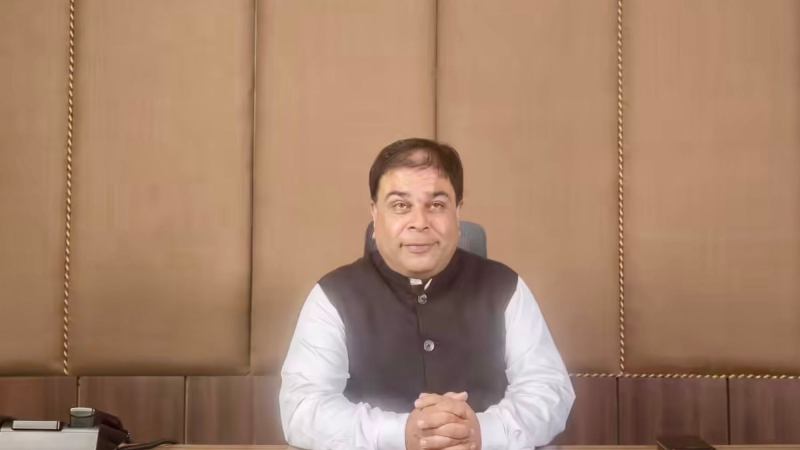
Abdul Majeed. chairman, Hamdard Laboratories
Opinions expressed by Entrepreneur contributors are their own.
You're reading Entrepreneur India, an international franchise of Entrepreneur Media.
With an eye on expansion, Hamdard Laboratories, country’s oldest Unani medicine manufacturer, is aiming for INR 500 crore revenue in FY26-27. The company is also targeting to enter allopathic generic medicine in the next five years. This move marks a shift towards strengthening Hamdard’s footprint in the overall pharmaceutical industry, blending its heritage in herbal and Unani medicine with modern generic healthcare demands.
The Union Budget’s proposed Biopharma Shakti initiative, with an outlay of INR 10,000 crore over five years, signals a strong push towards critical and preventive healthcare measures. Unani medicine has historically played a vital role in preventive and holistic healthcare, and modernising its delivery ecosystem would help make trusted, natural remedies more accessible to today’s consumers.
Highlighting India’s evolving health challenges, Abdul Majeed, chairman & managing trustee, pointed out that the country’s disease burden is increasingly shifting towards non-communicable diseases such as diabetes, cancer, and autoimmune disorders, where prevention and long-term care are critical. In this context, he said that biological medicines are emerging as key to improving longevity and quality of life at affordable costs, while positioning India as a global biopharma manufacturing hub. Furthermore, the emphasis on upgrading AYUSH pharmacies and drug testing laboratories, expanding the pool of skilled professionals, and bolstering evidence-based research would significantly improve quality standards and public trust in traditional healthcare systems.
“At Hamdard, our commitment has always been to uphold the scientific integrity, quality, and accessibility of Unani and Ayurveda medicine. This is even more relevant as people are increasingly seeking natural, preventive solutions for everyday health and wellness,” said the chairman.
The government’s proposal to establish three new All India Institutes of Ayurveda underlines the commitment to institutional capacity-building and formal education in traditional medicine.
Chairman recommends a further enhancement in the ministry of AYUSH budget in 2026–27 to support infrastructure development, digital initiatives, institutional strengthening, and capacity building across Ayurveda, Yoga, Naturopathy, Unani, Siddha, Sowa-Rigpa, and Homoeopathy.
To enhance credibility and global acceptance, dedicated funding should be earmarked for clinical research, pharmacovigilance, classical formulation validation, and integrative medicine through institutions such as the Central Council for Research in Ayurvedic Sciences (CCRAS), Central Council for Research in Unani Medicine (CCRUM), Central Council for Research in Homoeopathy (CCRH), and leading academic bodies. He also advocated for stronger public–private research partnerships.
“One of the priority recommendations is the comprehensive inclusion of AYUSH treatments under both government and private health insurance schemes – covering outpatient services, preventive therapies, chronic disease management, and rehabilitation services. This would improve accessibility, reduce out-of-pocket expenditure, strengthen preventive healthcare, and integrate AYUSH into mainstream healthcare delivery” he explained.
Talking about the expansion plans, the chairman emphasized the importance of Gen Z and their impact on the business model. “How do we get Unani in the minds of the new generation,” he questioned. “We started digitization keeping Genz in mind, and our aim is to be relevant to the future generation. Even when we move towards allopathic generic medicine, the new generation will play a key role.”
The company has a few formulations in the works, “But the fact that we’re changing the format at a grassroot level to suit Gen Z and make them more accessible and closer to new generation needs reflects our dedication to the cause. The shifts from sugary based mixtures to extract based tablet and capsule formulations and more emphasis on aqueous extracts is a testament to the same.”
With overall opportunities in the pharmaceutical industry, the company sees prospects in venturing into allopathic generic medicine, “As part of our growth strategies, we want to be present in different categories,” the chairman added.
Hamdard Laboratories India operates major state-of-the-art, GMP-certified manufacturing facilities for its Unani and Ayurvedic products, primarily located in Okhla and Ghaziabad (Uttar Pradesh).
“At this point in time, our main facility is in Ghaziabad. But as we are contemplating expansion, we look forward to setting up a separate R&D facility in Okhla which only concentrates on new products. One of the facilities will be laced with allopathic infrastructure to support our future plans and the other core area of interest is cosmetic products.”
Currently, the company offers a vast portfolio of Unani and herbal healthcare products, spanning over 600 items across categories like OTC, classical medicines, personal care, and wellness.
The global Unani medicine market, part of the broader 18-plus billion Indian AYUSH sector, is experiencing significant growth, with projections suggesting a potential to reach over$ 3 billion by 2028, growing at a CAGR of around 10 per cent. While rooted in the Middle East and South Asia, its reach is expanding globally through increased demand for natural, chronic disease remedies and strong government backing in India.
Unlike earlier decades, where classical formulations were reproduced with little alteration, today’s Unani manufacturers are increasingly turning to evidence-based validation. The chairman said that the industry is currently focusing on credibility and accessibility to ensure Unani is scientifically validated at the same time making it affordable for wider acceptance, especially among younger, wellness-driven consumers.
The India AYUSH and Alternative Medicine market is expected to reach USD 36.62 billion by 2031 at 6.66 per cent CAGR over 2026-2031. The mid-single-digit growth reflects the sector’s rapid alignment with modern insurance frameworks, production incentives, and digital distribution channels, according to a report by Mordor Intelligence.
With an eye on expansion, Hamdard Laboratories, country’s oldest Unani medicine manufacturer, is aiming for INR 500 crore revenue in FY26-27. The company is also targeting to enter allopathic generic medicine in the next five years. This move marks a shift towards strengthening Hamdard’s footprint in the overall pharmaceutical industry, blending its heritage in herbal and Unani medicine with modern generic healthcare demands.
The Union Budget’s proposed Biopharma Shakti initiative, with an outlay of INR 10,000 crore over five years, signals a strong push towards critical and preventive healthcare measures. Unani medicine has historically played a vital role in preventive and holistic healthcare, and modernising its delivery ecosystem would help make trusted, natural remedies more accessible to today’s consumers.
Highlighting India’s evolving health challenges, Abdul Majeed, chairman & managing trustee, pointed out that the country’s disease burden is increasingly shifting towards non-communicable diseases such as diabetes, cancer, and autoimmune disorders, where prevention and long-term care are critical. In this context, he said that biological medicines are emerging as key to improving longevity and quality of life at affordable costs, while positioning India as a global biopharma manufacturing hub. Furthermore, the emphasis on upgrading AYUSH pharmacies and drug testing laboratories, expanding the pool of skilled professionals, and bolstering evidence-based research would significantly improve quality standards and public trust in traditional healthcare systems.
Shrabona Ghosh • Former Senior Correspondent
Entrepreneur Staff
I write on corporates and lead a project called 'Corporate Innovations', wherein I cover large... Read more