TRUST, REGULATION AND SCALE
On the regulatory front, Binance maintains licenses or registrations across 20 jurisdictions globally.
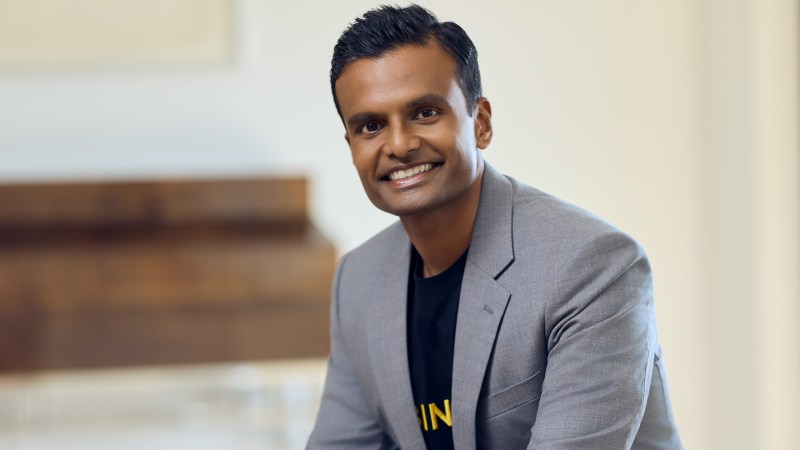
Binance
SB Seker Head of APAC Binance
You're reading Entrepreneur India, an international franchise of Entrepreneur Media.
Trust remains one of the most significant barriers to crypto adoption. How is Binance actively working to earn and sustain it?
Trust is built through consistent, verifiable action across every layer of the platform. We approach this through regulatory compliance, transparency on capital safeguards, and advanced risk systems.
On the regulatory front, Binance maintains licenses or registrations across 20 jurisdictions globally. In 2026, we became the first global cryptocurrency exchange to receive full operational authorization from the Abu Dhabi Global Market under the FSRA framework, a significant milestone that reflects years of compliance investment. In India, we maintain FIU-IND registration for anti-money laundering compliance and actively engage with law enforcement authorities, supporting investigations and providing assistance when required. Our compliance function represents over 20% of our global workforce, underscoring how seriously we take regulatory responsibility.
On transparency and security, we publish Proof of Reserves reports that independently verify user balances. We maintain a $1 billion SAFU (Secure Asset Fund for Users) as a dedicated emergency reserve, and we hold 29 in international security and compliance certifications, including ISO 27001, ISO 22301, PCI-DSS, SOC 1, and SOC 2.
Our security infrastructure operates at scale. We have deployed AI-powered risk systems that help protect users in real-time, preventing billions in potential losses annually for millions of users globally. We also work closely with law enforcement worldwide, processing tens of thousands of formal requests and assisting authorities in combating illicit activity. This comprehensive approach, from regulatory engagement to technological safeguards to operational transparency, forms the foundation of how we build and maintain trust at every level.
India has emerged as one of the world’s leading markets for crypto adoption. How does Binance approach this market differently from others?
Our India approach is built on three pillars.
First, regulatory responsibility and cooperation. We maintain FIU-IND registration for anti-money laundering compliance and take our obligations seriously. Beyond registration, we work closely with law enforcement agencies, supporting investigations and providing assistance when required. This collaborative approach is fundamental to building a sustainable digital assets eco system in India – we believe that responsible operators have a duty to help shape and uphold standards that protect users and market integrity.
Second, education at scale. Through Binance Academy and localized content initiatives, we are making crypto education accessible to users globally. We believe that informed users make better decisions, and education is the foundation for sustainable market growth. This is particularly important in India, where crypto literacy varies widely and quality education can be the difference between empowered participation and unnecessary risk-taking.
Third, community engagement and product accessibility. Through Binance Square, our community and creator platform, and our support for hundreds of events annually reaching millions globally, with significant engagement across India, we are building grassroots awareness and understanding. We offer products designed for different experience levels, from simple spot trading to sophisticated yield strategies and Web3 discovery tools, ensuring users can grow with the platform as their understanding deepens.
There’s an ongoing debate about whether most retail crypto participants are long-term investors or short-term speculators. What does user behaviour engagement on your platform actually tell you?
Crypto is maturing from a trading instrument into a portfolio asset class. Three shifts stand out.
First, users are holding longer and earning more. A significant portion of our base now treats crypto as strategic allocation, not trading inventory. Binance Earn adoption reflects this, users asking “how do I generate returns while holding?” rather than “when do I exit?” Second, the TradFi-crypto convergence is hitting a meaningful scale. TradFi perpetuals, 24/7 trading of gold, silver, equities on crypto rails, grew from $3 billion to $8.6 billion in daily volume between January and March 2026. Binance holds approximately 41% of this market. Silver perpetuals have reached 40% of COMEX contract volume.
Gold perpetuals are surpassing regional exchange futures. Weekend trading now serves as genuine price discovery, correlating 0.80 with Monday futures gaps, capturing 57% of gap moves, and predicting direction correctly 89% of the time. Third, real-world asset tokenization has crossed $25 billion on-chain. Tokenized treasuries, private credit, and commodities are no longer pilots, they are distributable products. Users are building genuinely diversified portfolios: large-cap crypto, DeFi, yield-bearing stablecoins, tokenized RWAs, and TradFi perpetuals under one roof. This shift from speculation to allocation is what sustainable growth looks like.
Binance Alpha 2.0 boarded 17 million users and crossed $1 trillion in volume in its first year. How does it fit into the larger picture of making Web3 more accessible?
Alpha 2.0 was designed to address a real friction point: most people who are interested in Web3 do not want to manage multiple wallets, navigate complex on-chain interfaces, or decode airdrop mechanics just to participate.
By building a CEX-native Web3 discovery layer directly into the Binance platform, we made it possible for users to explore decentralised assets, participate in on-chain activity, and access airdrop opportunities with the security, liquidity, and user experience of a regulated exchange. In its first year, Alpha 2.0 onboarded 17 million users, processed over $1 trillion in trading volume, and distributed $782 million in rewards across 254 airdrops. At multiple points in 2025, daily activity on Alpha alone rivalled the volumes of some of the largest centralised exchanges outside Binance. It is about lowering the barrier to entry, not lowering the standard of experience.
Regulation is still a work in progress across most markets. How does Binance view its role in shaping responsible industry norms?
We view compliance as infra structure, not a constraint. Binance is registered across 20 jurisdictions globally, and in 2026 we became the first global cryptocurrency exchange to receive full authorisation from the Abu Dhabi Global Market under the FSRA framework, a meaningful regulatory milestone. Our compliance function is staffed by 1,280 people, representing 22% of our total global headcount. That is not an overhead, it is an investment in the credibility of the platform and the industry. We have processed over 71,000 formal law enforcement requests, and our AI-driven systems have reduced direct exposure to major illicit categories by 96% since 2023. The crypto industry becomes stronger when its participants engage constructively with regulators and help define the framework. We would rather be part of building those guardrails than operating around them.
Trust remains one of the most significant barriers to crypto adoption. How is Binance actively working to earn and sustain it?
Trust is built through consistent, verifiable action across every layer of the platform. We approach this through regulatory compliance, transparency on capital safeguards, and advanced risk systems.
On the regulatory front, Binance maintains licenses or registrations across 20 jurisdictions globally. In 2026, we became the first global cryptocurrency exchange to receive full operational authorization from the Abu Dhabi Global Market under the FSRA framework, a significant milestone that reflects years of compliance investment. In India, we maintain FIU-IND registration for anti-money laundering compliance and actively engage with law enforcement authorities, supporting investigations and providing assistance when required. Our compliance function represents over 20% of our global workforce, underscoring how seriously we take regulatory responsibility.
On transparency and security, we publish Proof of Reserves reports that independently verify user balances. We maintain a $1 billion SAFU (Secure Asset Fund for Users) as a dedicated emergency reserve, and we hold 29 in international security and compliance certifications, including ISO 27001, ISO 22301, PCI-DSS, SOC 1, and SOC 2.

Entrepreneur Staff • Editor
Entrepreneur Staff
For more than 30 years, Entrepreneur has set the course for success for millions of... Read more