How Manychat Built Teams Across the Globe
How Manychat’s COO Dmitry Kushnikov scaled the company to 400+ employees across five global hubs.
Manychat
Opinions expressed by Entrepreneur contributors are their own.
You're reading Entrepreneur India, an international franchise of Entrepreneur Media.
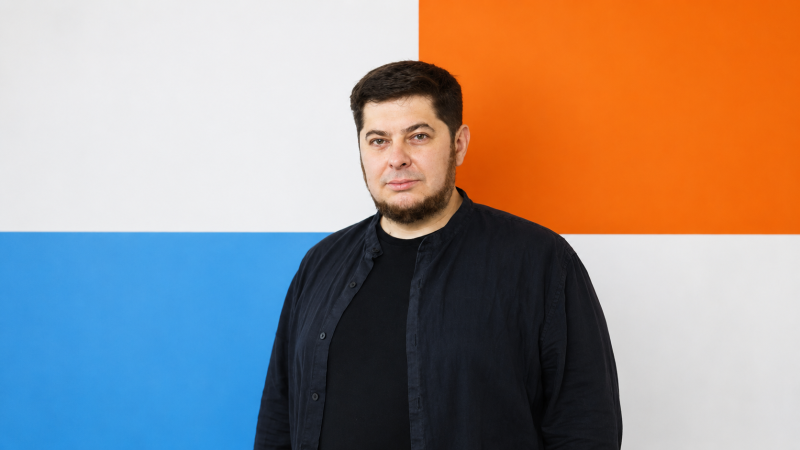
Manychat started with a handful of people and today has more than 400 employees working across several international hubs. For Dmitry Kushnikov, COO at Manychat, that growth meant figuring out how to build teams across countries while keeping them working toward the same goals.
One of the biggest tests came in 2022, when a shifting regional operating environment led Manychat to relocate its employees and operations out of Russia. The execution — new entities, new offices and the moves themselves — sat with him and his team.
The relocation became the start of a broader international build-out. Barcelona came first: Manychat set up its Spanish entity in 2022, and the office there has since grown into the company’s largest, with more than 150 people, and its main engineering and product hub. Amsterdam followed in 2024. Manychat started there with two relocated employees and built the office from scratch; today, the team in the Netherlands is more than 70 people. Kushnikov initiated both expansions.
Building teams across countries created a new set of operational challenges. Employees were working across different labor markets, legal environments, languages and time zones while contributing to the same product and company goals.
Manychat tripled in size in two years, from about 140 people in early 2024 to more than 420 today. Kushnikov says the discipline the company built around process is what kept its original culture intact through that growth — and let new people add to it rather than dilute it. The expansion also forced Manychat to formalize the way teams worked together. “You can’t manage things without processes at scale,” Kushnikov said. For him, introducing more processes means trying to understand what problem a process is supposed to solve, what it should optimize and how it could affect employees, customers, partners and investors. In 2026, the company distilled that discipline into The Manychat Way: ten operating principles that translate its five values into everyday decisions. Kushnikov turned them into policies and implemented them across global operations.
Turning Local Presence Into Growth
Brazil offers another example. At the end of 2023, Manychat saw potential for its WhatsApp business in the country and decided to invest in a local presence. Once again, Kushnikov was in charge of international expansion into new market. Over the next two years, Manychat’s WhatsApp revenue in Brazil more than tripled, and the company’s WhatsApp business overall grew from single-digit to double-digit millions of dollars in annual revenue, with Brazil as one of its main drivers. Today, Brazil is Manychat’s third-largest region by revenue. The growth followed Kushnikov’s playbook: hire a regional leader, build a local team, let the market prove itself. Over the next two years, Manychat’s WhatsApp revenue in Brazil more than tripled. Today Brazil is Manychat’s third-largest region by revenue — one Kushnikov built from a single hire.
That pattern now shows up as a deliberate map across the company. R&D is concentrated in two European hubs, Barcelona and Amsterdam. Go-to-market runs out of Austin and São Paulo. Support — about 85 people — is distributed across Armenia, Brazil and Honduras, following customers’ time zones. And roughly a third of the company works remotely, from 20 countries.
That combination also changed what leadership looked like inside a growing company. As the number of offices and employees increased, executives could no longer rely on direct oversight of individual work.
“I don’t believe that you can control what people do,” Kushnikov said. “The only way to ensure that something will happen at this scale… is to align around the vision, align around the strategy and align around everything that matters.”
Manychat’s use of Objectives and Key Results (OKRs) has been one way of doing that. The company first adopted the framework about eight years ago and has continued to adjust how it uses it as the organization has grown. For Kushnikov, the purpose is alignment: employees should understand the company’s direction and be able to make decisions within it without creating a culture in which managers control every task.
The same principle applies to hiring. According to Kushnikov, hiring senior leaders involves more than finding a candidate. Manychat’s own leadership team reflects that logic: over the past year, the company hired a new CFO and a new CPO, with Kushnikov powering the process — and both integrated into the distributed structure from day one.
Manychat’s international structure now reflects years of those decisions. The company has teams across multiple countries while serving customers around the world. Its growth has required Kushnikov to think about geography as part of company design: where to hire, which functions should be built locally, how much autonomy regional teams should have and how to keep the organization connected as it becomes more distributed.
That question of autonomy answered itself in Brazil. For two years, the market ran as its own regional organization. In January 2026, Manychat folded it into the company’s global marketing structure — “one marketing org, with local optimisation where it matters,” as Kushnikov put it. The sequence was deliberate: give a new market room to find its footing first, then integrate it once it has.
Manychat started with a handful of people and today has more than 400 employees working across several international hubs. For Dmitry Kushnikov, COO at Manychat, that growth meant figuring out how to build teams across countries while keeping them working toward the same goals.
One of the biggest tests came in 2022, when a shifting regional operating environment led Manychat to relocate its employees and operations out of Russia. The execution — new entities, new offices and the moves themselves — sat with him and his team.
The relocation became the start of a broader international build-out. Barcelona came first: Manychat set up its Spanish entity in 2022, and the office there has since grown into the company’s largest, with more than 150 people, and its main engineering and product hub. Amsterdam followed in 2024. Manychat started there with two relocated employees and built the office from scratch; today, the team in the Netherlands is more than 70 people. Kushnikov initiated both expansions.
Focuses on infrastructure, logistics, and the business implications of India's urban expansion.