From Karaoke to Supply Chains: A Leadership Pivot, and Why India Became Central to the Strategy
A CEO identified a structural inefficiency large enough to justify reinvention, sold a legacy business to focus, backed a platform with compounding network effects, and used India’s complexity as the proving ground.
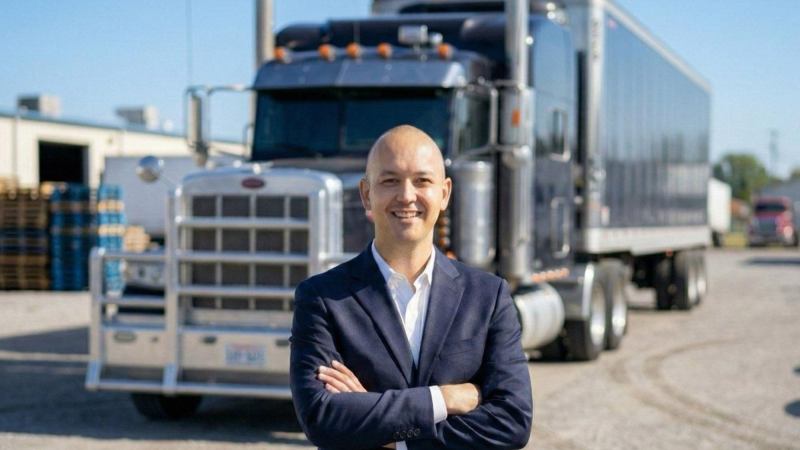
Some leadership stories begin in boardrooms. Gary Atkinson’s begins somewhere far less expected: consumer products and karaoke.
Atkinson has led Algorhythm Holdings (NASDAQ: RIME) since May 2012, after joining the company in January 2008 as General Counsel and Corporate Secretary. For years, the business behind the ticker was best known for consumer electronics under The Singing Machine brand. Then Atkinson encountered a structural inefficiency in freight that, in his words, “blew my mind.”
What followed was a CEO-level decision that defines real leadership: sell the legacy, double down on the future, and accept execution risk.
That future is SemiCab, the AI-driven freight orchestration platform Algorhythm acquired through a series of transactions across the U.S. and India. Strip away the buzzwords, and the thesis is straightforward: trucking operates as a fragmented network that wastes capacity every day, and software capable of coordinating the next move at scale can unlock outsized value.
Atkinson often frames the opportunity with an analogy that resonates instantly:
Imagine if one out of every three airline flights took off empty. Airlines would call it absurd. Trucking, by contrast, has tolerated the equivalent for decades.
Whether empty miles are measured at 20 per cent or closer to a third depends on methodology and segment, but the insight isn’t the exact number. It’s the nature of the problem. This is not a dispatch issue; it’s a network coordination issue.
Traditional systems optimize today’s shipment. They rarely optimize where the truck goes after delivery. That “after” is where empty miles are born.
A CEO doesn’t need to be a lifelong logistics insider to spot an economic leak. In fact, outsiders often see what industries normalize.
India was never a “test market.” It’s one of the world’s most revealing environments for logistics innovation because fragmentation and variability are amplified: a massive carrier base, uneven backhauls, dense metro corridors, and constant volatility in dwell times and routing conditions.
Recent data underscores the scale of the opportunity. A DPIIT/NCAER assessment estimates India’s logistics cost at 7.97 per cent of GDP in FY 2023–24, with government officials clarifying that earlier “13–14 per cent” figures were often overstated or misinterpreted.
Fleet composition further explains the urgency. As of January 2024, India reported approximately 16.48 million registered trucks, with light commercial vehicles accounting for nearly 60 per cent of the base. In India, last-mile logistics isn’t a niche; it’s the system.
For a platform built on network density and continuous optimization, India offers what most markets don’t: massive volume, visible inefficiency, and enterprise pressure to modernize.
In freight, the most honest KPI isn’t a press release; it’s whether pilots scale.
Enterprises don’t expand lanes or volumes unless service levels hold and ROI is real. SemiCab’s momentum in India increasingly shows that pattern:
• Hindustan Unilever (HUL) awarded SemiCab a USD 1.6 million contract expansion in January 2026, more than 10× the value of its initial pilot linked to strategic geographic synergies in Bangalore’s Southern Corridor.
• Apollo Tyres expanded its Master Services Agreement in January 2026, covering 20 high-density lanes with the potential to generate up to USD 2.5 million annually.
These weren’t isolated wins. In its 2025 year-end recap, Algorhythm reported five new enterprise contracts in India and six major expansions, with lane and trip volumes increasing 100 per cent to 600 per cent. Named customers included Procter & Gamble India, Kellanova (Kellogg’s), Marico, and Asian Paints, the latter expanding from 25 lanes to 183 under a USD 6 million contract.
For founders, this is the pattern worth studying: prove value, expand lanes, densify the network, and compound advantages.
One of the most powerful endorsements in logistics comes from practitioners who live and die by service reliability.
According to Sanchit Sasidharan, Senior Manager of Transportation and Warehousing at Asian Paints:
“We partnered with SemiCab early because we trusted their vision for network-level logistics. Today, they are one of our top transport partners in India, combining strong service performance with a more sustainable, data-driven operating model.”
That’s the kind of language supply chain leaders use when they believe a platform isn’t just a vendor, but an operating layer.
Atkinson’s pivot wasn’t just strategic; it was financial discipline under pressure.
In August 2025, Algorhythm sold its Singing Machine karaoke business to Stingray for USD 4.5 million, explicitly stating that the move would allow the company to focus fully on SemiCab’s growth. The decision meant walking away from a familiar revenue stream to concentrate capital, leadership attention, and execution on a single platform bet.
The early results are measurable. By December 2025, SemiCab reached an annualized revenue run rate of USD 9.7 million, a 300 per cent increase from USD 2.5 million at the end of 2024.
For entrepreneurs and CEOs alike, the lesson is clear: focus isn’t a slogan, it’s a financial decision.
SemiCab’s positioning also reveals a subtle but critical strategic choice.
Many digital freight platforms optimize transactions, matching loads faster. SemiCab aims to optimize systems, coordinating what happens after delivery and across multiple shippers to keep assets moving.
In earnings discussions, Algorhythm has highlighted enterprise relationships with Unilever, Procter & Gamble, Asian Paints, Apollo Tyres, and Kellanova as demand signals for broader platform expansion.
Leadership-wise, this matters. Competing on orchestration rather than brokerage means competing on category creation, not just price or speed.
Atkinson’s India-first strategy offers lessons beyond logistics:
- Earn trust through service, then scale through data. Pilots that convert into lane expansions are the real proof.
- Choose customers that create network effects. High-frequency FMCG routes accelerate platform learning.
- Scale deliberately. Geographic focus matters more than rapid sprawl.
- Make hard capital decisions early. Selling the legacy wasn’t symbolic—it was an operational focus.
- Speak in metrics that investors and enterprises share. ARR growth cuts through narratives.
India’s logistics cost nearly 8 per cent of GDP, which isn’t just a statistic. It’s a roadmap for reclaimed efficiency, margin, and competitiveness.
When enterprises like Asian Paints scale from 25 to 183 lanes on a single platform, it signals more than savings. It signals an operating model shift.
Gary Atkinson’s story is often summarized as “karaoke to trucking.” The real narrative is more instructive:
A CEO identified a structural inefficiency large enough to justify reinvention, sold a legacy business to focus, backed a platform with compounding network effects, and used India’s complexity as the proving ground.
That isn’t a logistics story. It’s a leadership one.