The Man Behind the Parcel
Shadowfax reported its best-ever quarter with revenue crossing INR 1,500 crore along with margin expansion.
Shadowfax
You're reading Entrepreneur India, an international franchise of Entrepreneur Media.
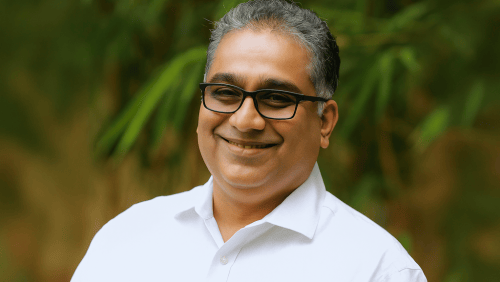
By: Abhishek Bansal, Co-founder, Shadowfax
India’s e-commerce opportunity is still in its early stages, and Abhishek Bansal believes the biggest growth story may lie ahead. For the co-founder of Shadowfax, the future of logistics is not simply about delivering more parcels faster; it is about building the infrastructure that enables millions of businesses to sell online, regardless of where they are located. “Today, only 7-8% of India’s e-commerce is happening online,” Bansal says, pointing to the gap between India and more digitally penetrated markets such as China, South Korea and the US. He believes India’s online penetration could reach 14-15% over the next three to five years, creating significant opportunities for logistics providers.
Shadowfax wants to be at the centre of that transition. Its business is built around a straightforward premise: online commerce can scale only when merchants have access to reliable, affordable logistics that allow them to serve customers across the country. “Our whole idea is to build an extremely competitive, high-quality, low-cost logistics network, which can enable any merchant in this country to effectively sell online,” Bansal says.
Founded in 2015, Shadowfax began as a last-mile delivery business, initially serving food delivery platforms. The idea emerged from a familiar consumer frustration. Living in Gurugram, Bansal found routine tasks such as ordering food or getting groceries delivered inconvenient. The experience prompted him to think about how technology and a flexible delivery network could simplify the process. “We said that last mile is the problem. India needs instant delivery,” he recalls.
The early model was simple: restaurants could request a delivery partner through a basic system, and someone would arrive to collect and deliver an order. What began as a solution to a specific problem gradually evolved into a broader logistics platform, spanning last-mile delivery and end-to-end e-commerce supply chains. Today, e-commerce forms the largest component of Shadowfax’s business, accounting for approximately 70-71% of its volumes, according to Bansal. Food delivery and quick commerce together contribute around 22%, while the company also serves direct-to-consumer (D2C) brands and other businesses.
The next phase of growth will involve expanding beyond large enterprise customers. Shadowfax has built its network by working with major e-commerce platforms, including Amazon, Flipkart and Meesho. That scale, Bansal explains, creates the foundation needed to serve smaller merchants. “You cannot get a D2C brand to work with your team. It’s not possible. You need to have a running network working in every pin code of the country,” he says.
With enterprise business providing the foundation, the company is now focusing on D2C brands, small and medium enterprises (SMEs) and offline distribution. Bansal describes these as among its biggest opportunities over the next two to three years.
The company is also investing in physical distribution through a channel-partner model. While merchants can already register online and ship through Shadowfax’s platform, many smaller businesses need a local point of contact to help them access the service. The company aims to establish approximately 1,000 channel partners across India over the next few years.
Shadowfax is increasing investments in facilities and capacity as it prepares for higher volumes. Bansal says approximately 3.5-4% of revenue is being directed towards capacity expansion, alongside accelerated entry into new cities and deeper penetration into smaller markets.
The company’s ambitions are significant, but Bansal insists that expansion must remain grounded in execution and financial discipline. He says the business was built without substantial family funding, beginning with INR 5 lakh contributed by the founders and another INR 3 lakh borrowed from their network. Early investor backing helped them turn an idea into a national logistics operation.
Even after its public listing, he says, the founders remain focused on building the business rather than treating the listing as an endpoint. Neither he nor co-founder Vaibhav Khandelwal sold shares in the IPO, according to Bansal. For a company operating in a competitive, capital-intensive industry, the challenge now is to translate its established network into a larger share of India’s expanding logistics market.
Q2 FY27 Highlights
| Metric | Q2 FY27 | Q2 FY26 | YoY Growth | QoQ Growth |
| Revenue (₹ Cr) | 1,538 | 982 | 56.6% | 13.2% |
| Orders (Cr) | 27.1 | 16.0 | 69.7% | 9.8% |
| Ind AS EBITDA (₹ Cr) | 104 | 39 | 164.8% | 13.1% |
| Ind AS EBITDA Margin | 6.7% | 4.0% | +276 bps | -1 bps |
| Adj. EBITDA (₹ Cr) | 77 | 28 | 177.4% | 14.8% |
| Adj. EBITDA Margin | 5.0% | 2.8% | +218 bps | +7 bps |
| Net Profit (₹ Cr) | 68 | 13 | 421.9% | 3.9% |
| Net Profit Margin | 4.4% | 1.3% | +309 bps | -40 bps |
By: Abhishek Bansal, Co-founder, Shadowfax
India’s e-commerce opportunity is still in its early stages, and Abhishek Bansal believes the biggest growth story may lie ahead. For the co-founder of Shadowfax, the future of logistics is not simply about delivering more parcels faster; it is about building the infrastructure that enables millions of businesses to sell online, regardless of where they are located. “Today, only 7-8% of India’s e-commerce is happening online,” Bansal says, pointing to the gap between India and more digitally penetrated markets such as China, South Korea and the US. He believes India’s online penetration could reach 14-15% over the next three to five years, creating significant opportunities for logistics providers.
Shadowfax wants to be at the centre of that transition. Its business is built around a straightforward premise: online commerce can scale only when merchants have access to reliable, affordable logistics that allow them to serve customers across the country. “Our whole idea is to build an extremely competitive, high-quality, low-cost logistics network, which can enable any merchant in this country to effectively sell online,” Bansal says.

Entrepreneur Staff • Editor
Entrepreneur Staff
For more than 30 years, Entrepreneur has set the course for success for millions of... Read more