Entrepreneur 2026: ‘The IPO is Just the Beginning’
The real test of an IPO is not the day a company lists, but what it builds in the years that follow
Entrepreneur India
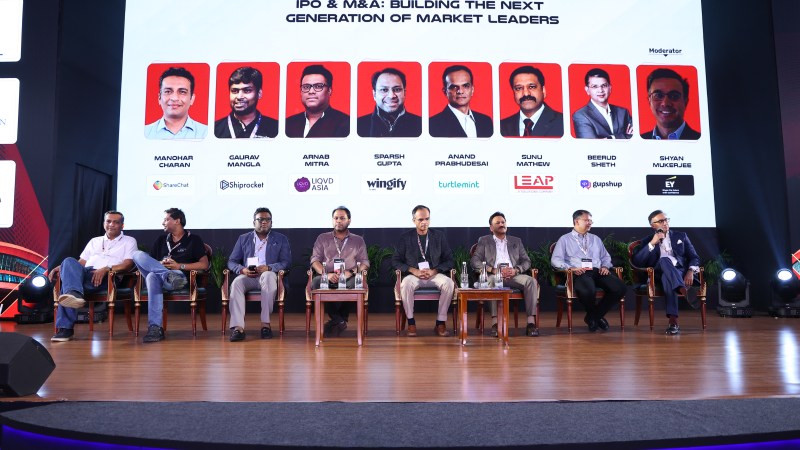
(L-R) Manohar Charan (Sharechat) , Gaurav Mangla ( Shiprocket) , Arnab Mitra ( Liqvd Asia) , Sparsh gupta ( Wingify ) , Anand Prabhudesai (Turtlemint) , Sunu Mathew ( Leap India Limited) , Beerud Seth ( Gupshup) , Shyan Mukerjee ( Partner , EY-Parthenon)
Opinions expressed by Entrepreneur contributors are their own.
You're reading Entrepreneur India, an international franchise of Entrepreneur Media.
An Initial Public Offering (IPO) is not the finish line for a company. It marks the start of a tougher phase, built on growth, accountability, and long-term value. Going public is a big milestone for any founder, but staying strong after listing takes a different mindset, better systems and a sharper strategy.
These themes ran through at the Entrepreneur Summit 2026 panel discussion, “IPO and M&A: Building the Next Generation of Market Leaders”, led by Shyan Mukherjee, Partner and Technology Sector Leader, EY-Parthenon. Featuring founders of recently listed companies and entrepreneurs preparing to go public, the panel examined what makes a company IPO-ready, how leadership must evolve after listing, and how M&A can accelerate growth.
IPO Readiness Goes Beyond Scale
Revenue and market share alone don’t make a company IPO-ready. Readiness also rests on predictable performance, professional management, robust financial systems, and strong governance.
The expectations of investors change sharply at this stage. “Private investors may tolerate greater uncertainty in pursuit of high returns, but public-market investors expect transparency, credible forecasts and consistent execution. Companies must show not only that they have grown, but that they can keep growing,” said Beerud Sheth, Co- Founder and CEO, Gupshup.
Forecasting matters most in this transition. Companies need to set targets they can actually hit, track their progress, and build the muscle to deliver. A strong management team, clear accountability, and dependable internal processes matter just as much. That’s why preparation has to start well before listing, while the company is still shifting from founder-led operations to a professionally managed organisation that can handle greater scale and scrutiny.
Growth Must Rest on Strong Fundamentals
Public capital opens up room for expansion, but only for companies with a credible plan to deploy it well. Ambition alone is not enough. “If you can scale your business, only then should you go for an IPO. Otherwise, you are better off with venture capital and private equity, because the capital market in India today doesn’t understand 10-15% growth,” said Sunu Mathew, Founder and Managing Director, Leap India. Growth targets, in other words, need the backing of sound fundamentals, operational capacity and reliable financial reporting.
The finance team’s job gets much bigger once a company lists. Reporting comes more often, and every number is watched more closely. A few quarters of missed expectations can shake investor confidence quickly, especially when the company set those expectations itself. Accurate reporting, realistic forecasts and decisions backed by data stop being nice to have and become the baseline.
Simplicity helps, too. “Public markets have limited bandwidth, and at times a lack of patience, for businesses like ours, and perhaps a lack of depth of understanding as well. So it is important for founders to distil their business into two or three key bullet points, so that people understand it in a simple story format,” said Manohar Charan, Co–founder, ShareChat.
The broader lesson is that sustainable growth takes more than a compelling business story. It takes the discipline and infrastructure to turn ambition into consistent results.
The Day After the Listing
For founders, an IPO is often the culmination of years of effort and risk. But the mental shift can be steep. “If, as a founder, you’re mentally not ready for it, that can become a challenge, because building a company in the public market is very different from building it privately,” said Anand Prabhudesai, Co-founder, Turtlemint.
Listing guarantees nothing. It opens a new phase in which the company must create value for a much broader group of stakeholders. Yet it can also validate the journey so far. “The IPO event gave us the recognition that we are in the right direction,” said Gaurav Mangla, CEO, Shiprocket.
Founders have to keep building after the listing. That means asking themselves how long they’re willing to stay committed, whether they want to lead the company through its next phase, and whether they can handle the glare of public scrutiny.
Communication changes too. Founders who once answered to a handful of investors now face institutional funds, retail shareholders, analysts and regulators, and they have to explain their strategy, their edge and their growth plans clearly, again and again. It’s harder still in specialised sectors, where investors may struggle to grasp the business model even when the market opportunity is big.
Being able to tell a clear investment story matters as much as delivering on the strategy. Founders also have to balance long-term bets against near-term expectations, without letting the pressure of each quarter wear down their bigger ambitions.
Trust Is Built Quarter by Quarter
Public-market participation demands greater discipline across the organisation. For Arnab Mitra, Managing Director, Liqvd Asia, that discipline began well before the listing. “The IPO journey started by becoming a lot more compliant and responsible in how we handle our financial operations, our business and the way we respond to our investors. That journey started long before we chose to become a publicly listed entity. In fact, it became a prerequisite,” he said.
Calls that founders once made on instinct now have to go through proper checks on governance, compliance, risk, and returns. And the change goes well beyond financial reporting. It affects how a business spends its money, weighs new opportunities, and talks to its stakeholders.
Investors trust consistency. A company that sets realistic expectations and meets them builds credibility over time, while big promises followed by repeated misses wear it away. That’s why founders need to tie their long-term vision to progress they can measure. A good growth story may win attention at first, but it’s steady delivery that keeps investors on board.
Why M&A Can Make the IPO Path Easier
An IPO provides access to capital. Mergers and acquisitions offer another route to expansion and competitive advantage. “I don’t think we did M&A from the IPO standpoint, but it makes the path towards an IPO much easier, because there’s a lot more diversity in the business,” said Sparsh Gupta, Co-founder & CEO, Wingify.
The panel distinguished between smaller, capability-driven acquisitions and larger deals that can transform a business. While tuck-in acquisitions help companies add technology, talent and expertise, larger deals can open new markets, diversify customers and expand scale.
The key takeaway was that M&A should go beyond IPO preparation. Acquisitions must strengthen long-term competitiveness, with companies clearly assessing their strategic goals and whether they can achieve them organically.
Conclusion
The Panel revolves around the question of how to build a company that lasts. The IPO and M&A do not make a resilient company in a volatile market. It takes strong leadership, dependable systems, good governance, and a clear strategy to endure the market shifts. An IPO brings in capital and an acquisition extends reach, but neither fixes weak fundamentals or poor execution. Companies that demonstrate predictable growth, a clear focus on scalability, and strong strategic execution are better positioned to navigate market uncertainties. Ultimately, the real test of an IPO is not the day a company lists, but what it builds in the years that follow.
An Initial Public Offering (IPO) is not the finish line for a company. It marks the start of a tougher phase, built on growth, accountability, and long-term value. Going public is a big milestone for any founder, but staying strong after listing takes a different mindset, better systems and a sharper strategy.
These themes ran through at the Entrepreneur Summit 2026 panel discussion, “IPO and M&A: Building the Next Generation of Market Leaders”, led by Shyan Mukherjee, Partner and Technology Sector Leader, EY-Parthenon. Featuring founders of recently listed companies and entrepreneurs preparing to go public, the panel examined what makes a company IPO-ready, how leadership must evolve after listing, and how M&A can accelerate growth.
IPO Readiness Goes Beyond Scale
Nikita Kumari • Senior Business Feature Writer
Nikita covers markets, corporate affairs, and regulatory policy across automotive, technology, and manufacturing. A law... Read more